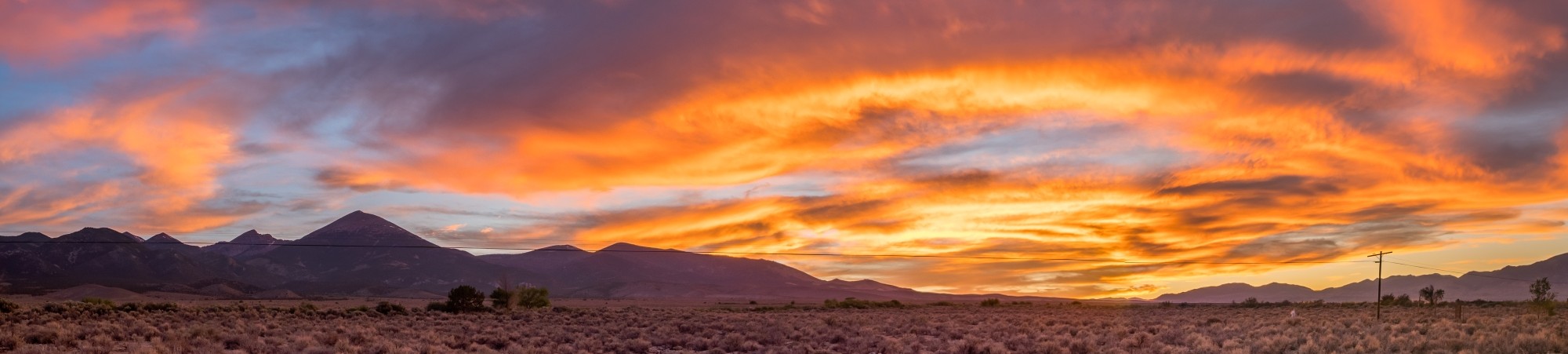
Recoleta Cemetery might just be the largest tourist attraction in Buenos Aires. We knew it would be popular, but were not expecting tour bus parking spaces right out front.
We rode the metro to Recoleta and walked over to the entrance of the cemetery arriving about 1:30 PM (13:30). We were quickly shown to the rear of a 25 minute line of folks waiting to enter. A stark reminder that January is the summer tourist season here.
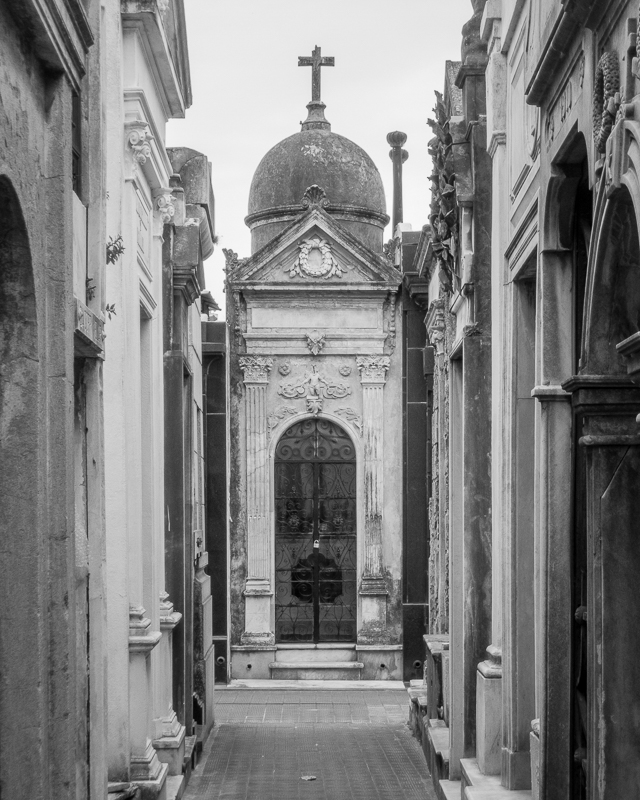
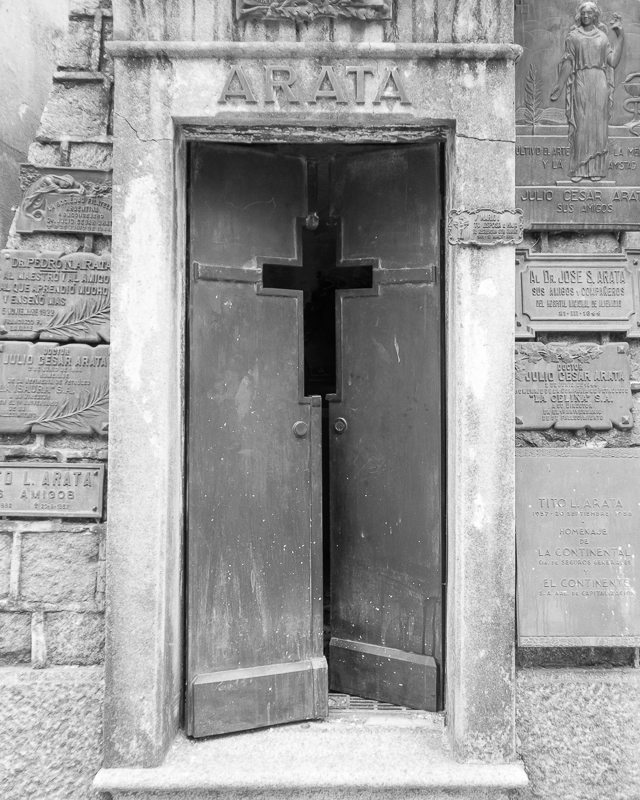
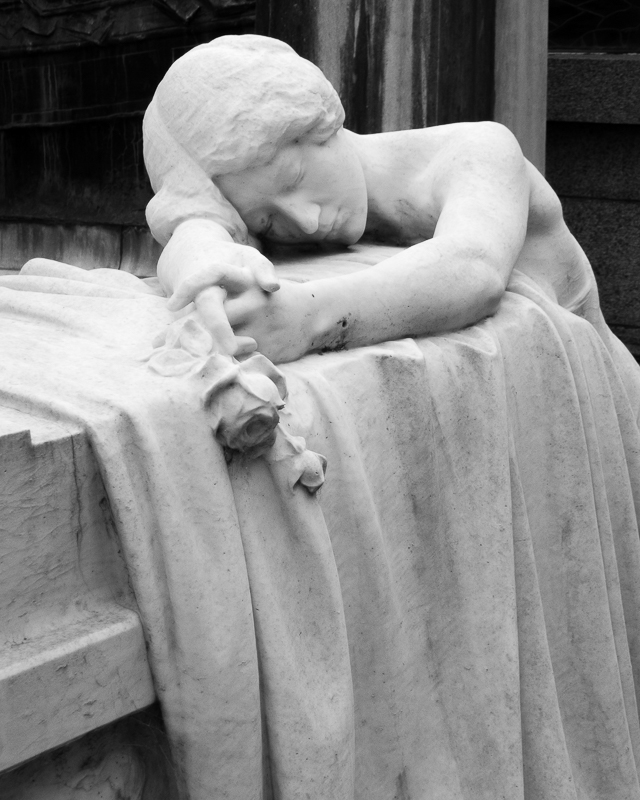
The ticket price for a foreigner is $22,600 Ar, about $15 each. We picked up a brochure and map on the way in. Fortunately the cemetery is quite large and the crowds disperse quickly.
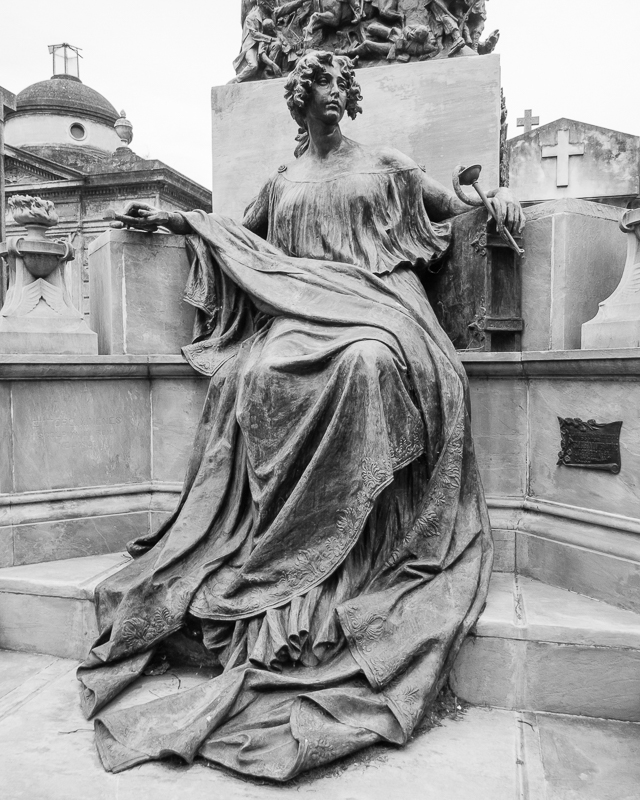
Most tour groups head straight down the middle of the cemetery after entering, and then turn left to wander over to the pantheon of Eva Perón’s family. Stephanie and I instead turned right and wandered around about half the cemetery that is largely untouched by tour groups.
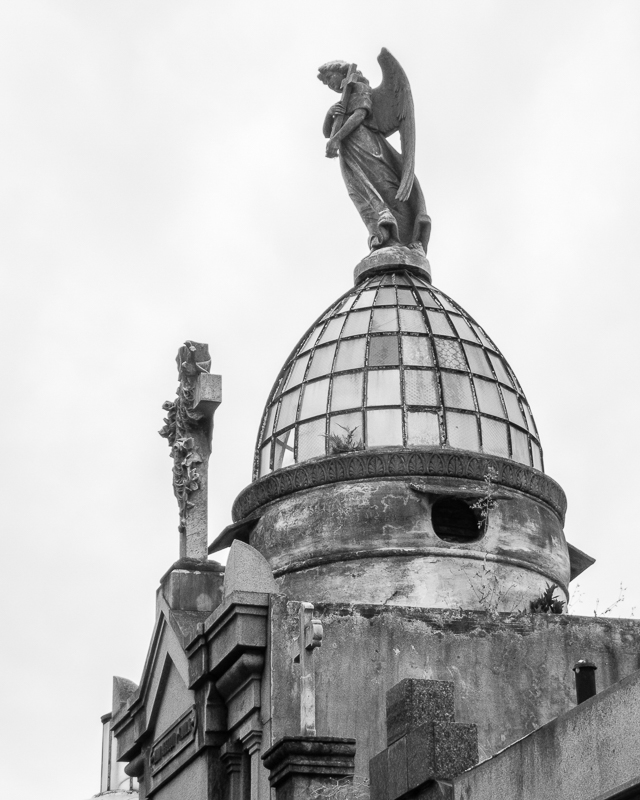
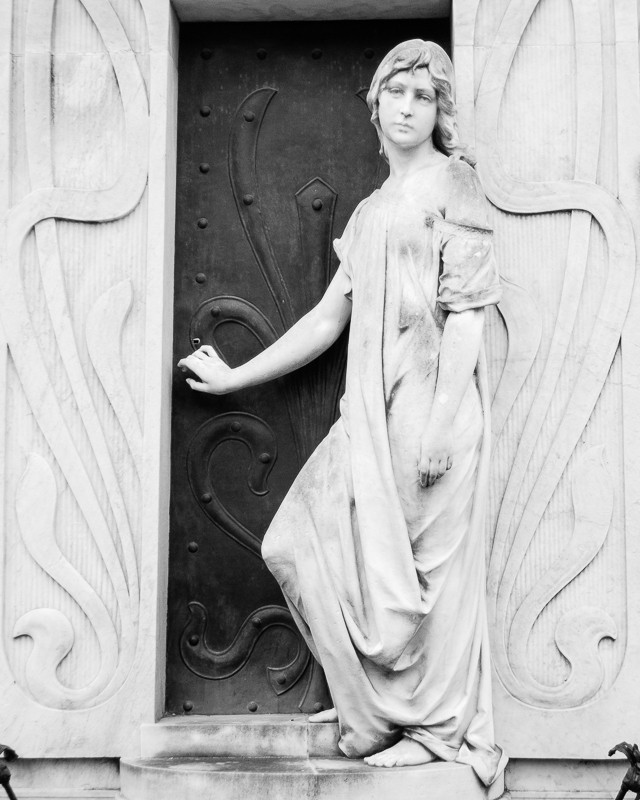
Many prominent Argentineans are interred in Recoleta Cemetery. We couldn’t tell you which ones, though, as we really did not take the time to look. We were much more interested in the architecture, stained glass, and sculptures than prominent locals. Apparently 90 of the pantheons in the cemetery are designated as National Monuments.
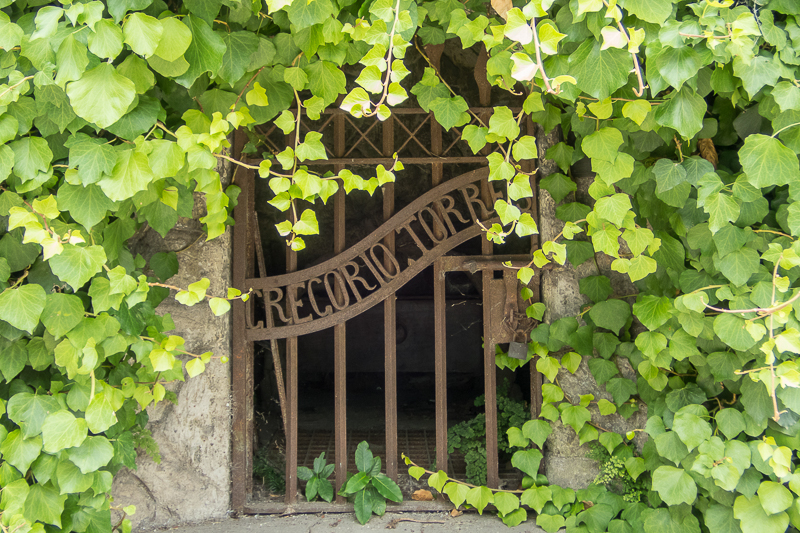
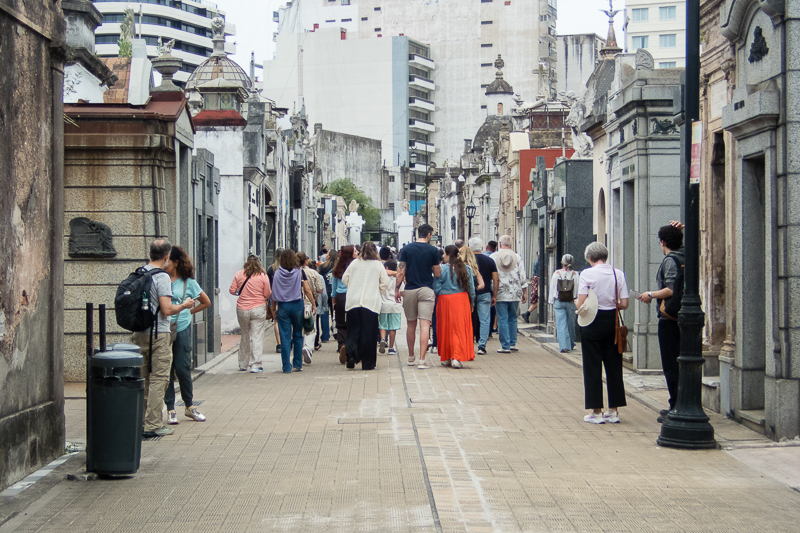
As a whole, the pantheons are well cared for; however, there are always a few that have seen better days. Families can vacate and sell pantheons if they choose. Or, if the family does not pay to maintain the pantheon, it will eventually be foreclosed upon and sold. We saw several condemnation notices. It seems to be a years-long process.
I’d estimate that we spent about two hours in Recolta Cemetery, wandering through about 85% of it before leaving. We tried to walk past the pantheon of Eva Perón’s family several times, but there was always a large tour group stopped right in front of it. So we gave up and left the cemetery to go get a drink.
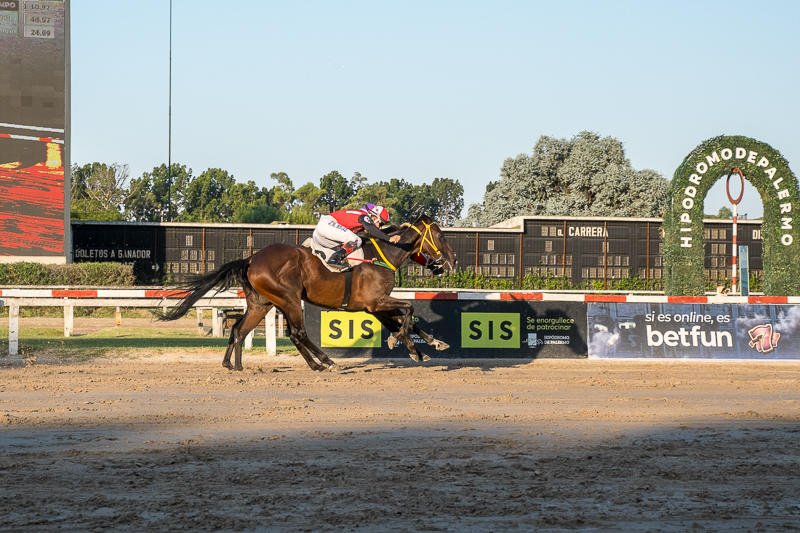
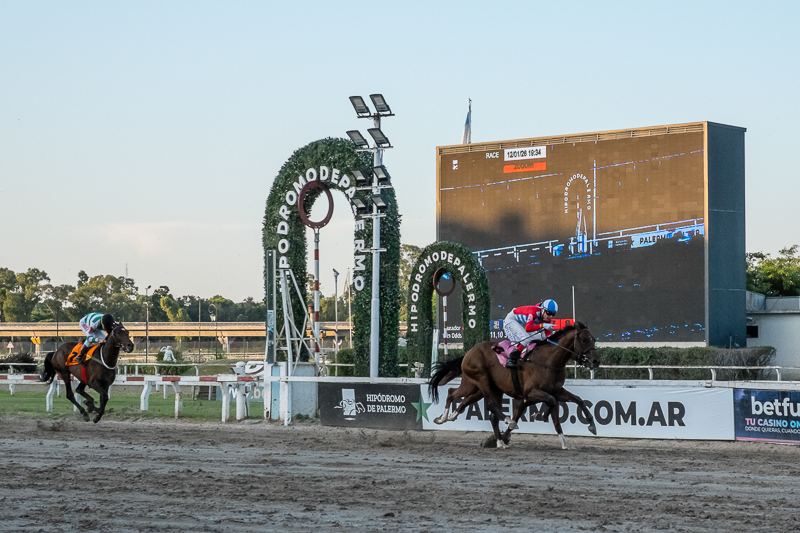
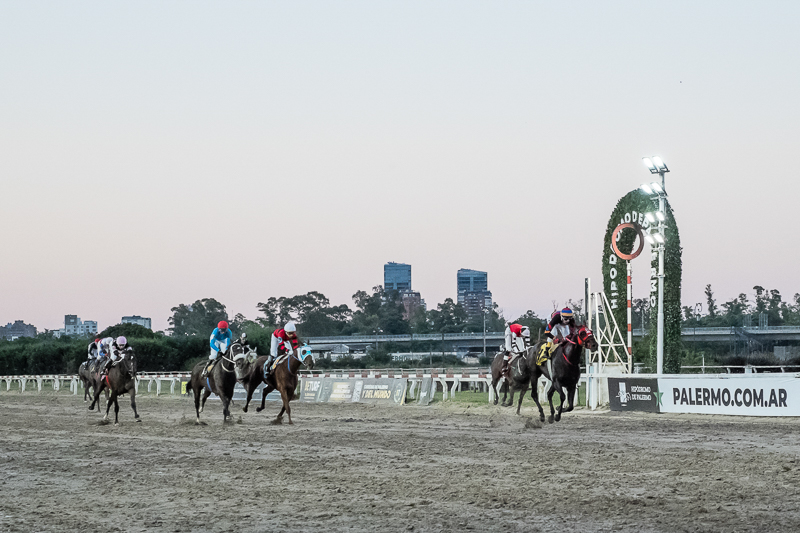
Our favorite activity in Buenos Aires was watching the horses race at Hipódromo Argentino de Palermo. The horses race several days a week pretty much year-round, usually on weekends and Mondays. Check the calendar on the website for the exact dates and times. Races go every 30 minutes from about 3:00 PM to 8:30 PM (at least in the summer months).
To avoid the worst of the heat, we arrived at the track a little before 6:00 PM to watch the late races. Upon walking into the main entrance a woman told us that the casino was next door. This confused us, so we left and walked towards the casino. Maybe the entrance to the track is through the casino? Nope.
I don’t know why the casino was pointed out to us, but it did not take long to figure out how to walk out trackside. Basically go through or around the main building. The facility is wide open. Once trackside, there’s not much there. Aside from a handful of tables and chairs, most of the seating is on concrete steps.
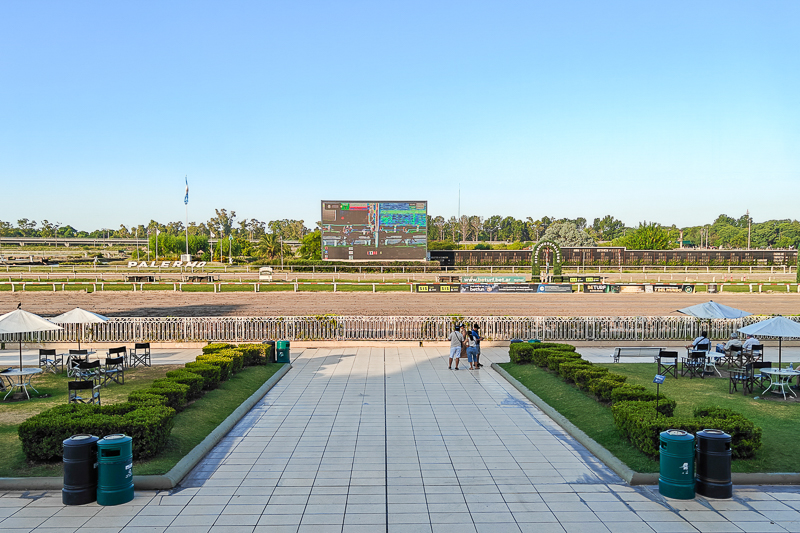
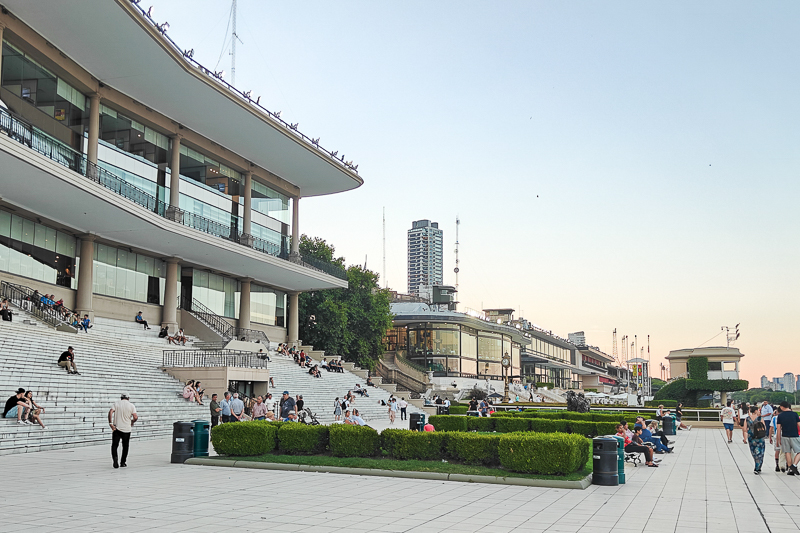
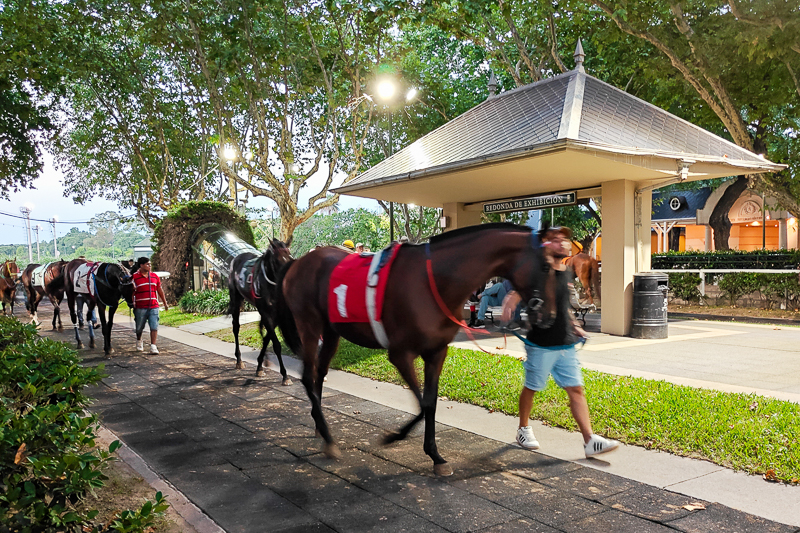
The track has a dress code for general attendees, which we were told was no “sportswear.” Seeing the number of people in sports jerseys and athletic shorts, we decided that no “sportswear” really means no “bathing suits”. Or, as one person in our group put it, don’t look like a Brazilian at the beach.
Certain restaurants and lounges on site have a more stringent dress code, but that was never our destination. The outdoor food stalls selling beer and sandwiches are more than sufficient. Bringing your own food and drink is also allowed.
As expected there are ample betting windows. We only bet on the final two races of the night, ending up with a $9,000 Ar profit, basically $6, enough to pay for an Uber to and from the track.
Speaking of which, one Uber driver enthusiastically told us about three bars in the Palermo neighborhood that are on some list of the world’s top 50 bars. When asked about drink prices he hemmed and hawed. Yeah, those bars are super expensive and swanky … not quite our profile. Somehow, notwithstanding our very informal dress, he must have mistaken us for rich tourists on vacation. Or massive winners at the horse track.
Instead we sought out places offering two for one happy hour beer specials. One nearby place that sold mediocre craft beers, Borneo, was so popular that it routinely ran out of beer during happy hour. Imagine that for a minute. A bar with an insufficient supply of beer.
While the days of 100° F (38° C) heat were behind us, temperatures still regularly reached into the 90° F range. One day we had the pleasure of a power outage for several hours, which apparently is not uncommon in Buenos Aires during times of high electrical demand. For someone who hates being hot like nothing else in the world, even power outages did not deter Stephanie from continuing to rave about liking Buenos Aires.
Garrett and Stephanie
If you have not already done so, read our other posts about Buenos Aires:
Buenos Aires, Argentina (January, 2026, Part I). Flipping hemispheres; walking through the Ecoparque and Jardín Botánico.
Buenos Aires, Argentina (January, 2026, Part II). Learning the Subte, and Sube; getting cash; exploring downtown.
Buenos Aires, Argentina (January, 2026, Part IV). The good and the bad: Museo Nacional de Bellas Artes; mate tasting.
For additional posts about Argentina, or elsewhere in the world, check out our Travel Blog. It contains collected links to all of our travel posts.
Want to subscribe (or unsubscribe) for email notification of new blog posts? It is only two to three emails a month. Send your name and email address to slowtravelchronicles@gmail.com, and note subscribe (or unsubscribe) in the subject line. All email addresses will be kept confidential and not sold to any third-party. You won’t get any marketing junk or sales pitches from us.