After a few days of riding out the heat in our Airbnb, we hopped on the Subte (the metro) to venture downtown and check out the area.
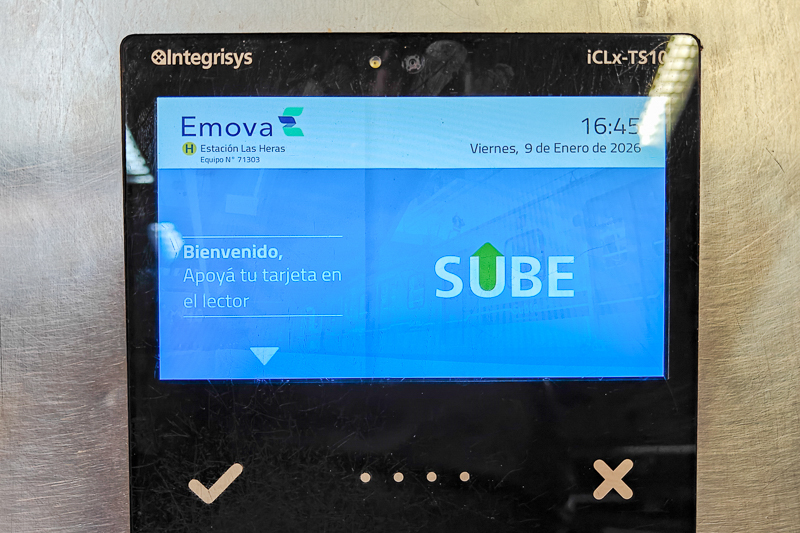
There are two ways to pay for rides on the metro or bus, a rechargeable pre-loaded Sube card (which can be shared) or tap to pay with a credit card. Don’t ask why the Subte transportation system uses a Sube card. The difference in spelling is real and illogical.
We meant to buy a Sube card at the airport on arrival, but forgot. Our Airbnb host, though, had an extra card available for us to use during our stay. On our first trip to the nearest metro station, Scalabrini Ortiz, we checked the card’s balance on the reader, $4,500 Ar. For us, each ride costs about $1,400 Ar, or $0.90 USD. (Locals with registered Sube cards get a better price.)
After using the card twice we loaded another $10,000 Ar onto it. To do so we had to pay cash at the Subte window in the metro station. After using the card a few more times we learned about the tap to pay option. Notably there is usually only one tap to pay machine in each metro station. It’s the one with the split payment screen. From then on, we used tap to pay with a credit card, while keeping the Sube card handy as a backup.
For us the cost per ride is the same whether we use a Sube card or tap to pay. The advantage to tap to pay is not having to repeatedly get cash from an ATM to reload a Sube card. (More on this below.)
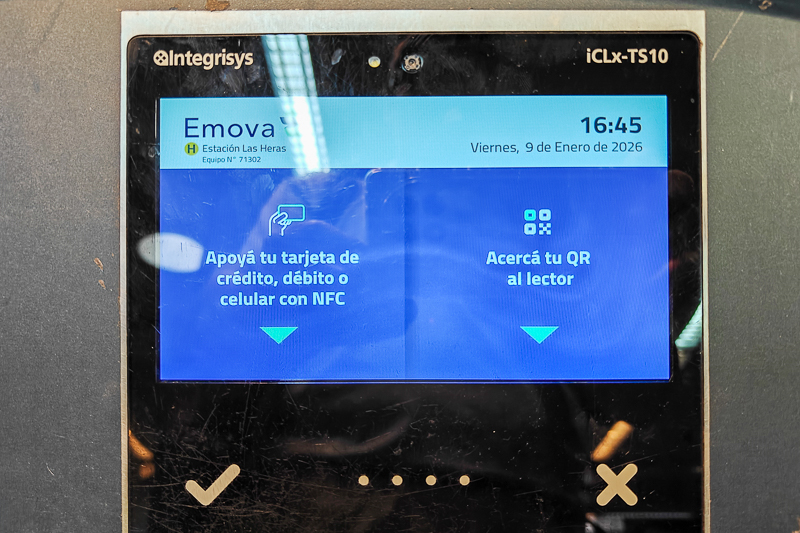
I’m pretty sure most busses, if not all, have tap to pay with a credit card as an option. But since we did not ride a bus once, I’m not certain.
The Subte metro map is easy to read. The only slightly confusing detail is that intersecting transfer stations have different names rather than one name for both lines. For example, the green and yellow metro lines intersect at the Pueyrredon and Sante Fe stations, respectively. Underground it just seems like one big station. It would be a lot simpler if those two stations had one name on the map.
Air conditioning in the metro cars works really well and we still had good data connection on our phones (at least on the green, yellow, blue, and light blue lines) while riding. These two details pleasantly surprised us.
While riding the metro you’ll run into the usual cast of characters: beggars; guitar players; singers; rappers; and, salespeople. Most of the stuff sold is small, reasonably cheap stuff, like socks, notebooks, hair ties, and post it notes. Sellers walk the length of the metro car placing their goods on people’s laps. If you want it, pay for it. If not, the seller will walk by a minute or two later and pick it up.
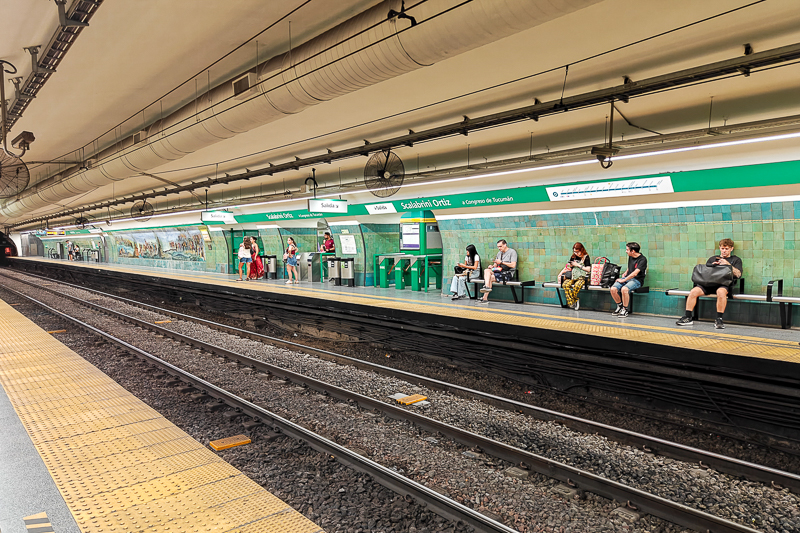
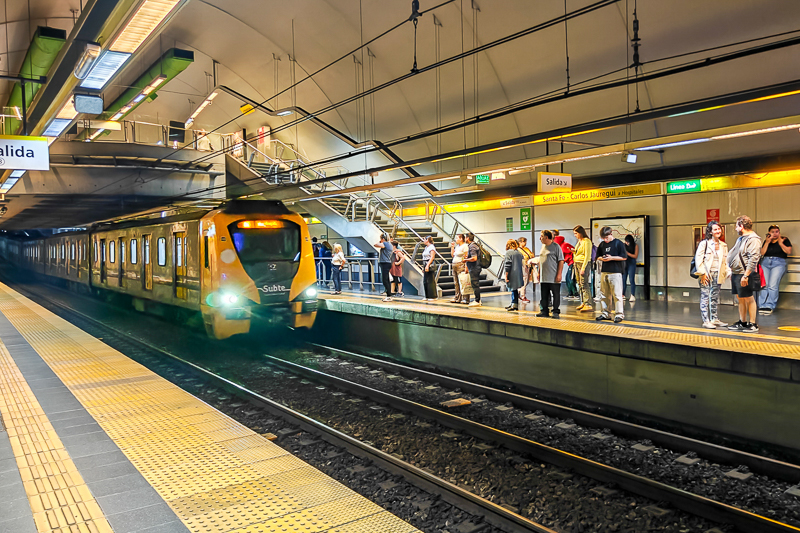
It’s really weird having someone drop something in your lap only to walk by again and pick it up a minute or two later. Standing up to ride is a good idea if you don’t want to deal with this.
As best we could determine, the only item that actually sells on the metro with any consistency is cigarette lighters.
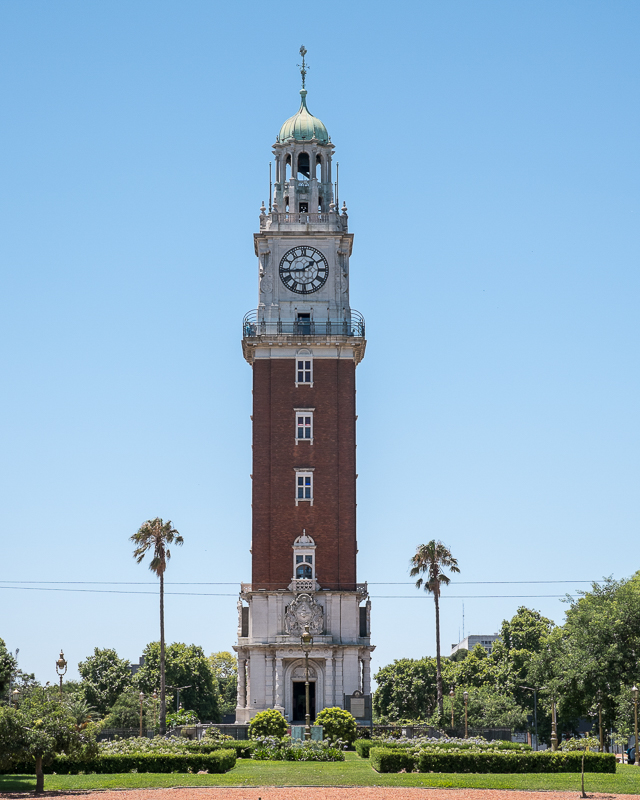
To get downtown we rode the green line metro from Scalabrini Ortiz to 9 de Julio, where we transferred to the Diagonal Norte station. By transfer we mean following a sign to the blue line and walking down an underground hallway. There we jumped on the blue line to Retiro.
At Retiro we exited the station directly across the street from Torre Monumental, the large tower. An elevator to the upper level observation deck is free on Wednesday; otherwise, it is $10,000 Ar (about $7) for a foreigner. As it was not Wednesday, and the views did not appear to be that great, we skipped the observation deck.
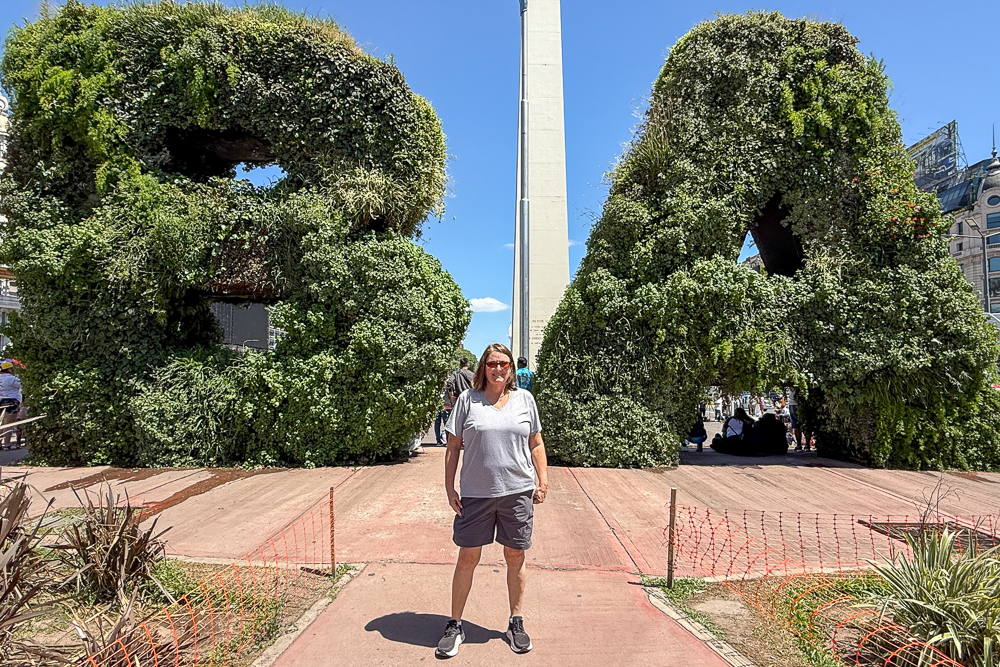
Across the street is Plaza General San Martin, a very nice and shady park, with a large playground, dog park, and many benches. At one end is a War Memorial dedicated to soldiers who died in the Falklands War. From the park we walked south on San Martín until reaching a pedestrian district at Lavalle, where we took a right turn to head west towards the obelisk and BA sign.
Walking around downtown was a culture shock of its own. Palermo has a very European influence and feel. Downtown, however, seemed like Cincinnati, Nashville, or any other reasonably large city in the United States. Nice, but nothing special or different. So while Buenos Aires has some of the best and most interesting suburbs that we’ve ever visited, with tons of trees and green spaces, it has perhaps the least interesting central downtown area.
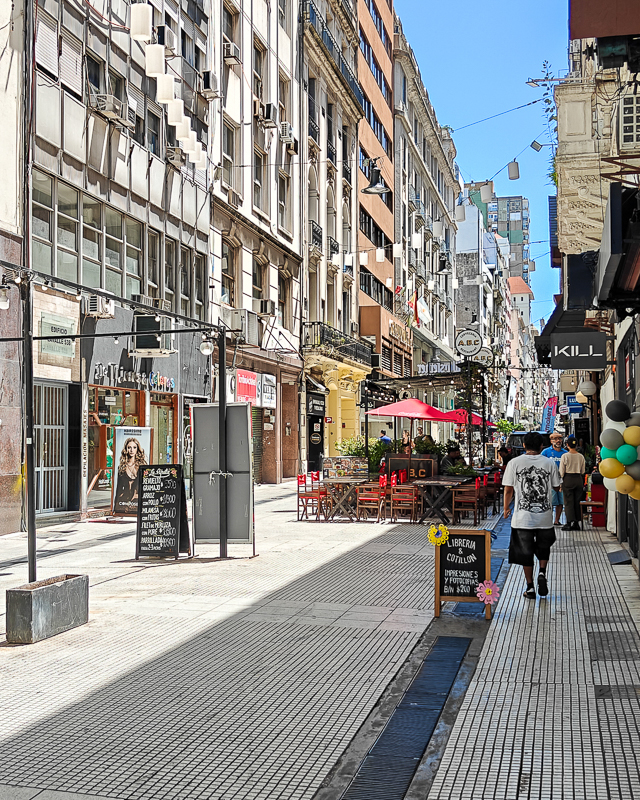
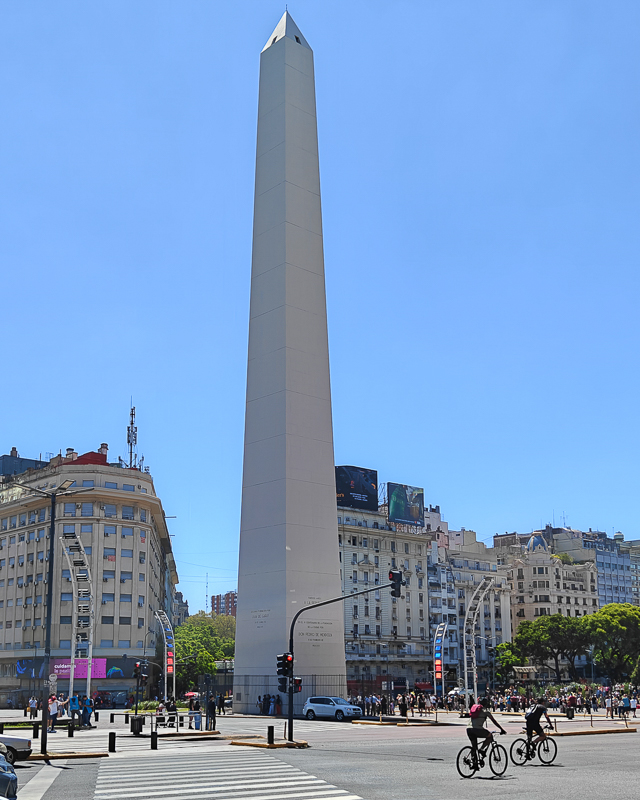
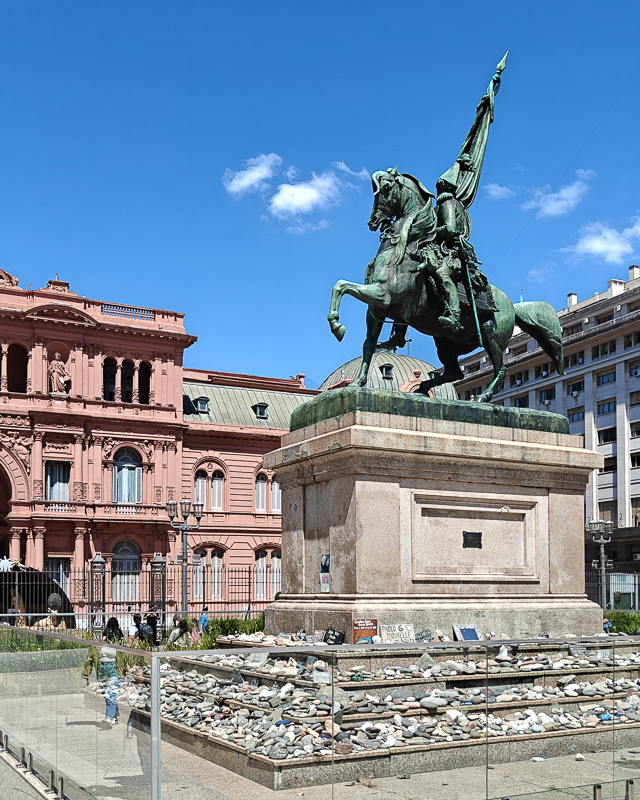
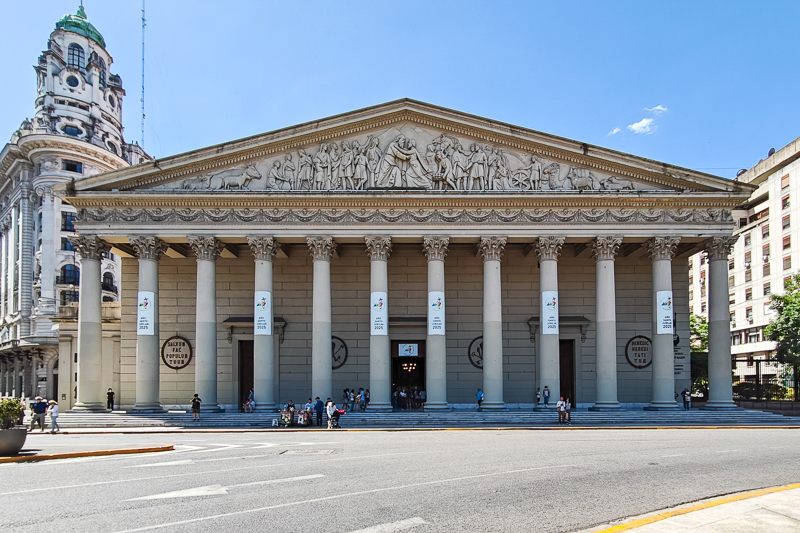
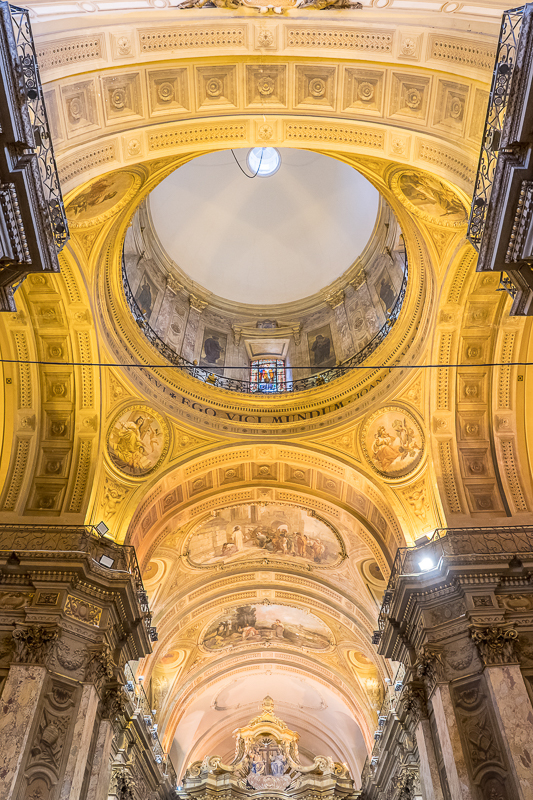
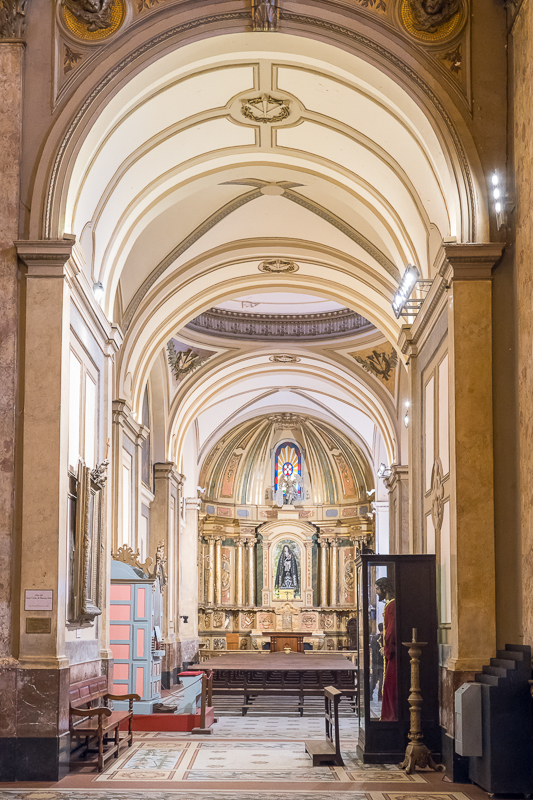
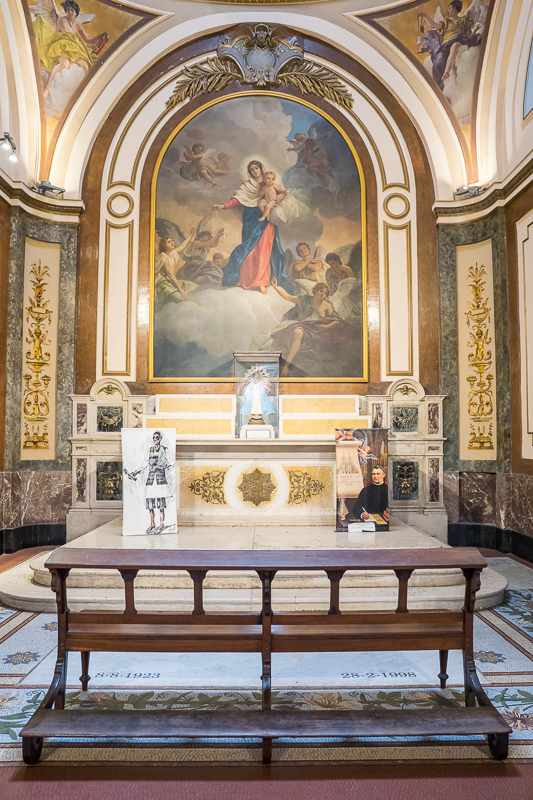
After obligatory photographs at the BA sign, we made the short walk to Plaza de Mayo and Catedral Metropolitana. The cathedral has an unusual front entry. Google Maps said it was the cathedral, but we were a bit uncertain until actually reaching the front door.
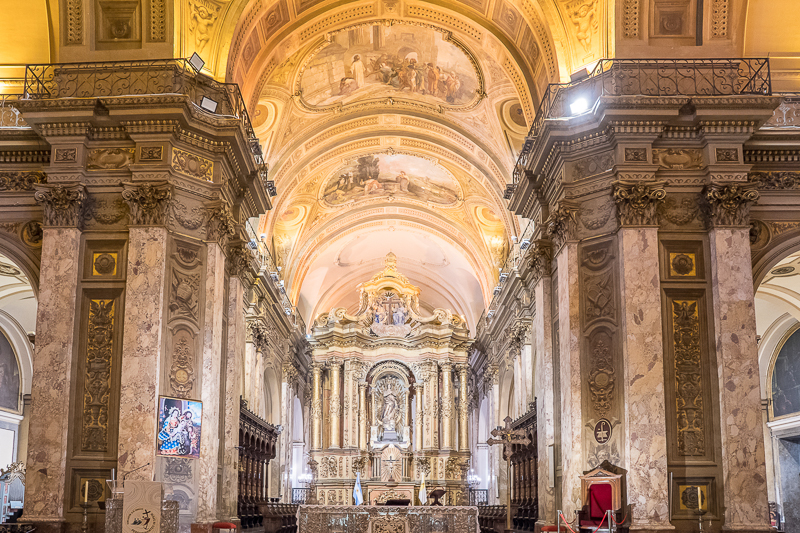
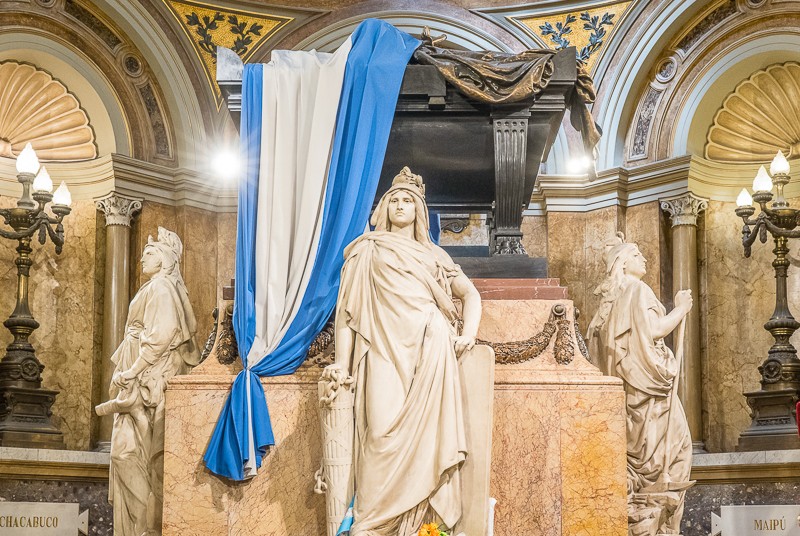
We walked in not realizing that a group of marching guards was not far behind us. They arrived for the changing of the guard ceremony at the Mausoleum of General José de San Martin (who liberated Argentina from Chile), which is in the cathedral. The barking of orders and clacking of boots immediately caught everyone’s attention. We might have been the only ones in the cathedral that did not rush over to watch the ceremony. Instead, it was our opportunity to walk around the rest of the cathedral in relative peace.
On the return trip to our Airbnb we ducked into a BBVA bank to use the ATM. The good news is that BBVA has a $60,000 Ar limit, which is fairly high for the area. The bad news is that the ATM comes with a fee of $14,950 Ar per withdrawal. Basically we were paying a $10 ATM fee to withdraw about $45 in cash. Ouch.
This is where our new Schwab checking account debit card came in handy. This account is incredibly popular among travelers because Schwab reimburses ATM fees, even overseas. Even ridiculous $10 ATM fees overseas. While we don’t want to incur ATM fees of this magnitude, even if reimbursed, there are few options to get cash in Argentina.
Other options included opening an account at Western Union and wiring money to yourself for pick up at one of the numerous Western Union offices, or changing a crisp new $100 bill with a money changer (at about a 4% fee). We did not try either of these latter two options during our visit. Cash on hand is not really necessary as credit cards are widely accepted. We found that having $30,000 Ar (about $20) available is sufficient in Buenos Aires. FN 1.
Garrett and Stephanie
1. Per recent economic reforms in Argentina, at the time of our visit the discrepancy between the official exchange rate and blue dollar (private) exchange rate was basically eliminated. The rates were within about 1% of each other.
If you have not already done so, read our other posts about Buenos Aires:
Buenos Aires, Argentina (January, 2026, Part I). Flipping hemispheres; walking through the Ecoparque and Jardín Botánico.
Buenos Aires, Argentina (January, 2026, Part III). Tour groups at Recoleta Cemetery; horse racing at Hipódromo Argentino de Palermo.
Buenos Aires, Argentina (January, 2026, Part IV). The good and the bad: Museo Nacional de Bellas Artes; mate tasting.
For additional posts about Argentina, or elsewhere in the world, check out our Travel Blog. It contains collected links to all of our travel posts.
Want to subscribe (or unsubscribe) for email notification of new blog posts? It is only two to three emails a month. Send your name and email address to slowtravelchronicles@gmail.com, and note subscribe (or unsubscribe) in the subject line. All email addresses will be kept confidential and not sold to any third-party. You won’t get any marketing junk or sales pitches from us.