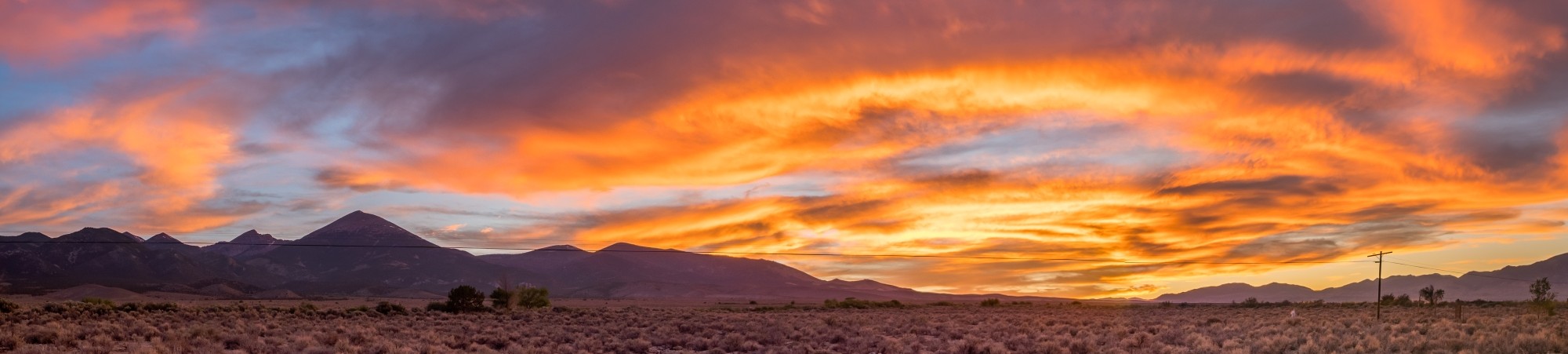
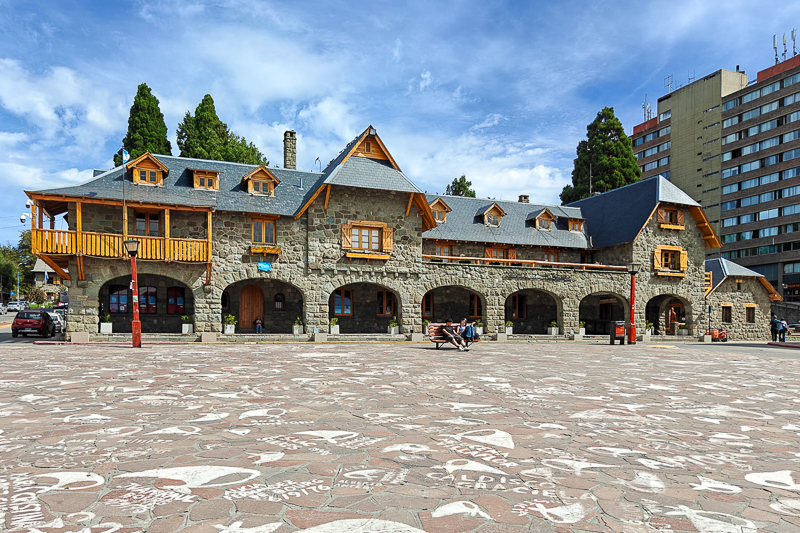
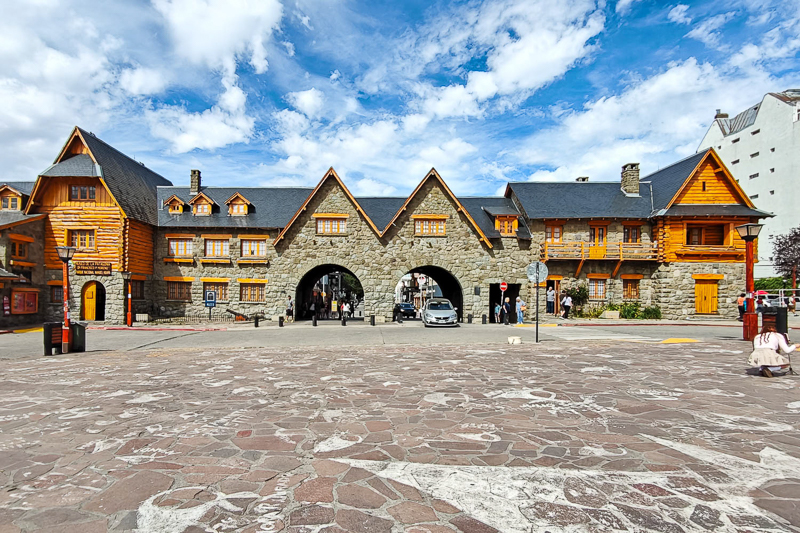
San Carlos de Bariloche (“Bariloche”) was settled by European immigrants and nicknamed “Little Switzerland”. This is pretty evident today as many buildings have a Swiss style design. If that is not obvious enough, then the zillion chocolate shops ought to be. We’ve never seen so many places selling chocolate in our lives.
For us the city felt like a cross between Lake Tahoe (large lake, mountains, tourists) and the Epcot World Showcase (a few places trying to be quaint Swiss).
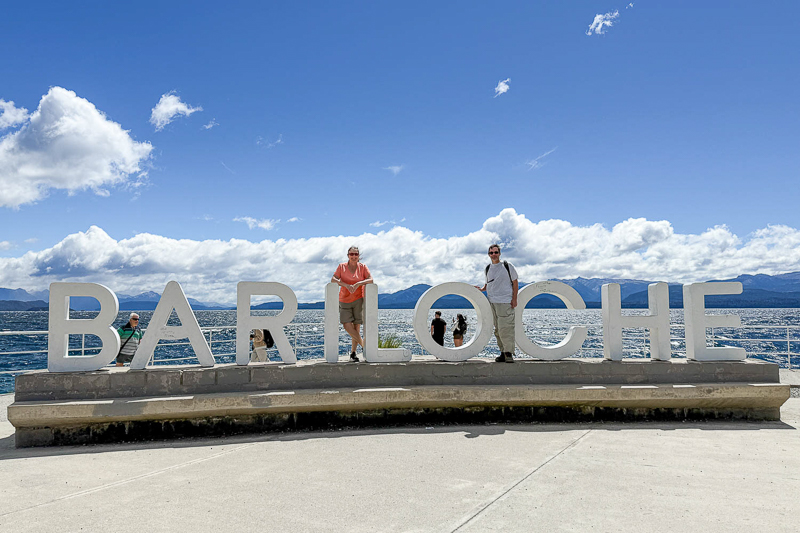
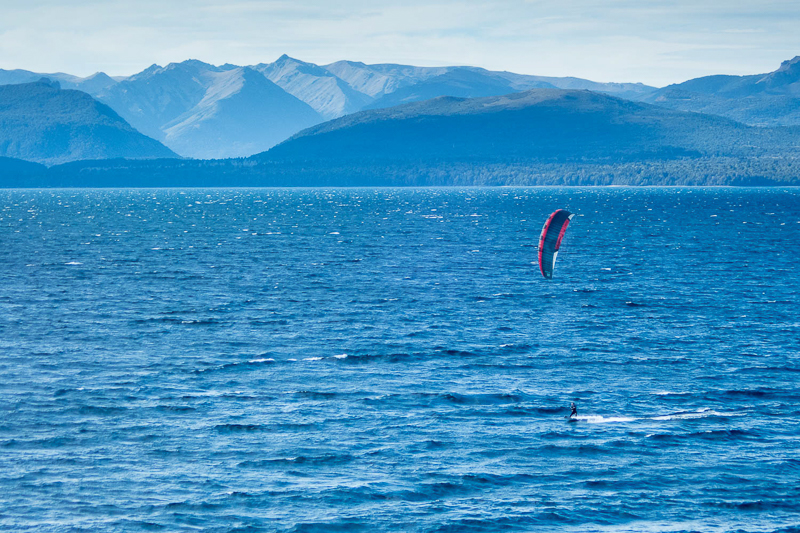
In 2012 Bariloche was designated as the National Capital of Adventure Tourism in Argentina. Hiking, rafting, fishing, biking, and kite-surfing are very popular in the summer months. Just outside the city Cerro Catedral (Cathedral Mountain) hosts the largest ski resort in South America.
After settling in our Airbnb, just a few blocks from center of town, we began researching grocery stores. Thank God there was a good sized La Anónima a few blocks away. Stephanie deemed it just good enough that we did not have to catch a ride out to Carrefour. We’re only here a week. I didn’t want to waste a day walking to every grocery store in a thirty minute radius as we would normally do for a longer stay.
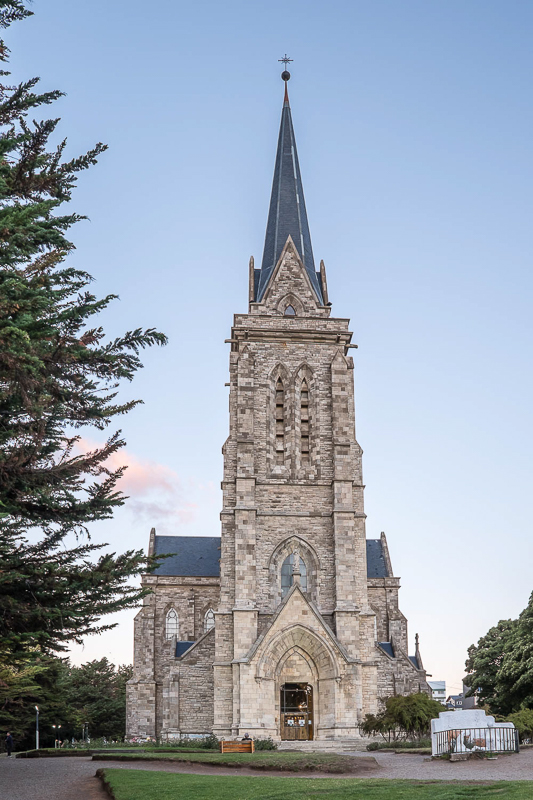
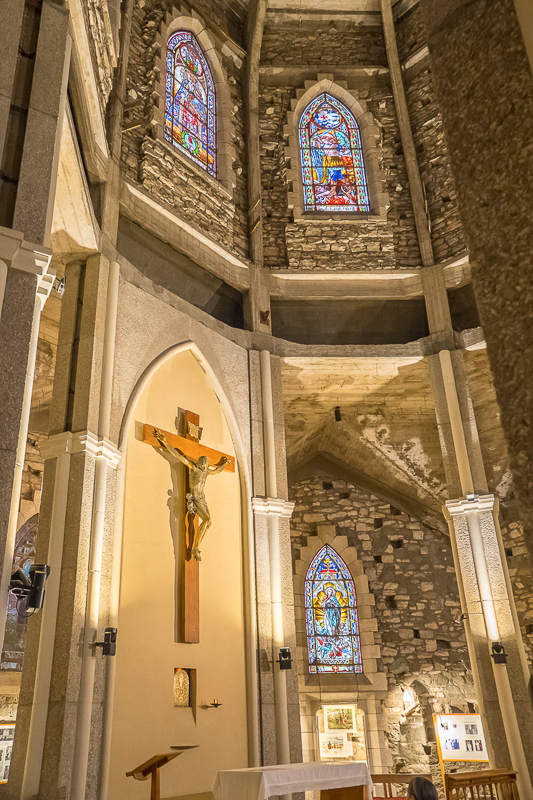
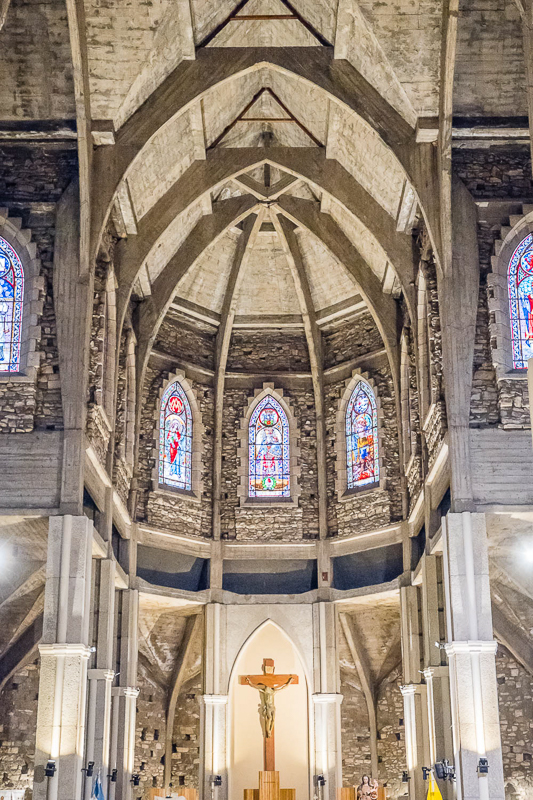
The town itself is mostly outdoor gear stores, tourist stores, chocolate stores, and restaurants. There really is not much to see in town. The only place in town that we visited, other than the lake front, was the cathedral.
Bariloche’s best places are most easily accessed by car. The local bus will do in a pinch, but is not ideal. Luckily we had friends in town with a car, so we were able to get out and about without having to figure out the bus system.
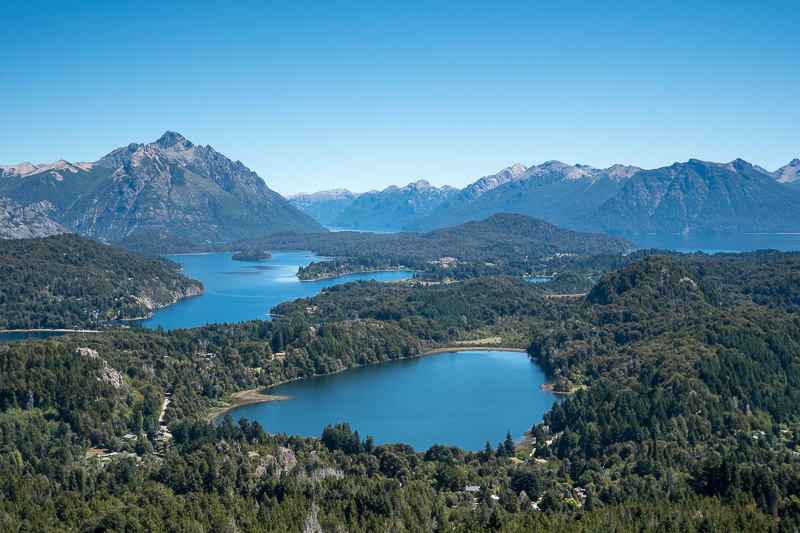
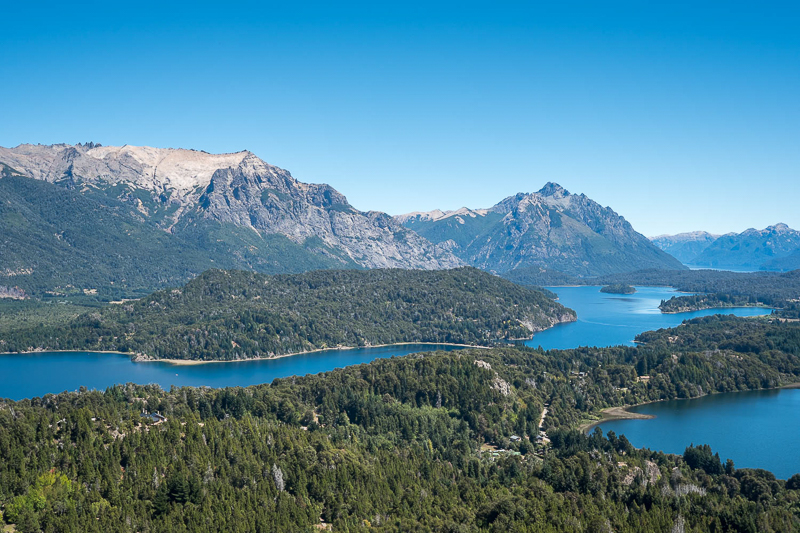
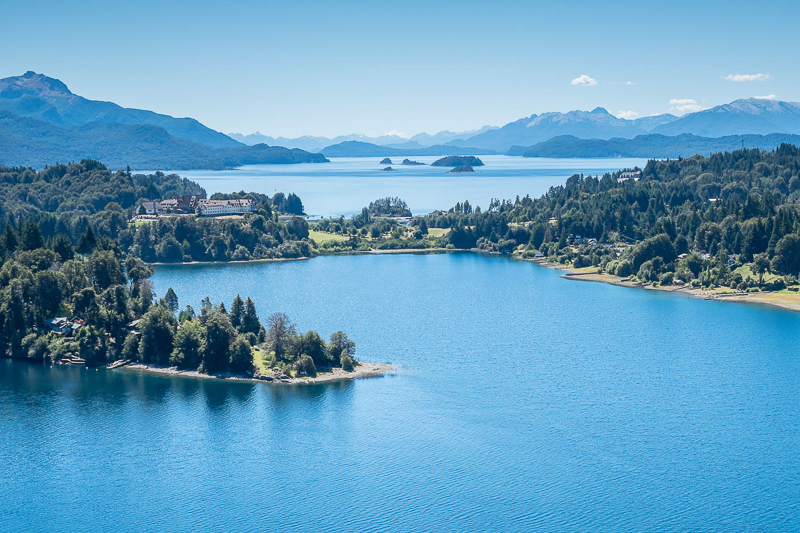
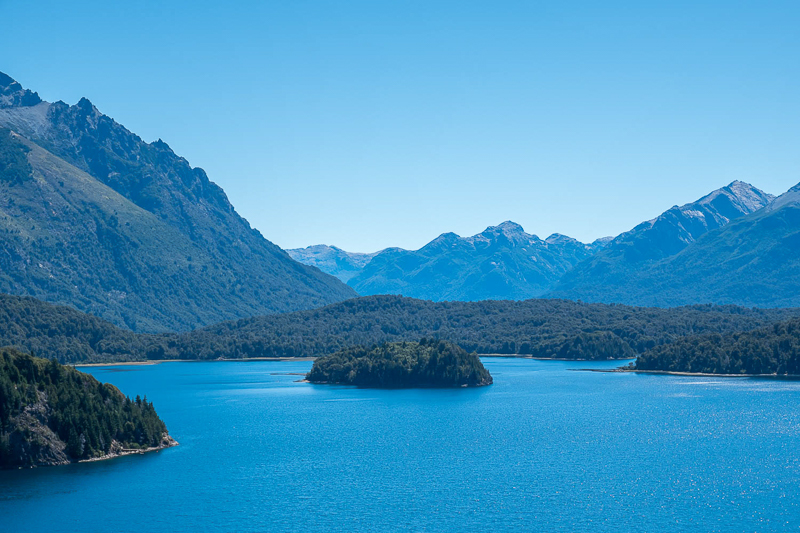
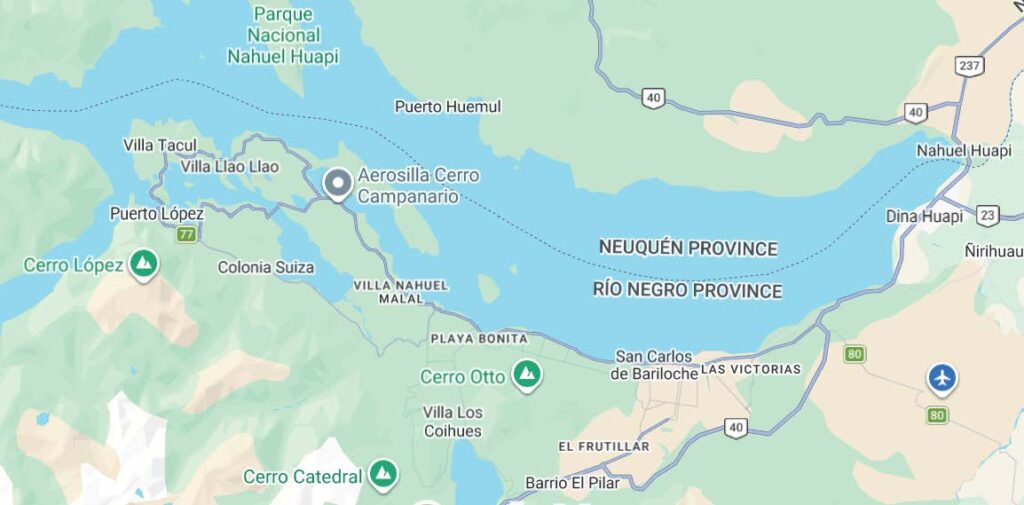
On our first outing we drove the Circuito Chico (the “small circuit”), a 17 mile (27 kilometer) loop just west of town that goes around Lago Perito Moreno (Lake Perito Moreno) and past Lago Nahuel Huapi (Lake Nahuel Huapi). Along the circuit are several lookouts, short hiking trails (of a few miles), a chairlift, several breweries, and a few cafés. It’s a popular route to drive or bike.
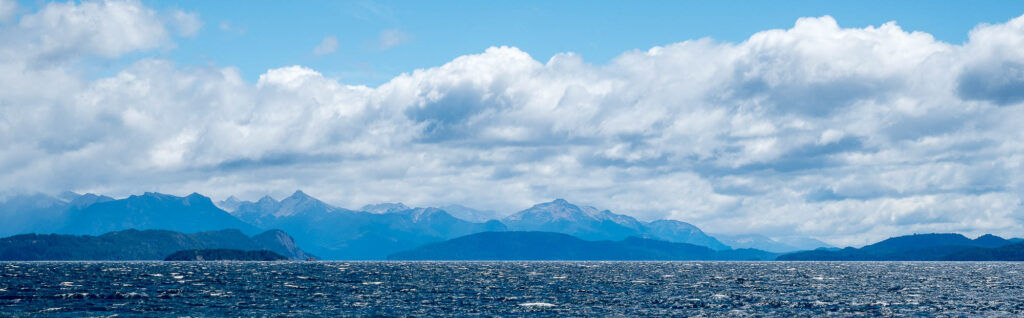
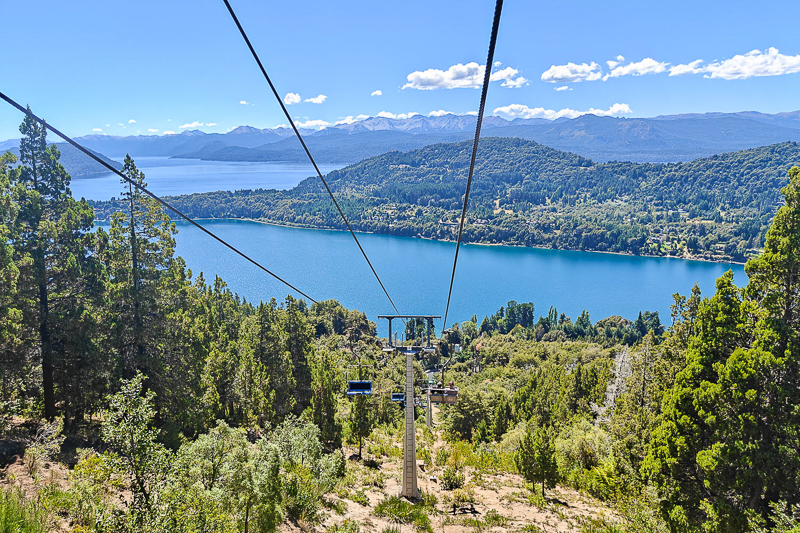
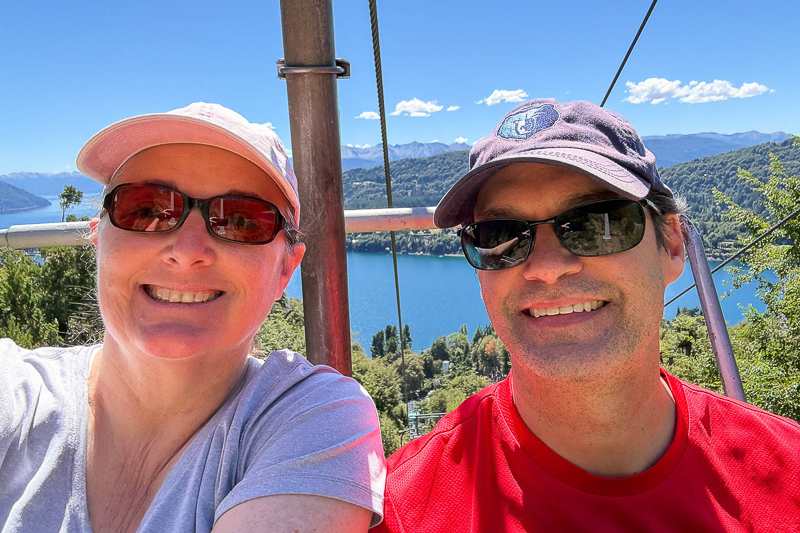
We spent a couple of hours driving this route and seeing the sights on a Sunday afternoon. It was a bit more crowded that I would have liked, but not too bad. Our trip started at Aerosilla Cerro Campanario, a chairlift. A roundtrip ride to the top of the mountain costs $22,000 Ar (about $15) per person. The views from the top are spectacular and worth the trip.
After a stop at the Punto Panorámico overlook, we detoured to Colonia Suiza, a tiny town that is now nothing more than a tourist stop. It’s a decent place to stop for lunch if you are in the area, but otherwise not worth a visit. It is like a giant crafts fair with horrific traffic.
We continued driving the loop clockwise, stopping at several miradors for the views. Because of the heat (near 90° F, or 32° C) we skipped the hikes.
Out of respect for the driver we also bypassed the breweries. With few exceptions, there is zero tolerance for driving after consuming alcohol in Argentina. Zero. There are checkpoints in the area set up where every driver must pass a breathalyzer – 0.0 – in order to continue.
Two days later we drove the Circuito Grande (the “large circuit”), also known as the Camino de los Siete Lagos or the Ruta Escencia de los Siete Lagos, the route of the seven lakes. Actually we rode in the back seat; our friends drove. Basically it’s a scenic drive among numerous lakes between Villa La Angostura and San Martín de los Andes.
Drive. Stop to look at a lake and mountains. Drive. Stop. Repeat. Over and over. It was a long day, almost 12 hours exactly. We left our place at 8:30 A.M. returning a little over 12 hours later.
We made our first stop an hour and a half after leaving, at Villa La Angostura. There we did a quick walk around town with a detour to the gas station to buy drinks and snacks, and use the restroom.
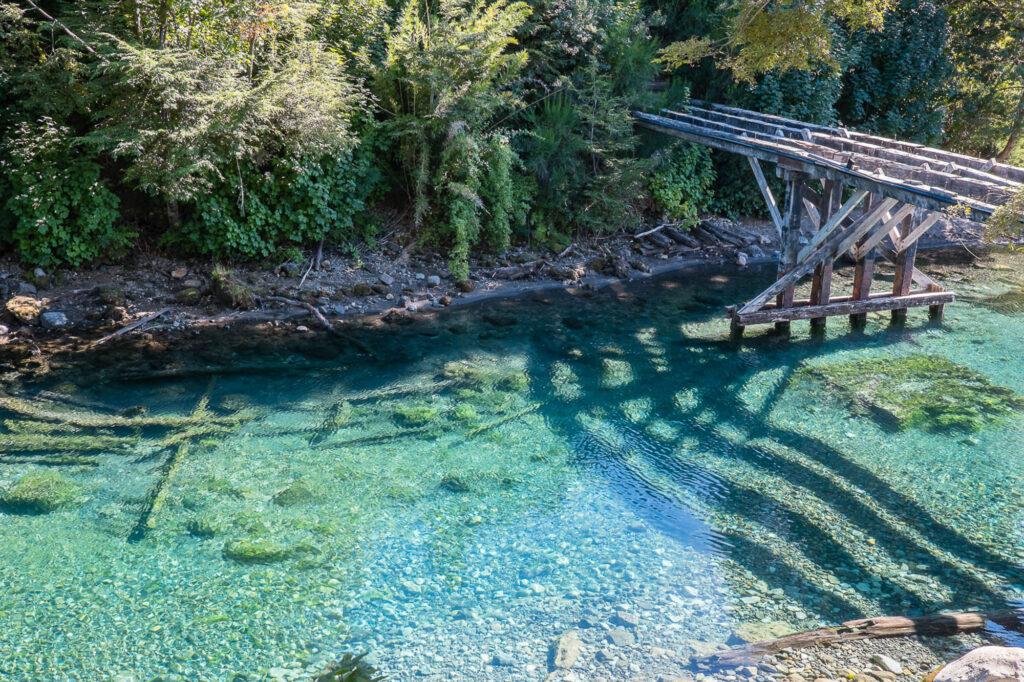
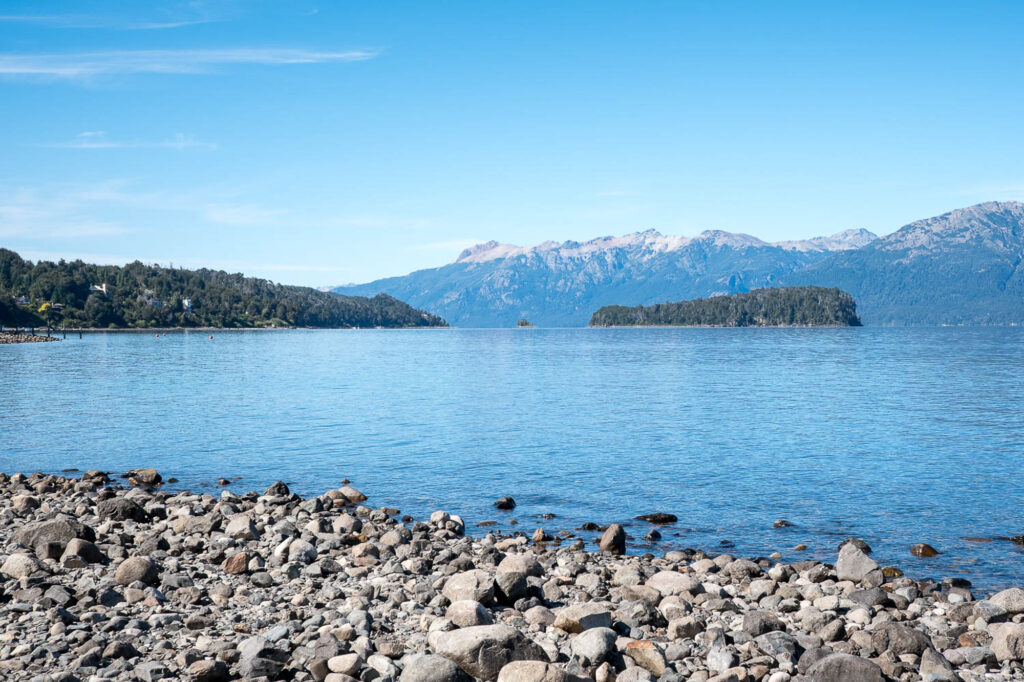
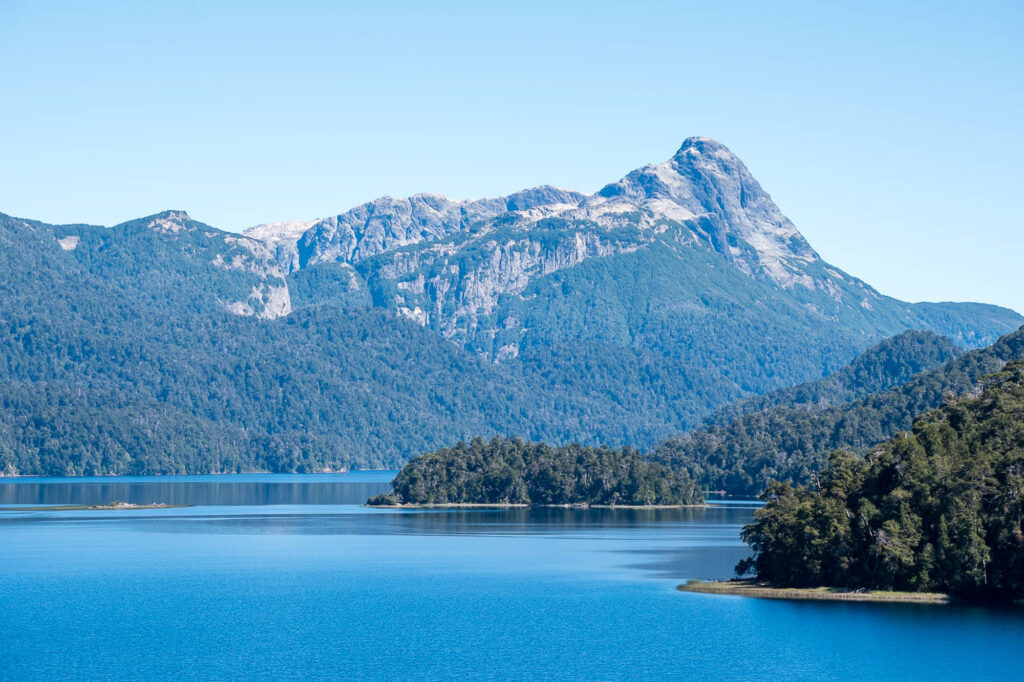
Just up the road was our first real stop on the journey at Rio Correntoso, a short river between Lago Correntoso and Lago Nahuel Huapi. This turned out to be our favorite stop on the entire trip.
Much of the drive is in Parque Nacional Nahuel Huapi, though you do not need a park pass while on the driving circuit.
We continued north along Highway 40, making a short detour onto Highway 231 for a stop at Mirador Lago Espejo. After returning to Highway 40 we continued a short distance before reaching a second Mirador Lago Espejo, followed not long after by Mirador Lago Correntoso.
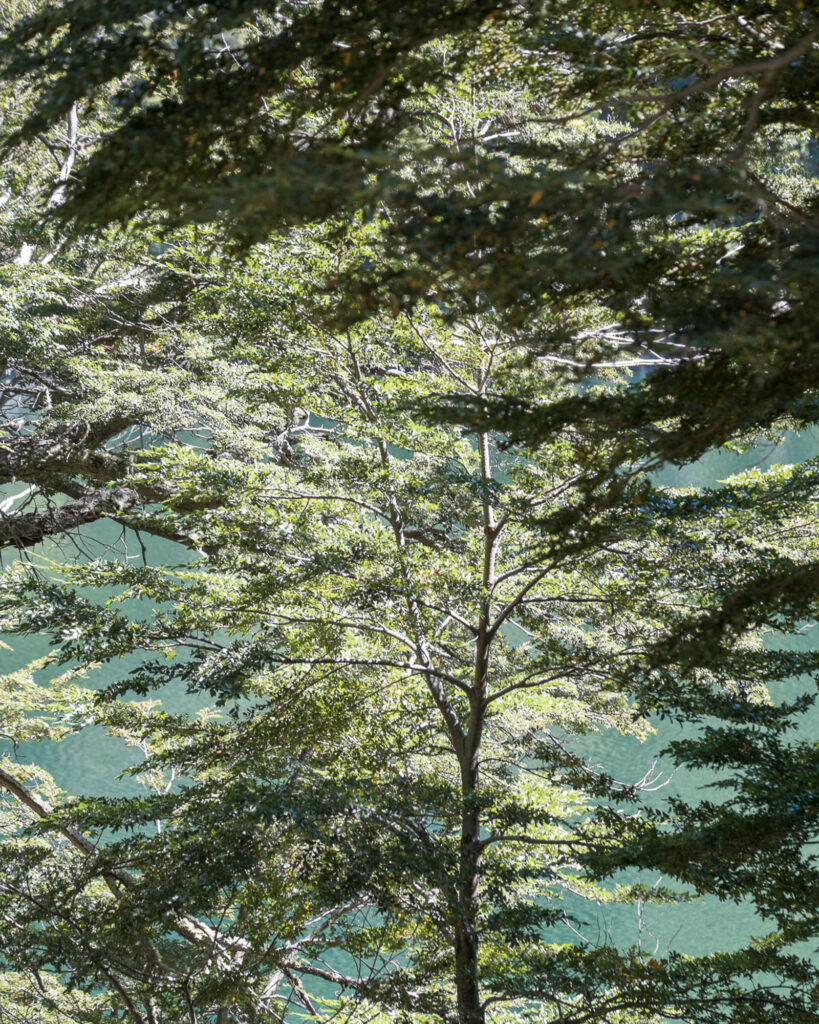
A slightly longer distance away is the hidden lake, at Mirador Lago Escondido, which basically means the trees between the overlook and lake were never cleared.
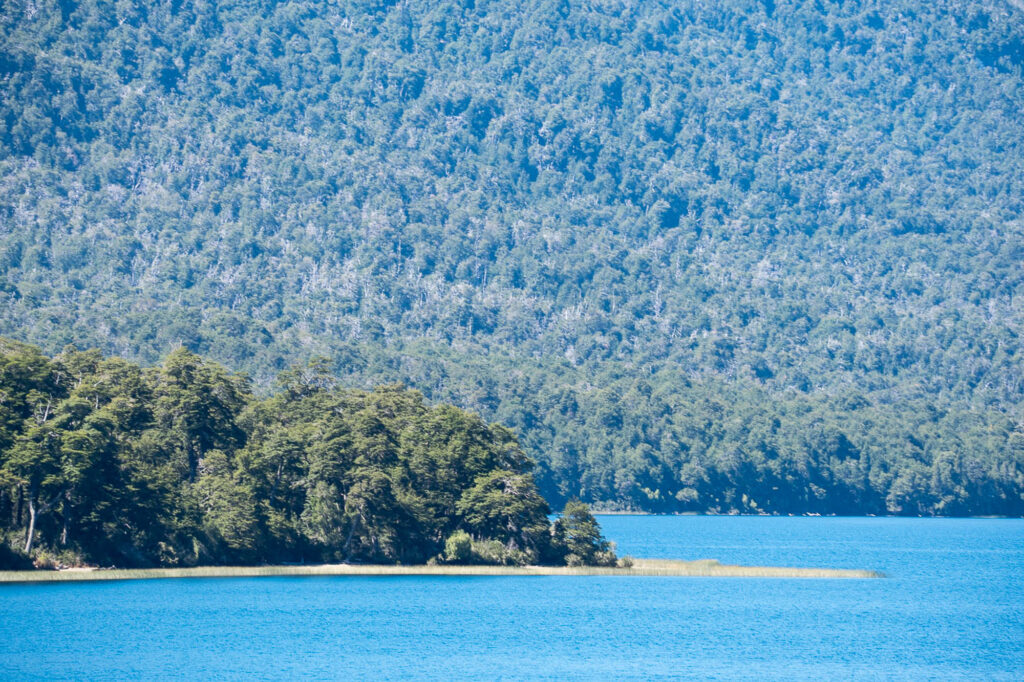
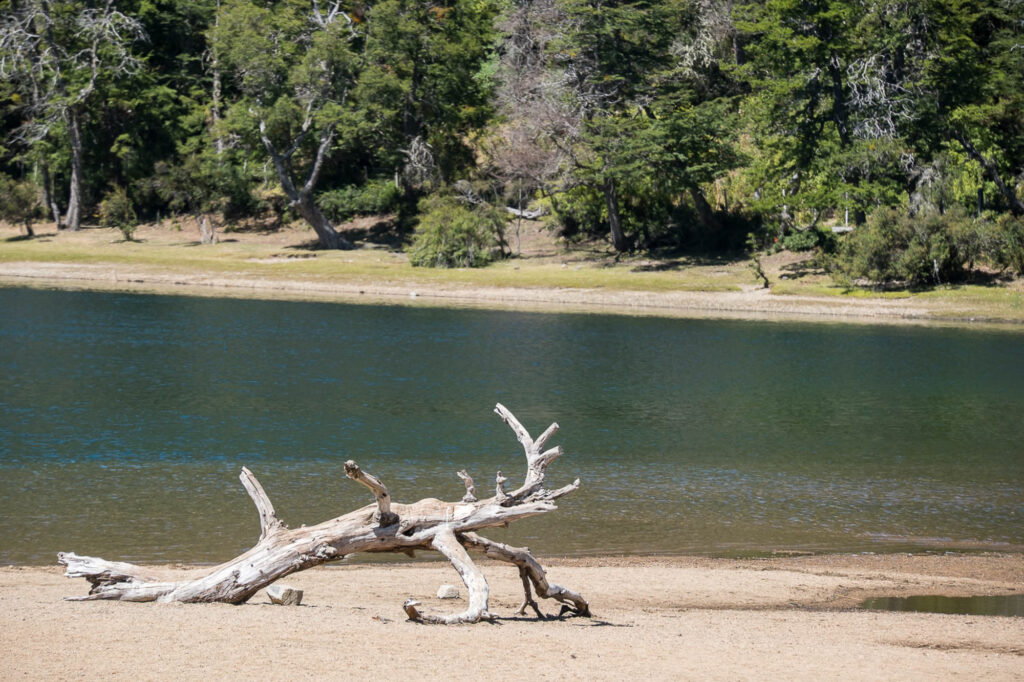
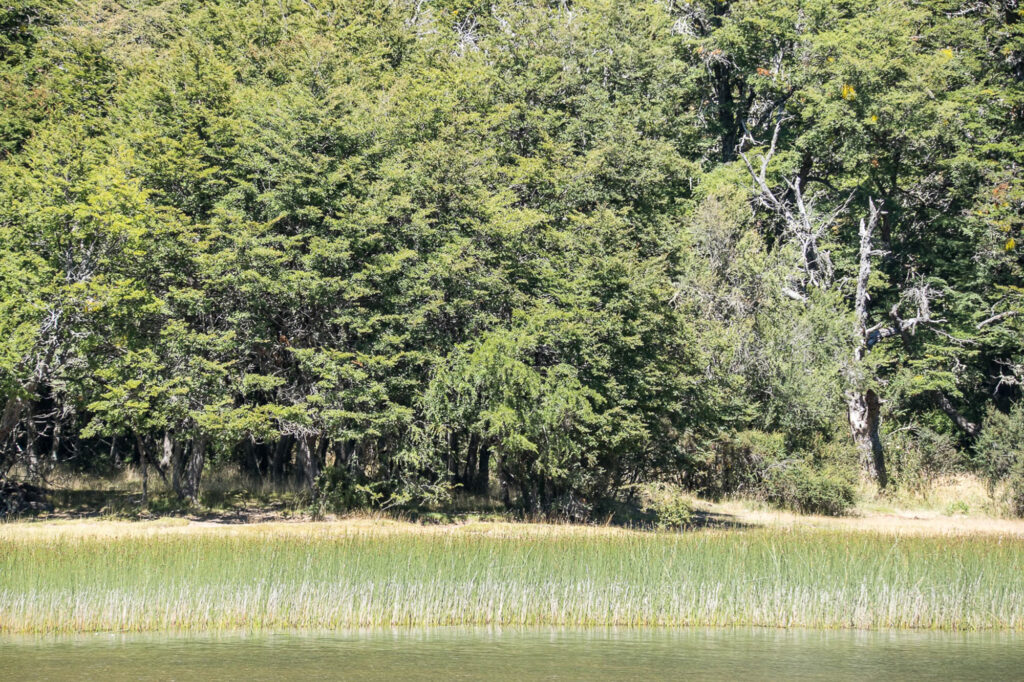
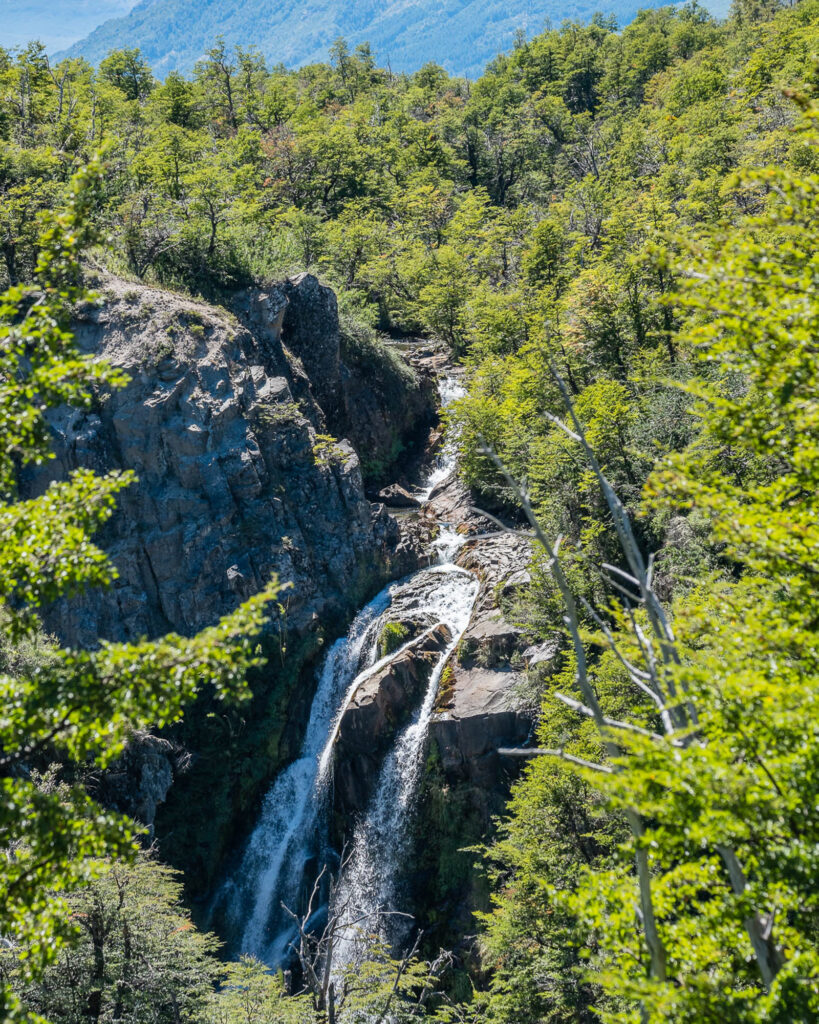
From there we continued the route on Highway 40 north reaching Mirador Cascada Vuliñanco, the waterfall. It’s nice, but a good distance away from the overlook. After driving past Lago Villarino, we next stopped at Mirador Lago Falkner. This lake has, by far, the best and easiest beach access with the nicest sand in the area. It would make a great place for an extended stop with a picnic.
An hour later, after a quick stop at Mirador Lago Machónico, we pulled into San Martín de los Andes a bit after 2:00 P.M. It’s a much smaller city than Bariloche, and not quite as touristy.
Finding a parking spot on the street was not a problem. Paying for parking, however, was. The parking attendant was nowhere to be found and the parking app was not working. We weren’t parked for more than ten minutes before the parking attendant showed up and ticketed the car.
I’m not sure what was more aggravating – getting a $50,000 Ar parking ticket (about $35 USD) while trying to pay for parking or dealing with employees that did not care and would not listen to a reasonable explanation. In the end the parking company accepted $25,000 Ar as payment in full for the ticket. Still aggravating, but at least more reasonable.
During the haggling we found out that the city will not ticket the same car twice in a day. Basically we paid for an expensive all day parking pass. Too bad we weren’t staying in San Martín de los Andes longer.
After a so-so lunch at By the Way Patagonian Burgers, we walked over to a convenience store to buy cokes and snacks for the return drive to Bariloche.
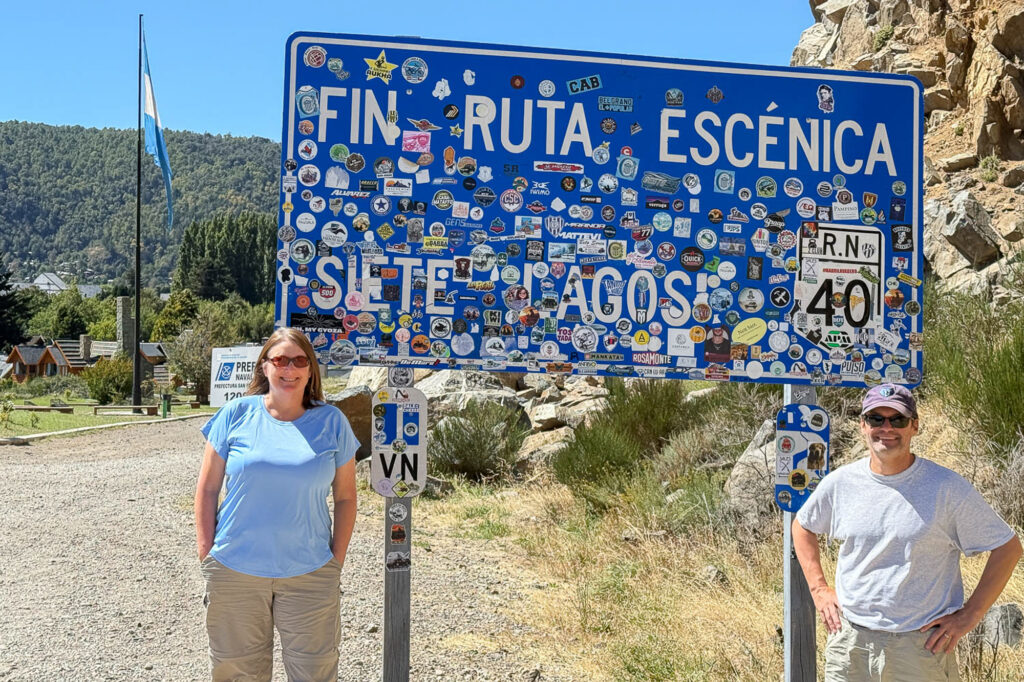
Heading south on Highway 40 we only stopped twice, with both stops being just as we left San Martín de los Andes, at the End of Route Sign and at Valle del Arroyo Pil Pil. Proceeding farther south, we made a left turn onto Route 65, the road to Villa Traful on Lago Traful.
Route 65 is a disaster. Between Highway 40 and Villa Traful, the road alternates between gravel, graded dirt, and actual pavement. There is no rhyme or reason as to the different road sections. One minute you are on dirt, the next pavement. Then dirt again, rocks, pavement, and so forth.
Judging by the construction equipment and workers, it appears that this section of the road just might be being paved in its entirety.
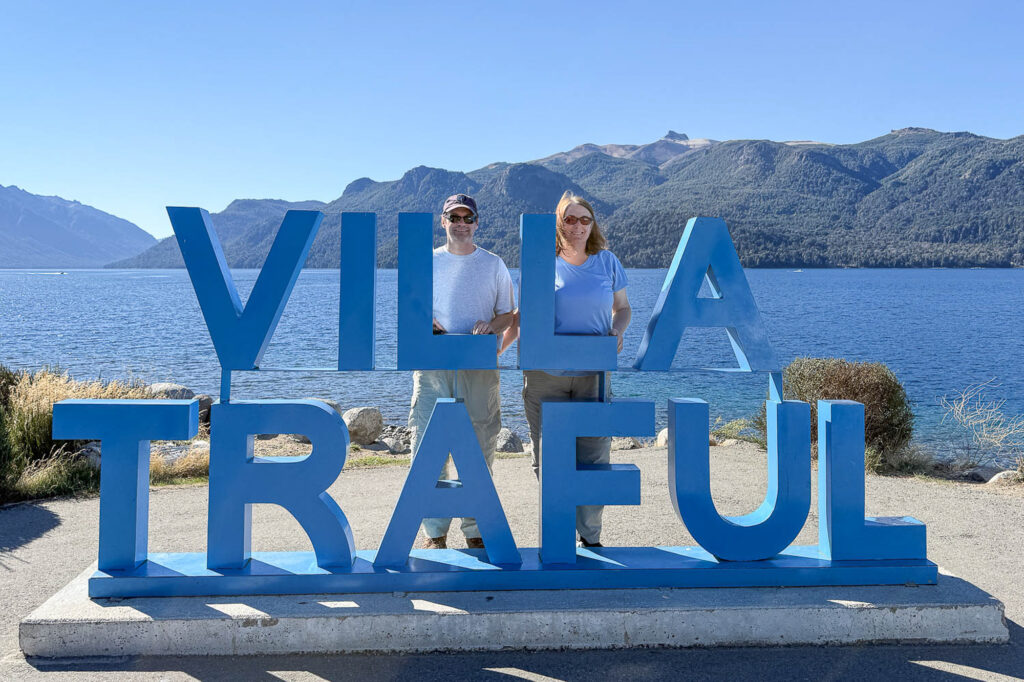
We stopped to see Lago Traful at the obligatory Villa Traful sign. Villa Traful is basically a collection of summer camps with a convenience store. It’s probably a nice place if you want to spend a few days on the lake, but that’s about it.
The long and rough drive on Route 65 from Highway 40 into Villa Traful was a piece of cake compared to the drive east leaving Villa Traful heading towards Highway 237. It’s nothing but washboard gravel for 20 miles (33 kilometers). The bouncing was so severe that Stephanie got a headache. Granted, the views were pretty nice, but not worth the drive.
In hindsight it would have been better to skip Lago Traful.
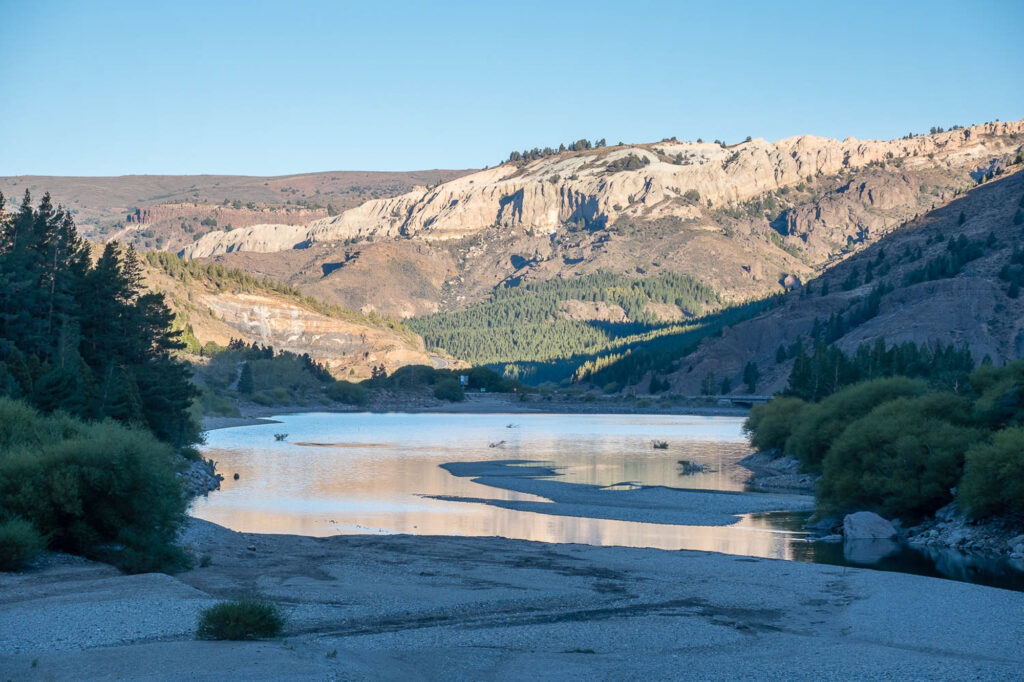
Our last stop on the journey was at Playa Confluencia where Rio Traful and Rio Lamay joined. From there it is an easy drive south on a very nicely paved Highway 237 back to Bariloche.
Actually the last stop was at the checkpoint at the border between the Neuquén Province and Río Negro Province. Expect a breathalyzer, so you driver better not have been drinking.
Unfortunately, without renting a car of our own, or desiring a really long bus ride (over two hours each way), we missed some great hiking at Pampa Linda in Parque Nacionales Nahuel Huapi. Maybe next time.
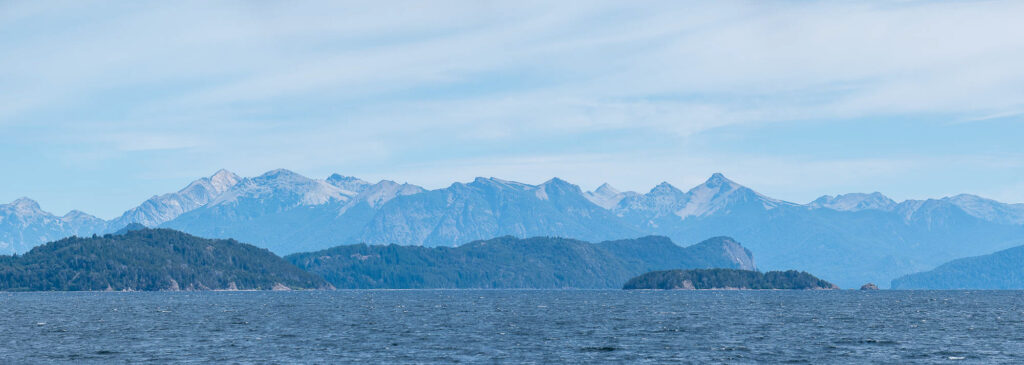
We have plenty of hiking coming up in the near future.
Garrett and Stephanie
A more detailed guide of the stops on the Route of the Seven Lakes can be found here.
For additional posts about Argentina, or elsewhere in the world, check out our Travel Blog. It contains collected links to all of our travel posts.
Want to subscribe (or unsubscribe) for email notification of new blog posts? It is only two to three emails a month. Send your name and email address to slowtravelchronicles@gmail.com, and note subscribe (or unsubscribe) in the subject line. All email addresses will be kept confidential and not sold to any third-party. You won’t get any marketing junk or sales pitches from us.