After the Iguazú Jungle boat ride, we were dropped off in the middle of the park, near Estación Cataratas. Not really sure where to go for lunch, we wandered over to Don Hermanas Fast Food to grab a quick bite. We got a hot dog, fries, two empanadas, and two drinks for $24,000 Ar, or about $18. Mediocre food with a mediocre price tag.
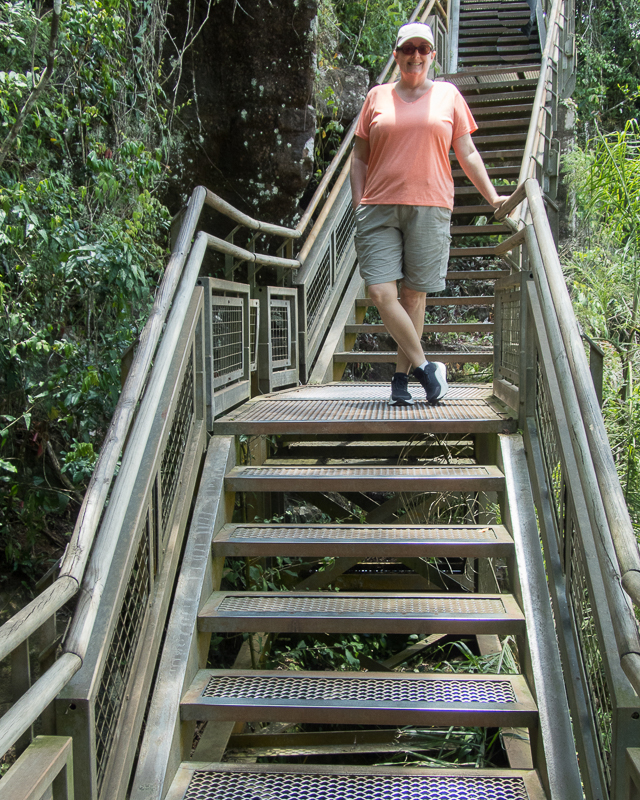
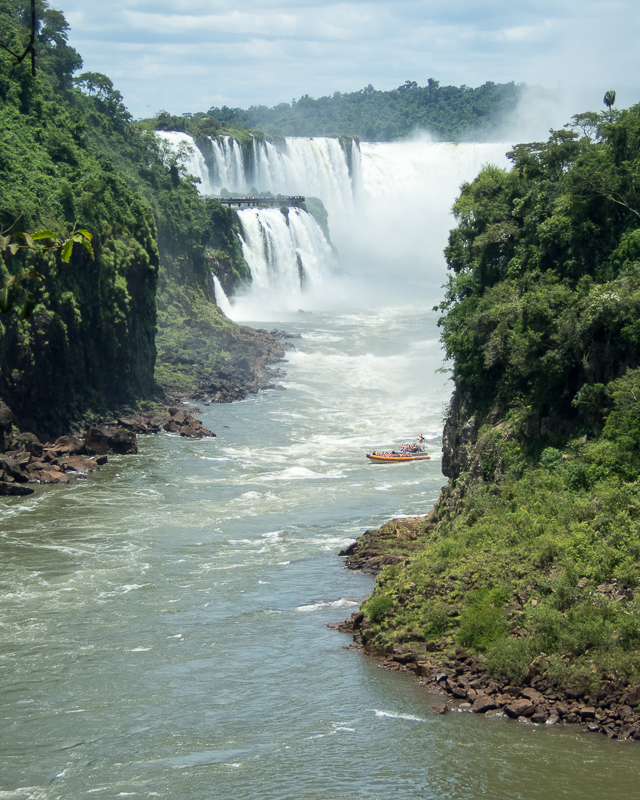
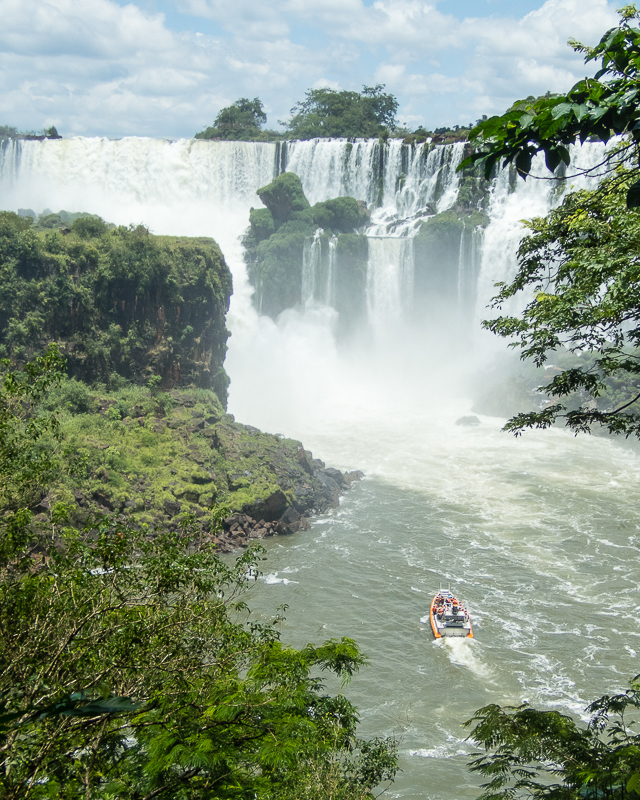
From there we strolled over to the start of the lower circuit. At 2,500 meters, or about 1.5 miles, this is the longer of the two walking circuits. It is also, by far, the least crowded. Tour groups rarely come to the lower circuit because it is not near a train station (and trains are how tour groups get around) and it has a lot of stairs (which are not for everybody).
We really enjoyed our 45 minute stroll on the lower circuit as it offers good views of the falls with relatively few other visitors.
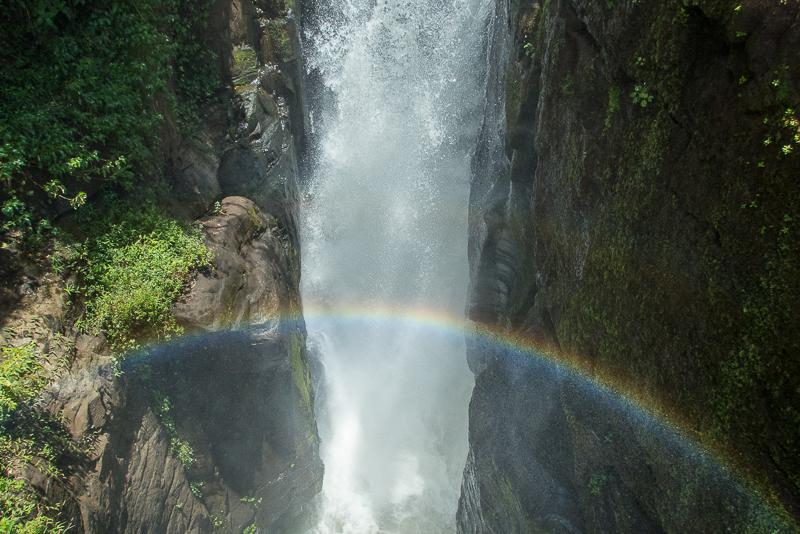
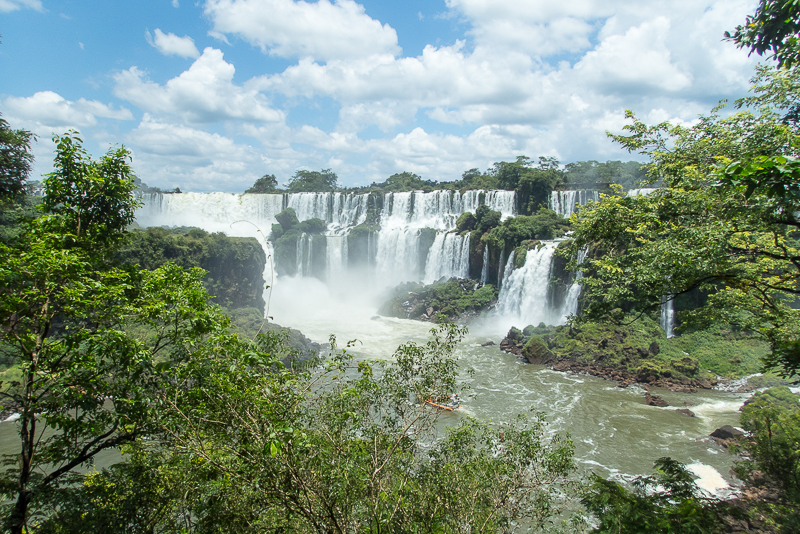
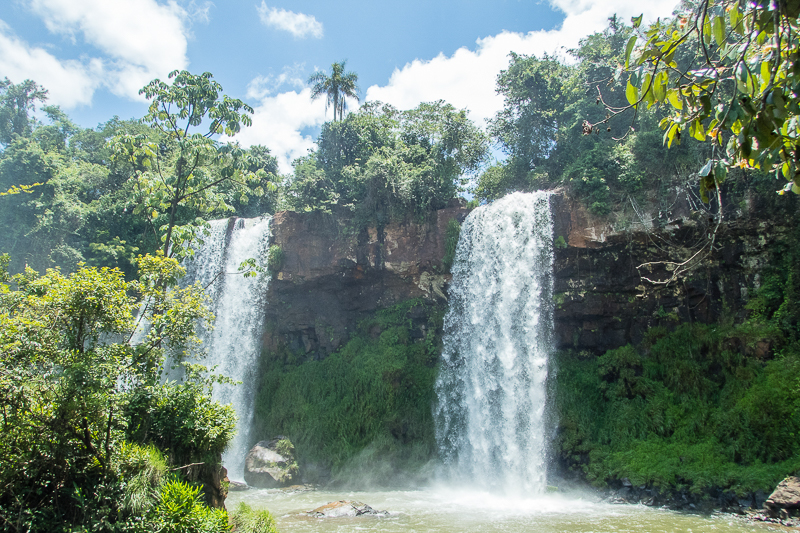
After completing the lower circuit we debated whether to continue exploring Iguazú Falls or leave and return to the park in the morning. Since our flight to Buenos Aires is not until 7:15 PM tomorrow night, we decided to call it a day at the park. At Estación Cataratas we discovered that the next train to Estación Central was not for 30 minutes. Rather than waiting for the train, we walked to the park’s exit.
At about 2:00 PM we left the park, got straight onto a bus to the city, and were lounging poolside at the hotel by 3:00 PM.
Surprisingly the park did not seem crowded, except at Estación Cataratas. Presumably the visitors spread out far and wide as there are several places to go and see.
The next morning we repeated the process: early breakfast; buy round trip bus tickets; and, arrive at the park around 8:30 AM. Our luggage was left at the hotel for pickup later in the day. Because we took the Iguazú Jungle boat ride the day before, we really did not know how to best navigate through the park from the entrance.
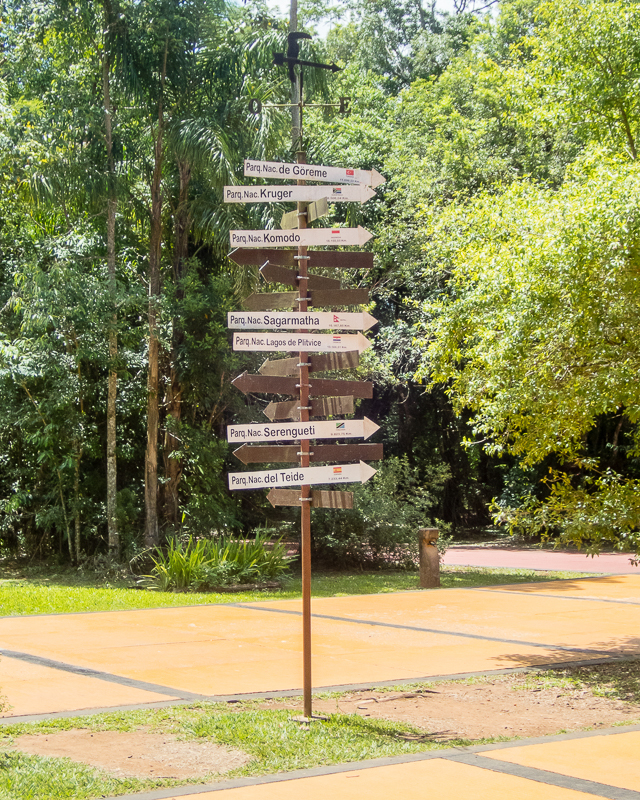
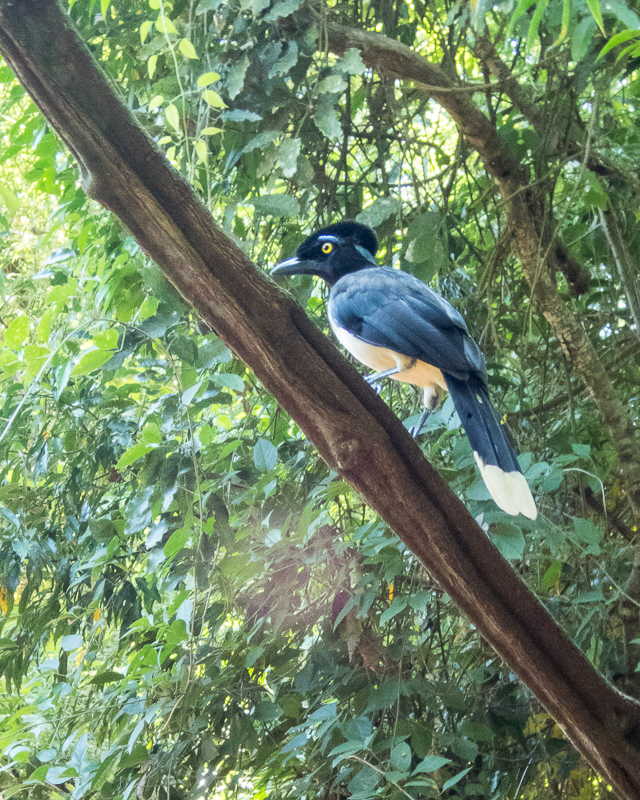
There are two ways to get to the primary areas of the park – walking or riding the train. Three train stations are in the park. The first, Estación Central, is near the entrance. It is central to absolutely nothing. Basically this station is your gateway to the interesting areas of the park, unless you choose to walk.
The second is Estación Cataratas. It is central to almost everything. From this station it is a short walk to Circuito Superior, the upper circuit walking trail, and a slightly longer walk to reach Paseo Inferior, the lower circuit walking trail.
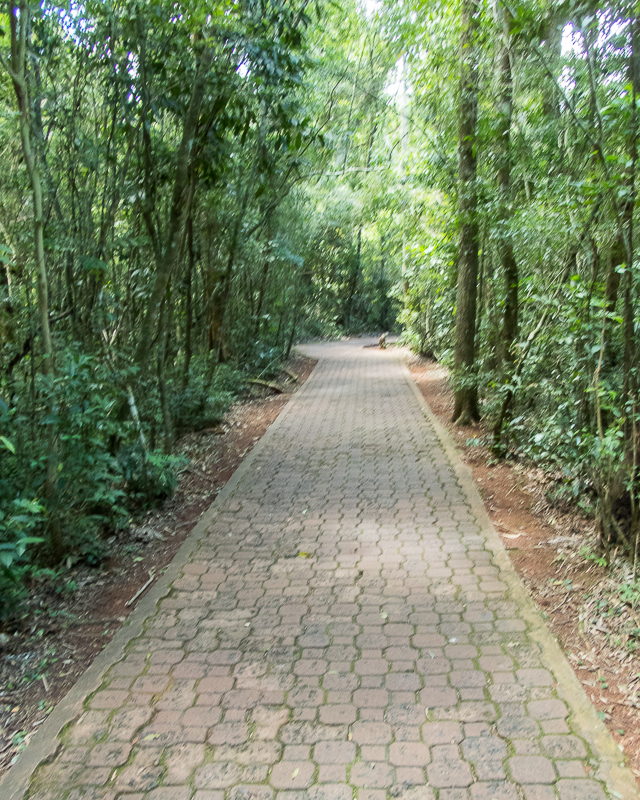
Sendero Verde, the green path, connects the park’s entrance to Estación Cataratas. The path is an easy 10 minute walk through the woods and over some wetlands. It is paved and mostly in the shade. Unless you have mobility issues or small children, you’ll want to walk this path instead of getting on the train at Estación Central.
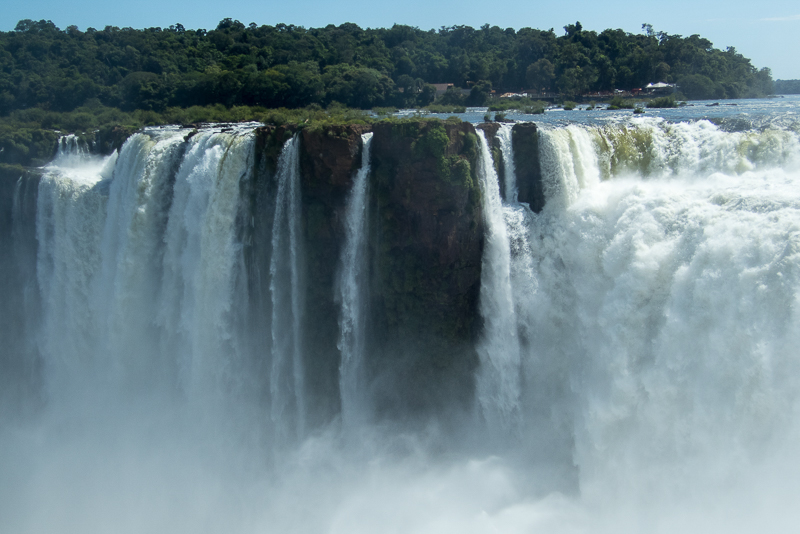
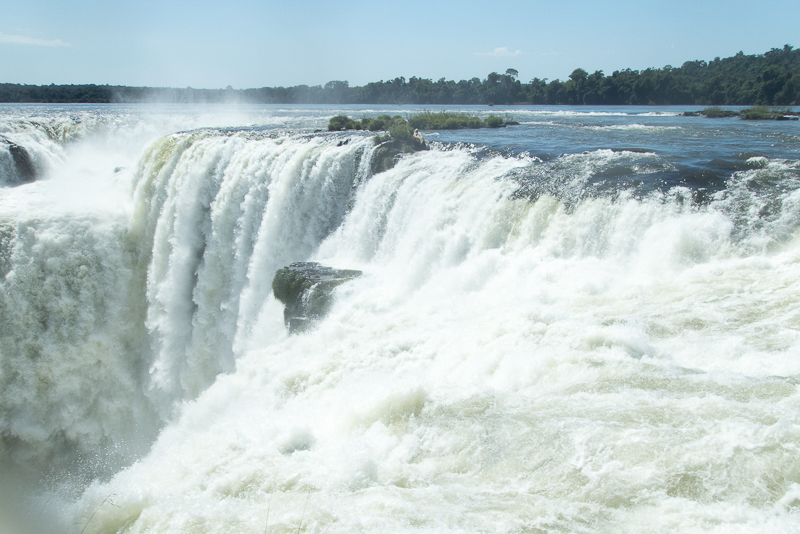
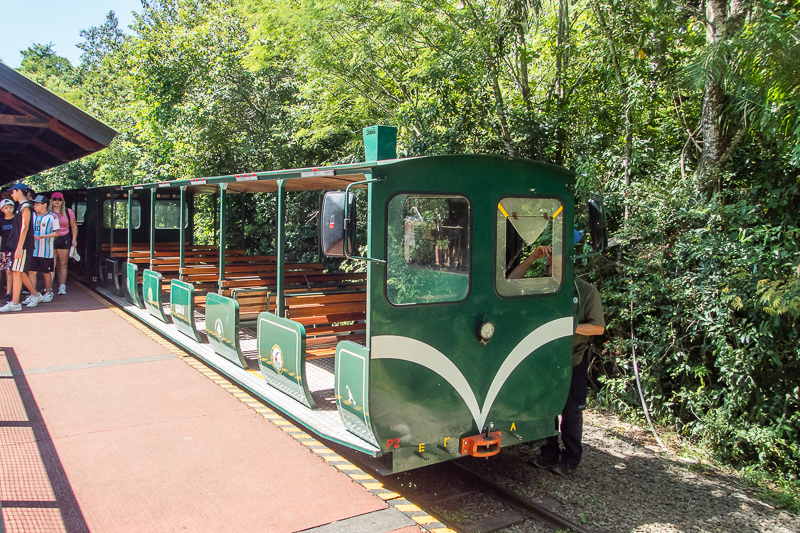
The third train station, Estación Garganta, at the rear of the park, serves as the gateway to Garganta del Diablo, the Devil’s Throat, a viewpoint directly over the tallest falls. The only reason to ever get on the train at Iguazú Falls is to go to Devil’s Throat. Otherwise, from Estación Cataratas, you’re walking about ¾ of a mile each way on a hot, dirt trail that parallels the train tracks just to reach the Devil’s Throat boardwalk. Not fun.
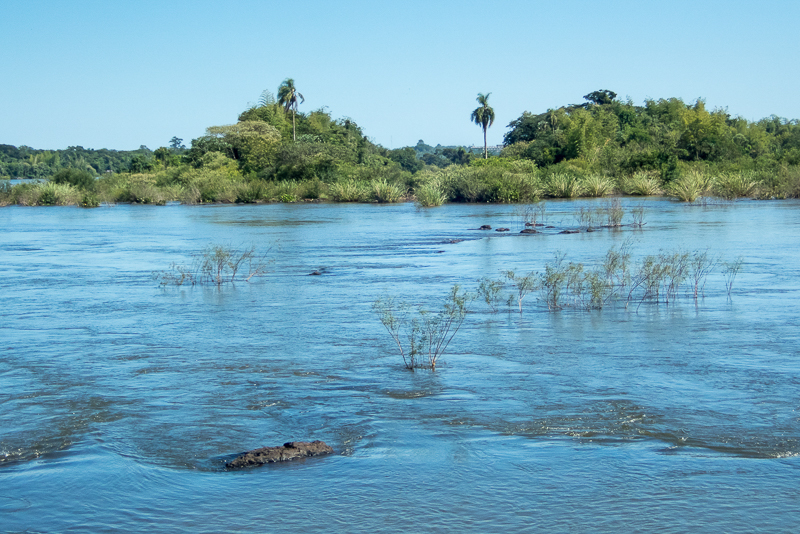
Though the train is free to ride, you must have a timed ticket to board. This makes it near impossible to ride the train when you actually want to, as tickets are snapped up in advance. And if you arrive at the park early in the morning, like we did, but not exactly when the park opens, you’ll end up waiting a long time to get on a train. The morning train tickets go fast. It’s probably much easier to get train tickets later in the afternoon.
Our first destination on day two was Devil’s Throat. The earliest train we could catch going from Estación Central to Estación Garganta was at 9:30 AM. Hmmm, instead of waiting an hour we decided to walk to Estación Cataratas to see if there was an option to take an earlier train. Nope, there we were given tickets for the 9:40 AM train. So we sat and waited for almost an hour.
Actually there was an earlier train from Estación Cataratas at 9:20 AM that we probably could have squeezed onto, but with Stephanie being the rule follower we did not try.
Arriving at a park and sitting for over an hour sucks. In hindsight maybe we should have walked that ¾ of a mile to Devil’s Throat. Who cares if it’s hot.
Finally the 9:40 AM train arrived. It was packed. Low hard benches are set up facing each other. So for the ride you are squeezed in between two people all while bumping knees and ankles with the person sitting across from you. It was a miserable 10 minute train ride to Estación Garganta. Better than walking ¾ of a mile on a dirt path in the sun? I’m still not sure.
Upon exiting the train it took us no time at all to realize that we wanted to be first on the boardwalk to Devil’s Throat. There were a lot of tour groups and families on our train, many of whom decided to stop at the restroom before continuing. We needed to be ahead of them for our own sanity.
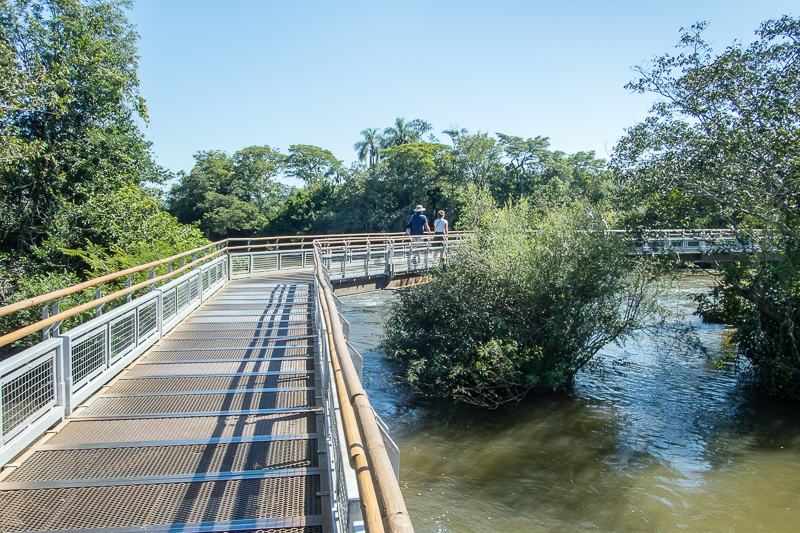
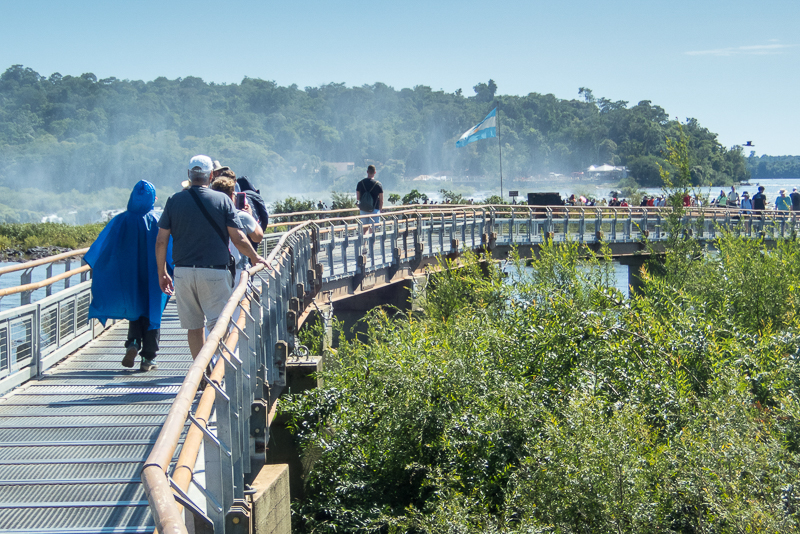
The walk to Devil’s Throat is 1.3 miles roundtrip (about 2.2 kilometers) on a raised metal boardwalk. There are a couple of places to sit on benches in the shade along the way if needed. Otherwise it is in full sun just a few feet over the river.
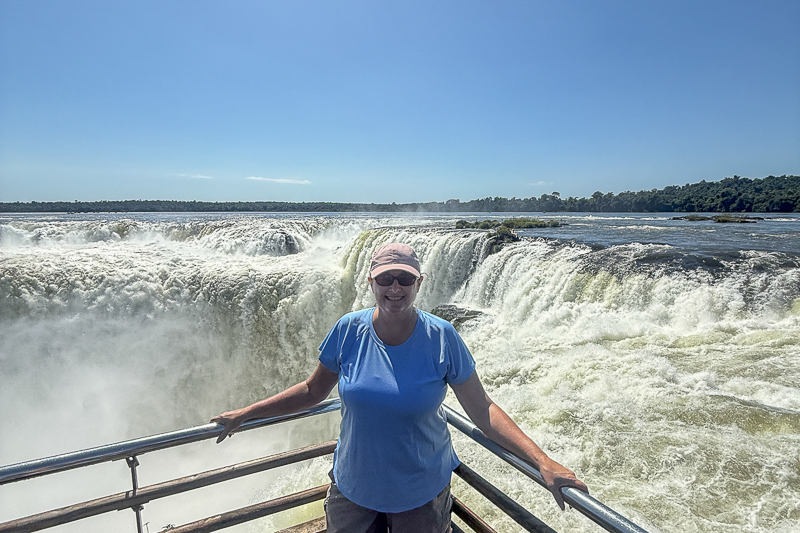
While the boardwalk is reasonably wide, it only takes one tour group, one stroller, or one wheelchair to completely clog it up and bring traffic to a near standstill. You do not want to be behind these folks, so get on the boardwalk quickly.
Our walk to Devil’s Throat was fairly pleasant. We stopped a few times for photographs or videos, but did not take any extended breaks.
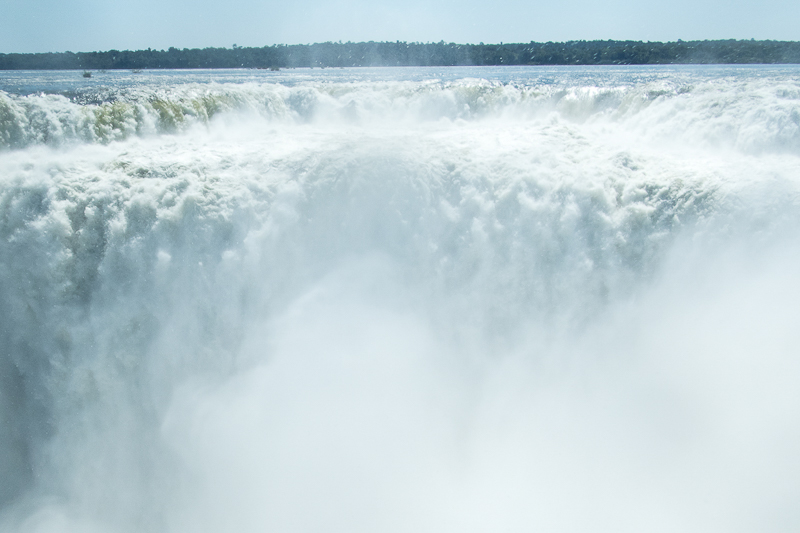
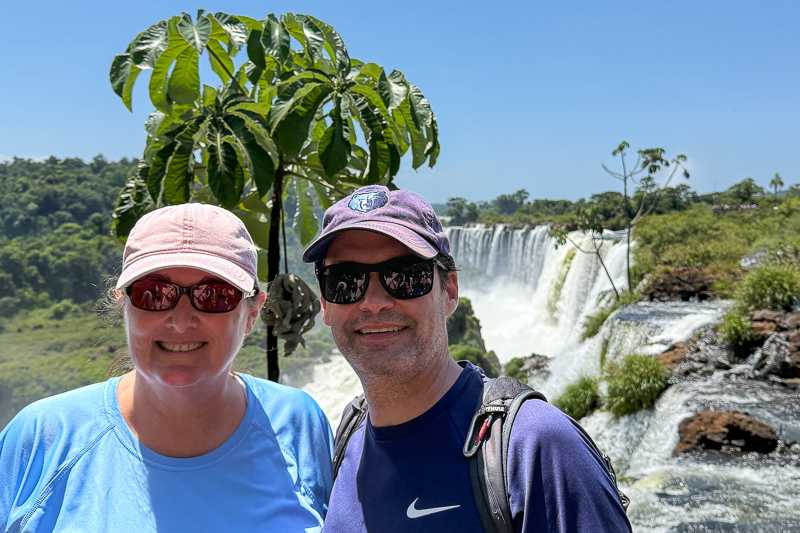
The Devil’s Throat overlook is not very large. It was fairly crowded when we arrived, but we were able to get to good viewpoints with a little patience and jostling. There is a constant, heavy mist that envelops the overlook. Not enough to get soaked, but more than enough to get really damp.
I had a hard time keeping water drops from forming on my camera lens.
Quite a few folks were wearing ponchos to avoid getting wet, but I bet they sweat plenty in those things. Better to get damp and dry off on the walk back to the train. A few carried umbrellas, which I though was a bit goofy as the mist comes up from the falls and blows sideways, not down from the sky.
The return walk to the train station was a nightmare as we ran headfirst into one tour group after another, a few strollers, and at least one wheelchair. We were going at a snail’s pace. Finally we made it back, where we waited only 10 minutes to board the 10:40 AM return train. Thankfully a timed ticket is not required when departing Estación Garganta.
We exited at Estación Cataratas into a mob of tour groups. From there we made the short walk to Circuito Superior, the upper circuit, a 1 mile (1,750 meters) walk on a metal boardwalk over the river along the edge of the waterfalls.
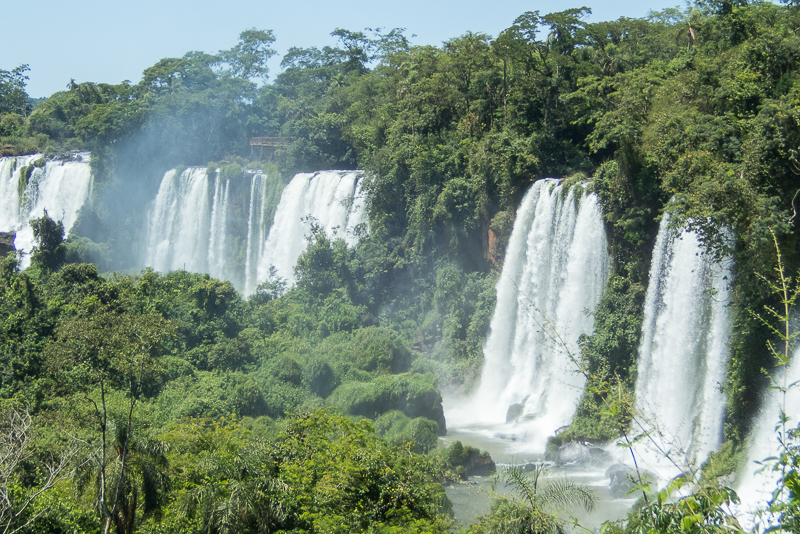
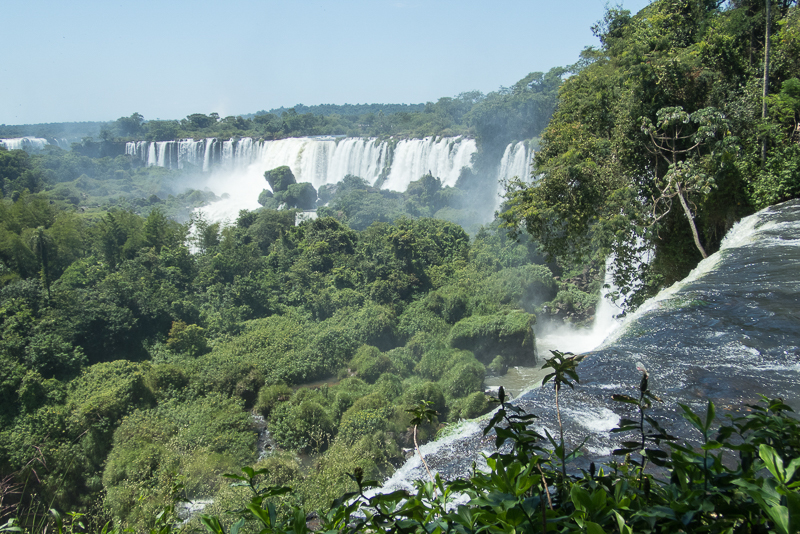
Given that it is flat, with zero stairs, and near Estación Cataratas, the upper circuit is super crowded. Everyone makes this walk. It took us about an hour to make the complete circuit because we were battling the crowds the entire way.
The views along the upper circuit are worth it, but plan on a slow walk and be prepared to fight for space at the small overlooks. After reaching the end of the upper circuit we made a beeline for the green path, walked to the exit, and caught the 12:30 PM bus back to town.
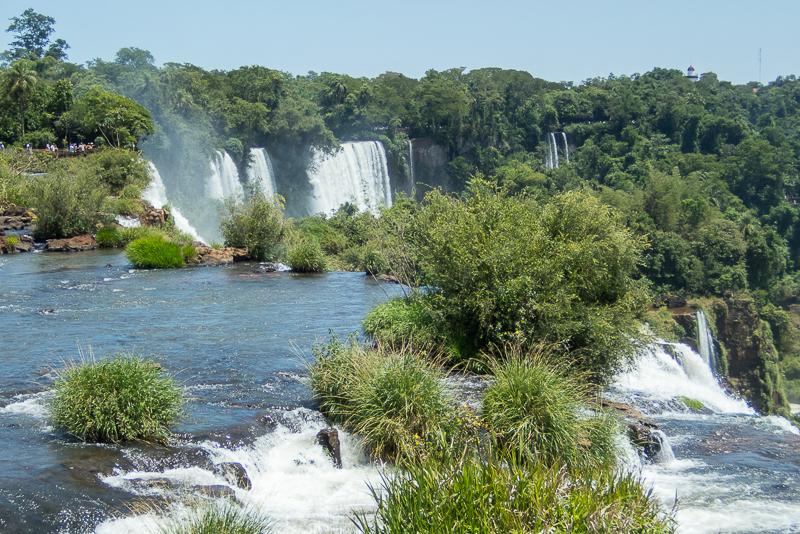
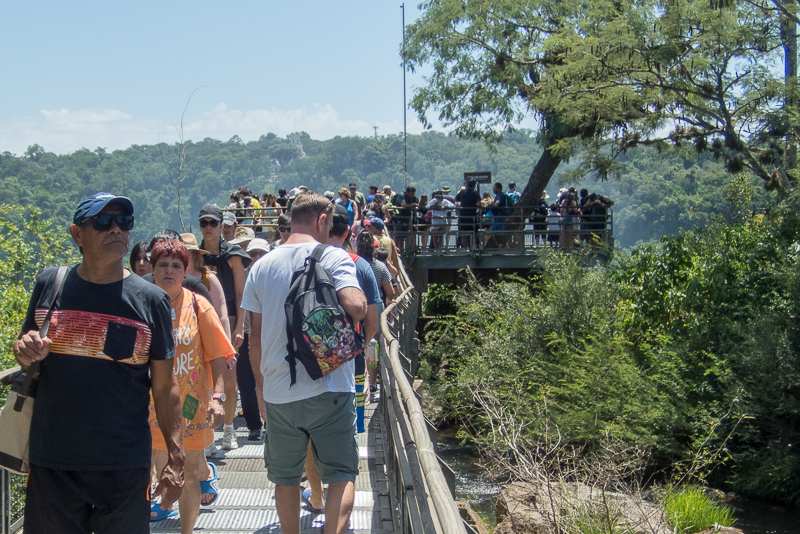
As an aside, the vast majority of visitors to Iguazú Falls arrive in the morning. No one was entering the park when we left on either day. If you can arrange your visit for late afternoon, it is probably a lot less crowded.
Once in town we walked over to Subway for lunch, picked up our bags at the Hotel Saint George, and bought tickets for the next Rio Uruguay bus to the airport.
The airport at Puerto Iguazú is tiny, with only a few gates. We arrived late afternoon and saw no one. We were the only ones at security. One of the two security guards had to get up to start the bag scanner. The other didn’t move. We walked through the metal detector by ourselves.
In the terminal proper … it was empty. It was 4:00 PM and literally no planes were scheduled to arrive or depart between 3:55 PM and 7:15 PM. We had the airport lounge to ourselves for over two hours. If you have to wait several hours in an airport, this is the way to do it.
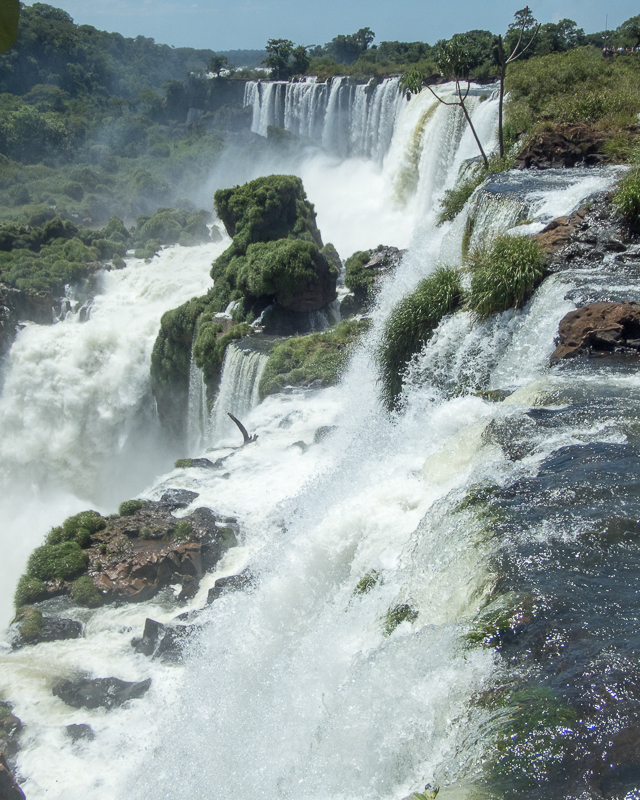
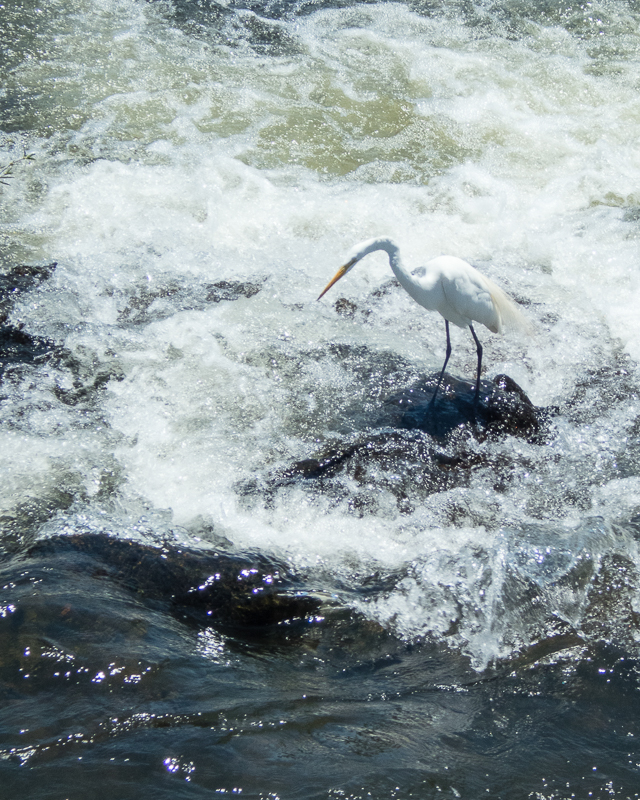
We’re glad we went to Iguazú Falls, but damn it was expensive for what it was:
Plane tickets from Buenos Aires on Aerolíneas Argentina, $445;
Hotel Saint George, two nights, $300;
Bus tickets on Rio Uruguay, $43;
Iguazú Falls park tickets, $85 (allocated from the cost of our annual passes);
Iguazú Jungle boat ride, $135; and,
Food and beverage, $180.
Total cost: $1,188. For two days. To see waterfalls.
Garrett and Stephanie
Read about the start of our two day trip to Iguazú Falls here.
For additional posts about Argentina, or elsewhere in the world, check out our Travel Blog. It contains collected links to all of our travel posts.
Want to subscribe (or unsubscribe) for email notification of new blog posts? It is only two to three emails a month. Send your name and email address to slowtravelchronicles@gmail.com, and note subscribe (or unsubscribe) in the subject line. All email addresses will be kept confidential and not sold to any third-party. You won’t get any marketing junk or sales pitches from us.