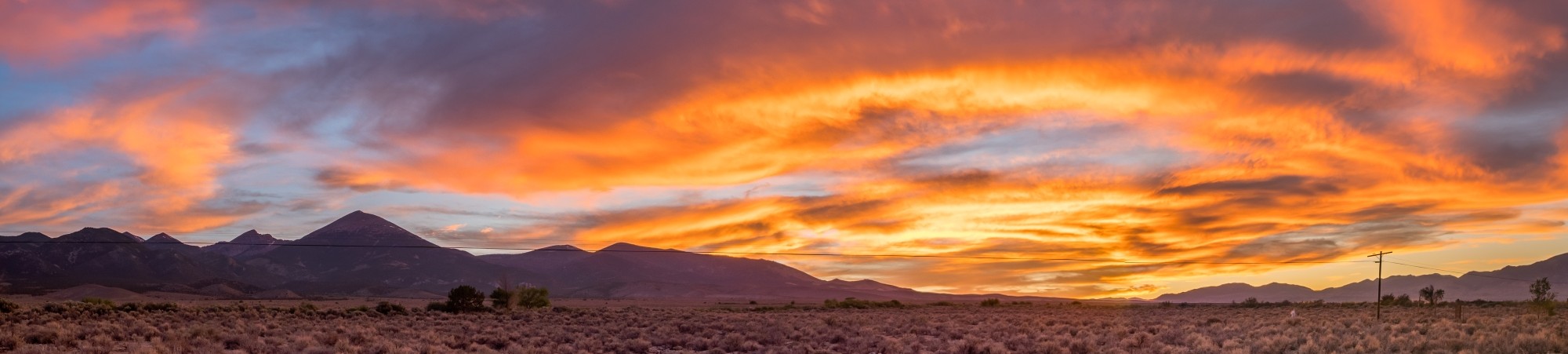
After 11 days of sub-40° F (4.5° C) temperatures, we decided that a few weeks of sun and warmth was in order. Instead of staying in Patagonia, as many on our Antarctica cruise opted to do, we made our way back north to Córdoba. It was 90° F (32° C) and sunny on the day we arrived.
We had a 7:00 AM flight out of Buenos Aires. Going through security, as I walked through the metal detector, the guard on the other side (mid-20s) asked me where I was going in broken English. His voice and demeanor read tired, a bit aggravated, and completely disinterested. As if his boss required him to question every foreigner coming through the line.
Córdoba, I replied. Wow did his demeanor change. Instantly a huge smile spread across his face, accompanied by rapid fire Spanish telling me who knows what. I just stood there smiling and nodding my head, unsure whether it was okay to walk past him to collect my backpack while he was obviously thrilled to talk about what I presume is his hometown. I’ve never seen a security guard so happy in my life.
It took us only a few days of exploring to realize that few foreign tourists visit Córdoba. During our two weeks here, we identified exactly zero other Americans and only two Europeans. Maybe that is why the security guard was so happy, because a foreign tourist was actually going to his hometown? Very few signs have English words in them and even fewer teenagers wear t-shirts with English slogans. The people who have some English ability know only a couple of words (kind of like our Spanish).
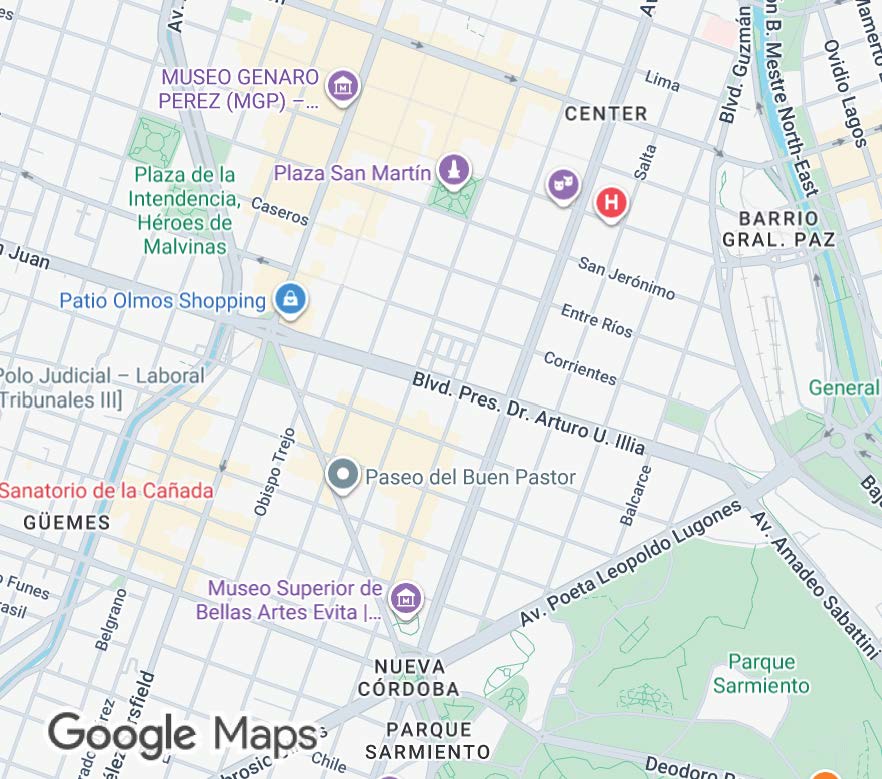
Córdoba is the second largest city in Argentina, but only a fraction of the size of Buenos Aires. Our Airbnb is in city center a few blocks from the main tourist zone. The nearby grocery stores leave a bit to be desired. There are several small city markets with few options and high prices (Carrefour Express; Supermercado Ruffino), as well as three larger markets (Buenos Días Supermercado – which is just trash; Vea Cencosud – which is pretty decent; Disco Cencosud – also decent).
After spending the better part of an afternoon visiting five different markets near our place, we realized that cobbling together decent meals for two weeks is near impossible without a trip to a hipermercado. Stephanie lobbied for an Uber ride way out into the suburbs to go to a Carrefour Hipermercado. But I was able to convince her to first try Hipermercado Libertad, which is about a 25 minute walk for us.
Hipermercado Libertad is basically a Super Target or Super Walmart. It is no surprise that there is taxi stand right out front, as lots of folks come and go to the store in a taxi. After walking to the store and picking up a decent haul of groceries, it cost only $3 for a short Uber ride back to our place.
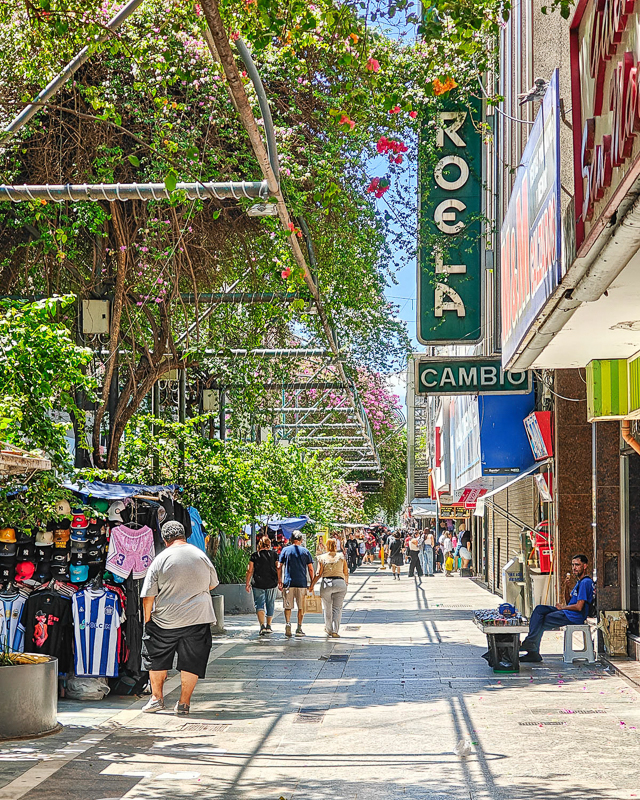
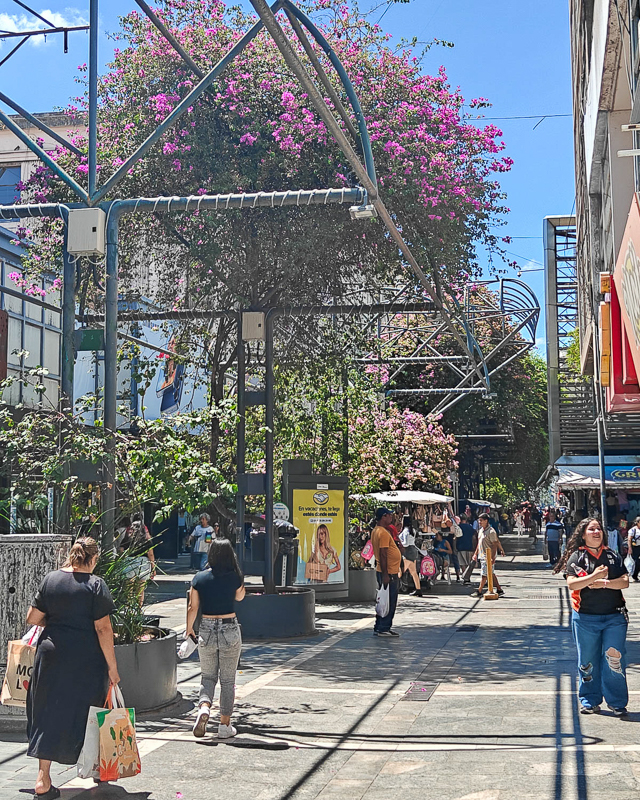
Córdoba is home to the Universidad Nacional de Córdoba, the oldest and second largest (over 100,000 undergraduates) university in Argentina. There are a lot of students out and about. We see them all the time, but really only hear them on weekend mornings around 5:00 AM when the nearby dance club closes.
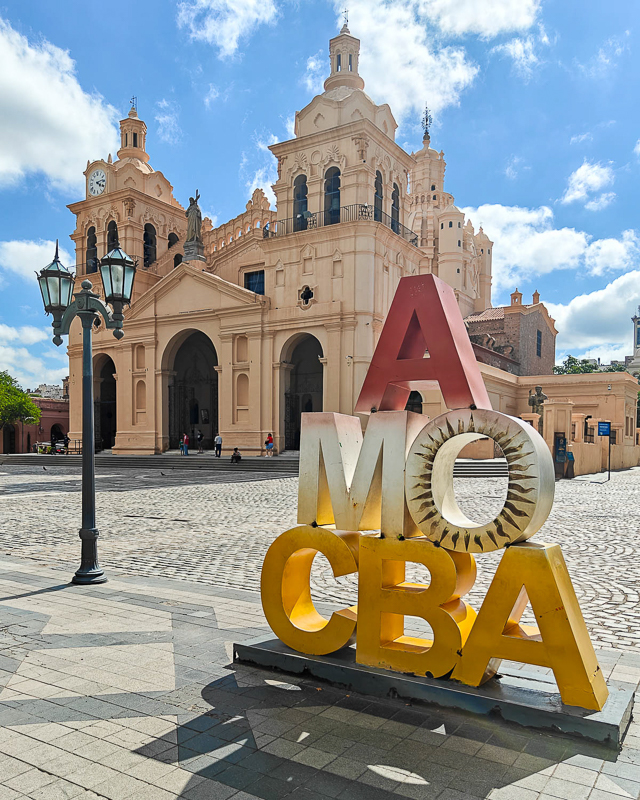
The new symbol of the Córdoba is AmoCBA. There are nine such signs currently spread around the greater area. It’s shorthand for I Love Córdoba, and a refreshing change of pace from simply seeing a city’s name spelled out in letters. Admittedly it took us a while to figure out exactly what the sign meant.
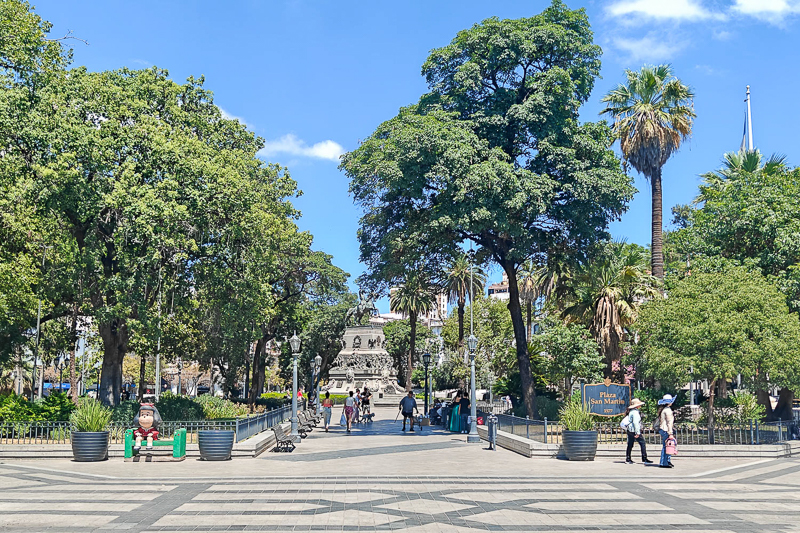
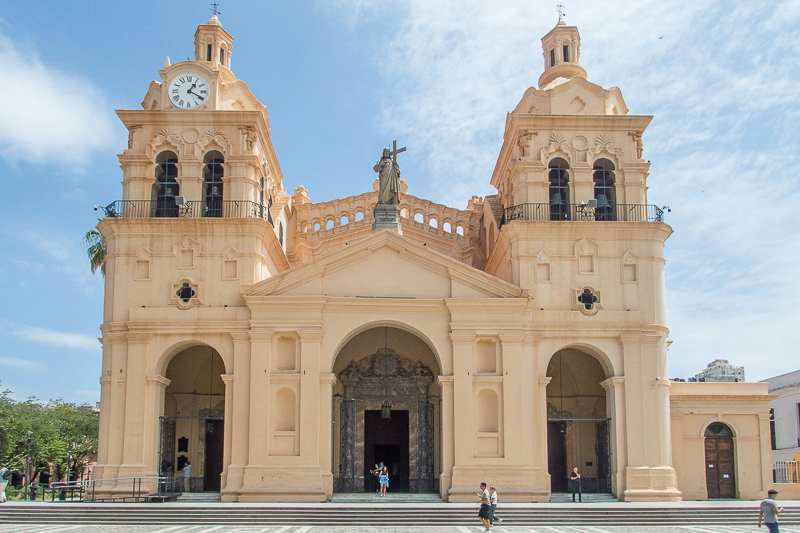
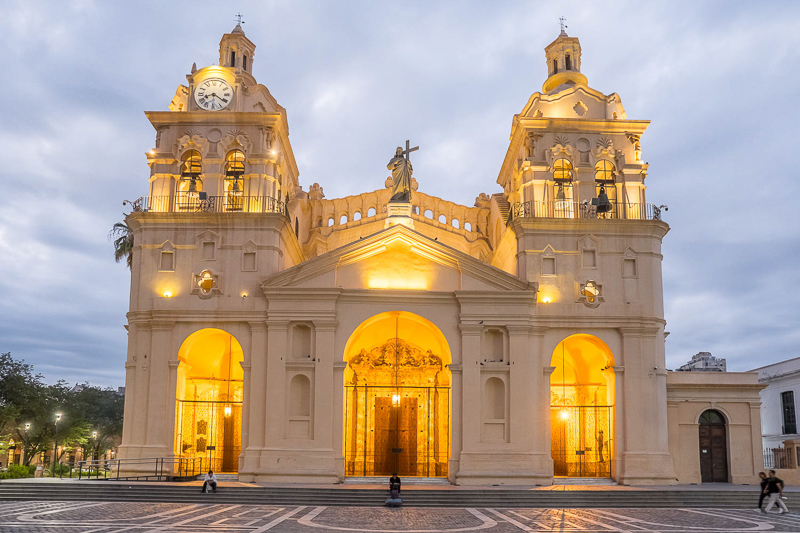
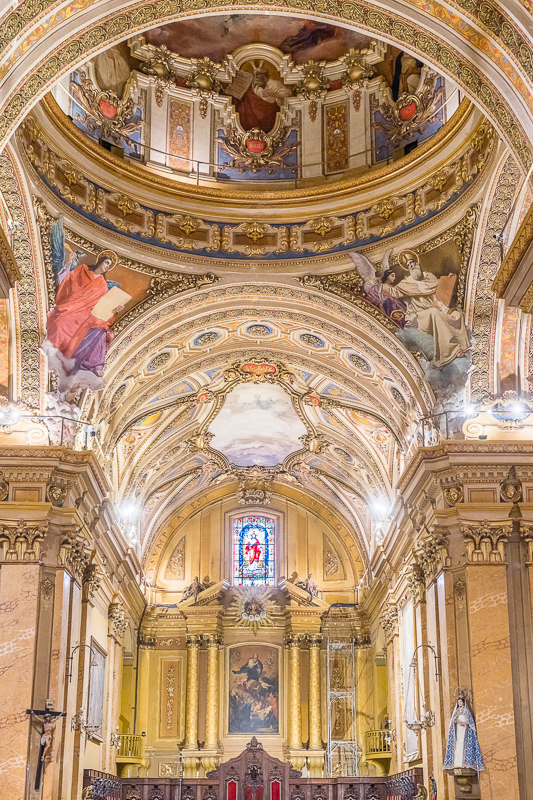
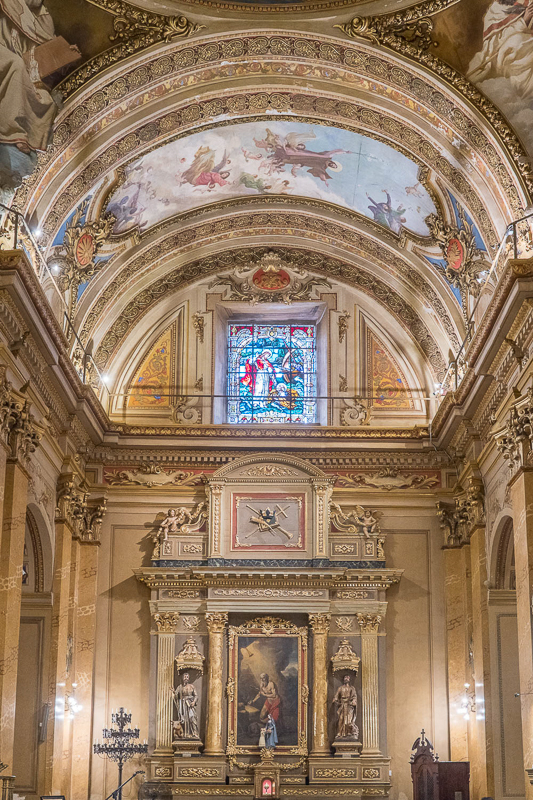
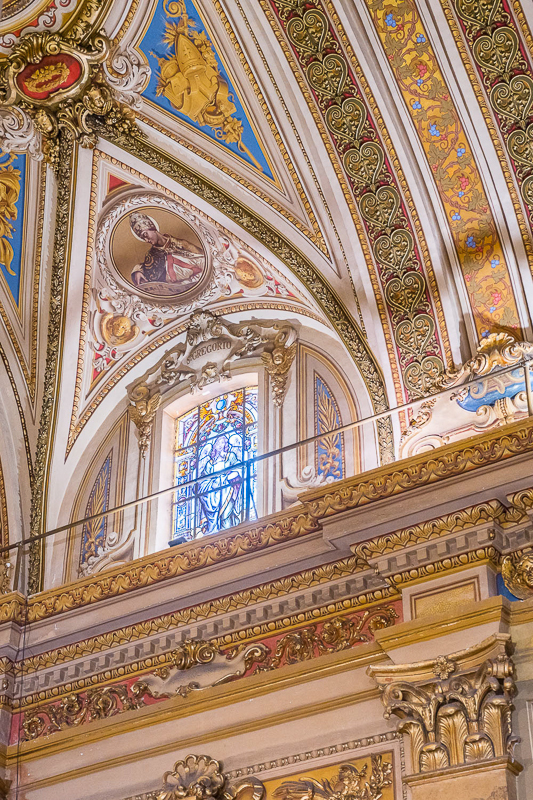
We first saw an AmoCBA sign in Plaza San Martín, in front of the Catedral de Córdoba, Nuestra Señora de la Asunción. It’s a great cathedral for a quick visit, was not crowded, and – thankfully – has plenty of fans inside to keep the temperature at a reasonable level.
The cathedral was largely constructed in the 1600s, and is now the oldest church in continual service in Argentina. It is a really nice cathedral, with the notable distinction of not being too fancy or over the top.
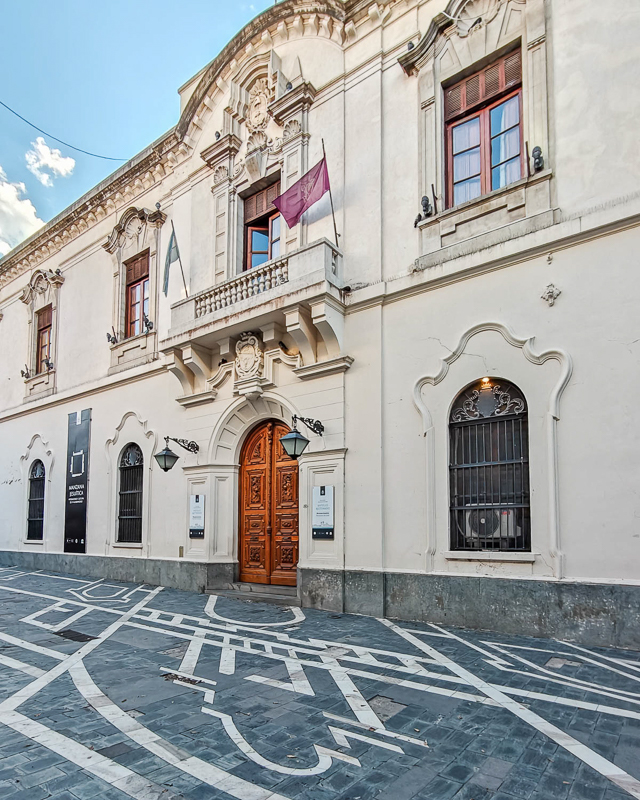
A few blocks from Plaza San Martín is Manzana Jesuitica, a Jesuit complex encompassing an entire city block. The buildings (originally comprising a Jesuit church, university, and residences) were constructed in the 1600s and are now listed as a UNESCO World Heritage Site. Many of the buildings are occupied by the Colegio Nacional de Monserrat and the Universidad Nacional de Córdoba, which operates the Museo Histórico de la Universidad Nacional de Córdoba.
Our visit to the museum was on a Wednesday, which is free day for public museums in Córdoba. Otherwise the ticket price is a paltry $50 Ar, or $0.35. At the reception we were given two tickets and shown how to access the audio guide (in several different languages) on our phones.
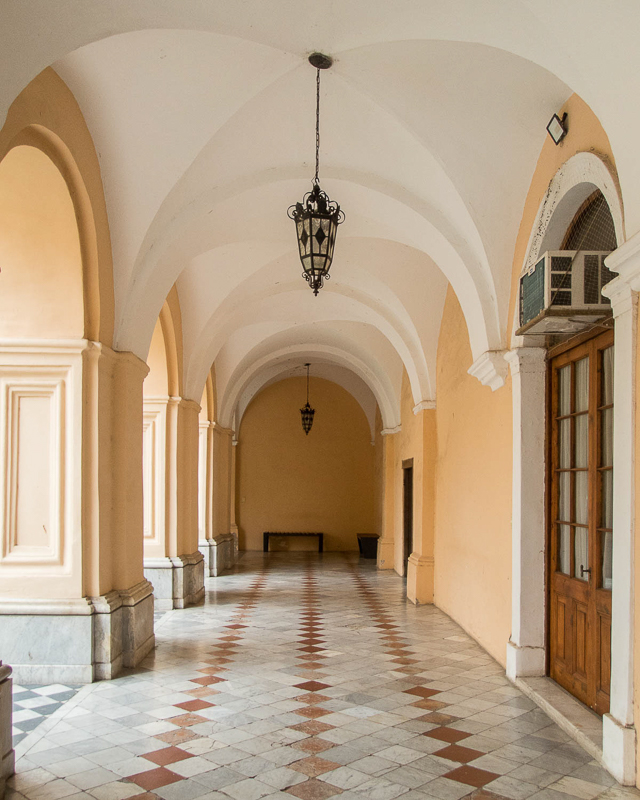
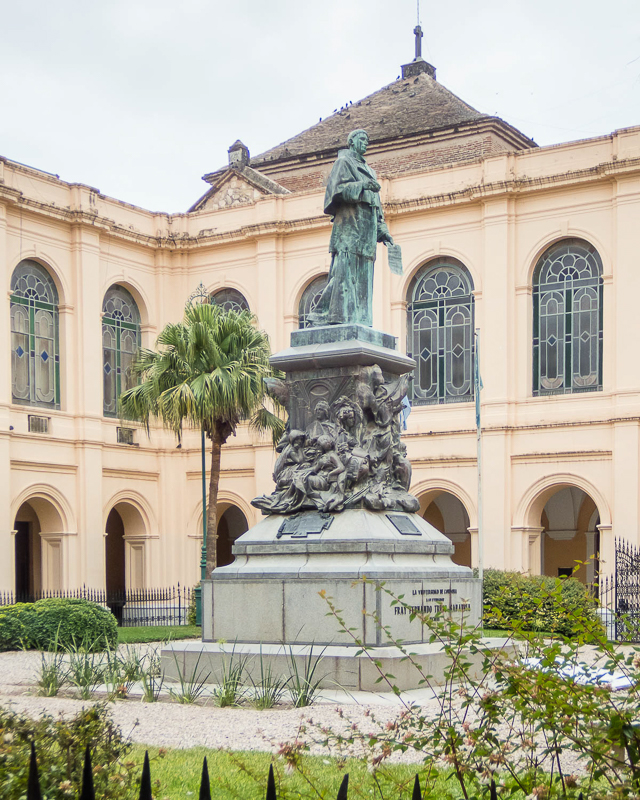
Strangely we were instructed not to play the audio, but instead to only read the descriptions of the rooms and displays (also in several different languages). We weren’t going to listen to the audio anyway, but this is the first time we’ve been told explicitly not to play an audio guide. I can appreciate that others might not want to hear you playing an audio guide out loud. Of course that assumes there are other visitors around, which there were not. It was just Stephanie and I, and a couple of guards.
A map showed us the few rooms that are included in the museum tour. At each one there is an employee who checks tickets and opens the door. For us the only two exhibits of interest were those of the antique maps of South America and the antique libraries of the Jesuits (which today holds about 2,500 books of the original 6,000).
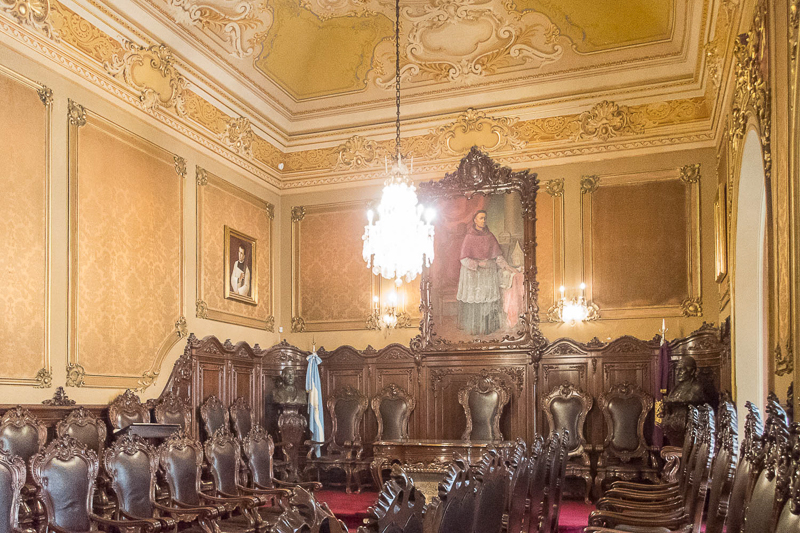
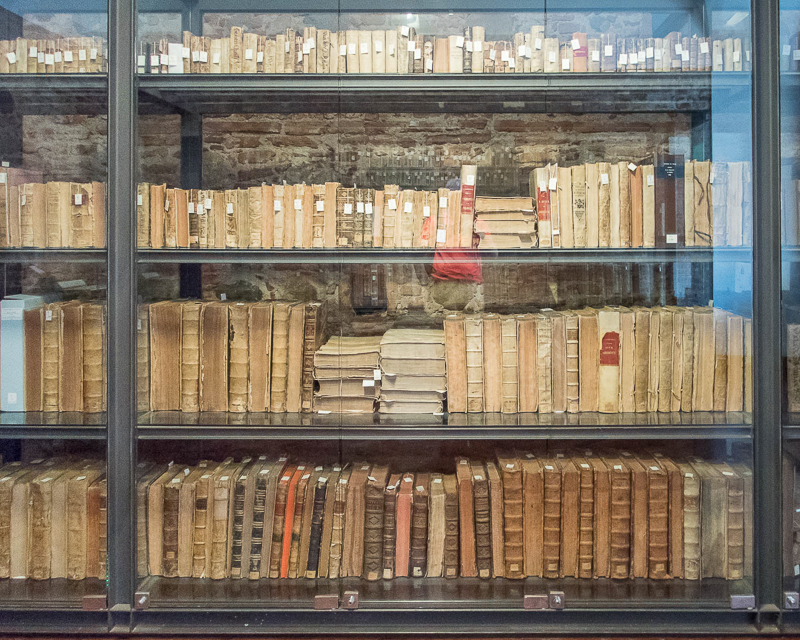
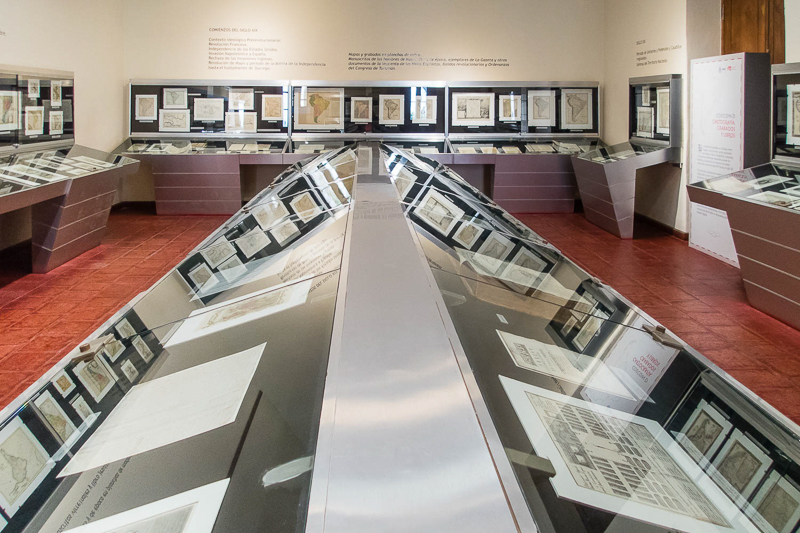
The other rooms were just interesting enough to pop our heads in and take a look, but that is about it. We weren’t complaining, though, as the museum was free (nearly free even if you pay) and worth a look.
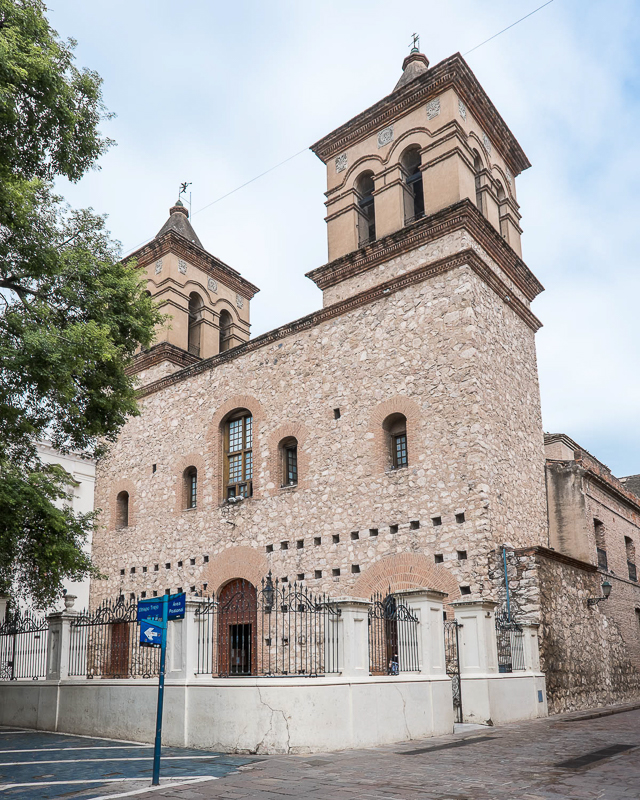
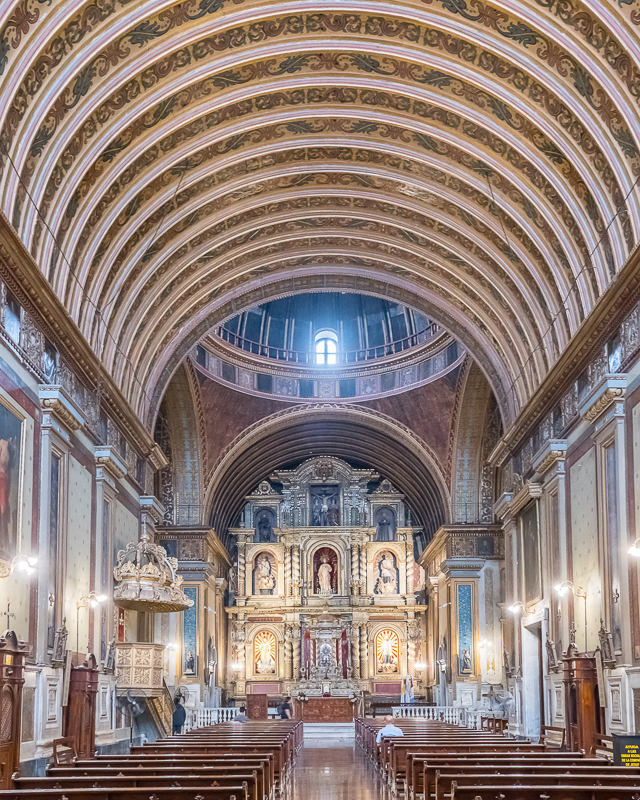
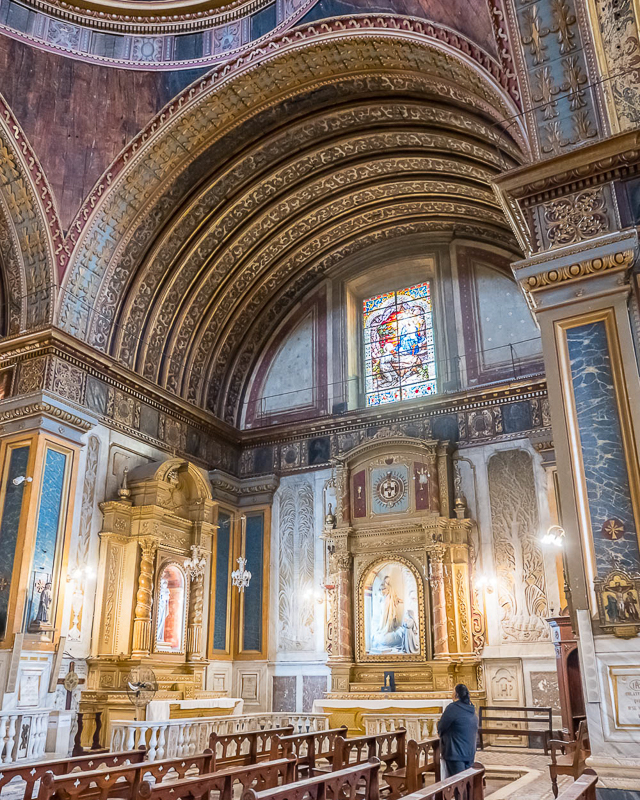
Adjacent to the museum is Iglesia Compania de Jesus, the Church of the Society of Jesus, and the oldest church in Córdoba. If you’re visiting the Jesuit block, definitely take an extra few minutes to check it out. As we learned during our two weeks here, there is not a lot to do in Córdoba as a foreign visitor, so you might as well take advantage of what you can see.
Garrett and Stephanie
If you have not already done so, read our other post about Córdoba:
Córdoba, Argentina (February, 2026, Part II). Museums, parks, and Carnaval de Jazz Córdoba.
For additional posts about Argentina, or elsewhere in the world, check out our Travel Blog. It contains collected links to all of our travel posts.
Want to subscribe (or unsubscribe) for email notification of new blog posts? It is only two to three emails a month. Send your name and email address to slowtravelchronicles@gmail.com, and note subscribe (or unsubscribe) in the subject line. All email addresses will be kept confidential and not sold to any third-party. You won’t get any marketing junk or sales pitches from us.