
Exactly 30 days prior to flying to Portugal our Airbnb host in Lisbon cancelled our rental. This has happened to us a few times so we didn’t lose our minds. Still, finding a new place at what is essentially the last minute is a bit nerve wracking.
It’s hard enough finding a nice place for 30 days in Lisbon, much less one that won’t break the bank.
We searched for comparable Airbnbs in the same price range as our original rental. Zero. We increased our price by 25%. Zero. With a 50% price increase, we had two options. At an almost 100% price increase, we got four more options. Okay, those last four weren’t serious options, but instead proved that we only had two options.
As fast as possible we booked a replacement Airbnb for an additional $1,200. Because of the cancellation, Airbnb readily provided a small, immediate rebooking credit. If you call up customer service and ask, Airbnb also gives an additional 20% credit (based on the price of the original booking) to be used on a future booking. So we got an immediate discount of $125 and a credit to be used on a future rental of just over $500.
Once our new Airbnb in Lisbon was confirmed, our second task was to cancel and rebook a future Airbnb solely for the purpose of using our $500 credit.

On the plus side, our new Airbnb is larger, farther out in the suburbs, and close to two reasonably sized supermarkets (Pingo Doce and Continente), two metro stations (yellow and green lines), and a train station (Roma-Areeiro).
Because we are staying well outside of the tourist zone, learning to navigate the Lisbon metro quickly and cheaply is a priority. Buying tickets is easy, as the machines have an English language option.
Several different ticket types are available. For a short stay of a few days, your best bet is probably to just pay as you go one ride at a time for €1.85. One-day tickets are a bit pricey, €7.00, unless you plan to ride the metro at least four different times during the day.
Another option is recharging and “zapping” a Navegante Occasional card. The card costs €0.50. Instead of loading it with specific tickets, you have the option to prepay dollar amounts for “zapping”, meaning the cost of each ride is deducted from your total balance.
The benefit to prepaying and “zapping” is that each ride is €1.66, about 10% cheaper. The cost of the card is recouped after only three rides. The downside is that any unused balance at the end of your stay in Lisbon is forfeited. No refunds. You need to pay attention to your balance and plan carefully to avoid a forfeiture of any significance.
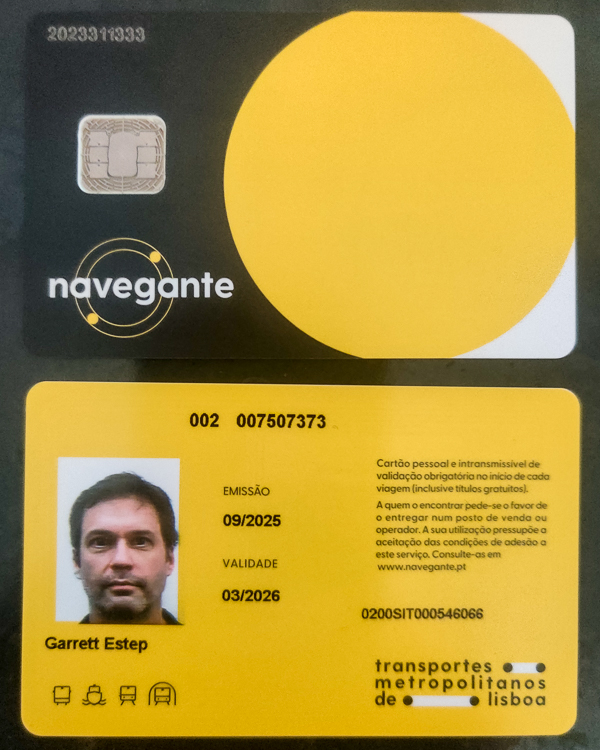
For stays of a month or longer, assuming you plan to ride the metro a lot, consider obtaining a personalized Navegante card. The major benefit of this this card is the ability to purchase a metropolitan monthly pass for €40.00. It’s just like it sounds. You are covered for all rides on the metros, trams, busses, funiculars, ferries, and suburban commuter trains in the greater area.
You can get as far as Cascais, Sintra, Mafra, and Setúbal.
Except for walking to the grocery store and a few nearby restaurants, we will be taking a metro everywhere during our month in Lisbon. Getting Navegante cards and buying metropolitan monthly passes was an easy choice.


Obtaining Navegante cards was a bit time consuming, but not difficult. You must go to one of two metro stations to apply for an expedited Navegante card, either Maurice dê Pombal or Campo Grande. You’ll need a completed application (forms are available at the ticket window; or download, print, and complete in advance), your passport, and an extra passport photograph. The fee for obtaining an expedited card is €12.00.
On our first trip to Maurice dê Pombal, on a Tuesday afternoon, the Cartão Urgente ticket windows were inexplicably closed. So we returned the next day and promptly got into an hour long line. Ugh. You have to take a number to get in line. Make sure you get a number that begins with the letter A.
(As an aside, we went to Maurice dê Pombal because we could easily walk there. But it was crowded. The Cartão Urgente ticket windows at Campo Grande seem to have shorter lines.)
Also, and this is very important. Pay attention to the screen that displays the numbers being called to the ticket window. Do not wander off or ignore the line while waiting. If you miss your turn, you have to get a new number and go to the back of the line.
Once we made it to the ticket window, processing of our applications went pretty quick. No questions were asked. I guess we filled the forms out correctly and everything was in order. For an address, we used our Airbnb address in Lisbon.
We were told to return the next day after 3:30 PM to pick up our cards. We returned at about 4:00 PM, took a number, this time beginning with the letter B, and waited. Judging by the number of people walking around holding letter B tickets, it was apparent that the cards were not yet ready.
Finally, at about 4:15 PM, the B numbers starting being called. We picked up our cards at about 4:30 PM, walked over to the nearby ticket machine, and loaded metropolitan monthly passes onto them.
It helped that we arrived in Lisbon on September 1 as the monthly passes are calendar month. Had we arrived here in the middle of the month, we definitely would be using Navegante Occasional cards instead.
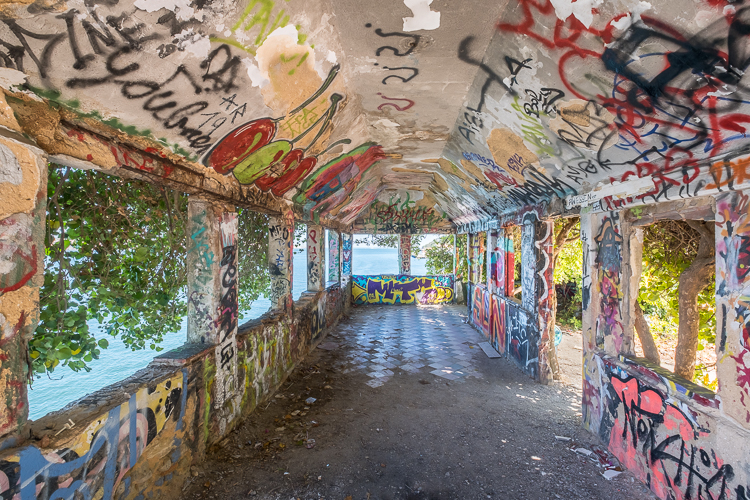
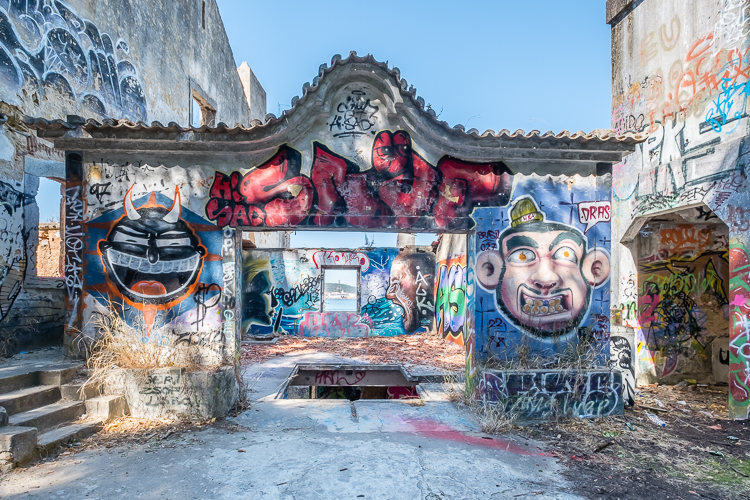
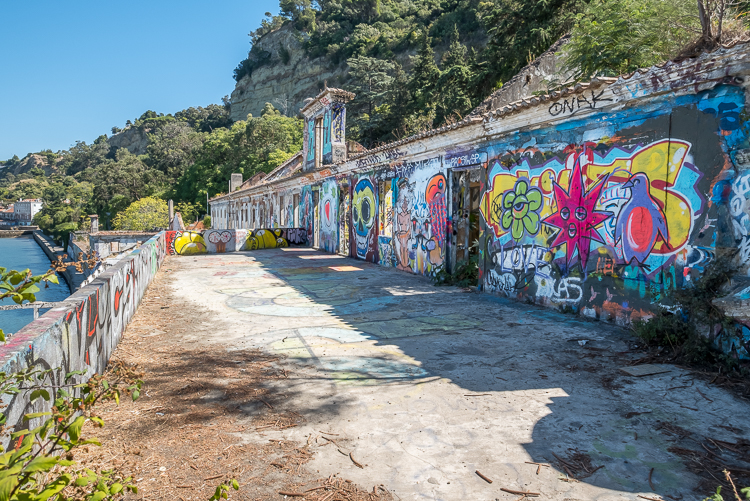
One of our first trips on the metro inevitably involved going to the largest grocery store that we could find, an El Corte Inglés, where Stephanie found two cans of Monster Tea + Lemonade. You’d have thought she won the lottery. From there it was a short walk over to the Liberty American Store (imports, obviously) where we grabbed a bottle of Italian salad dressing.
Strangely enough, finding decent salad dressing in Europe is much harder than you would think.
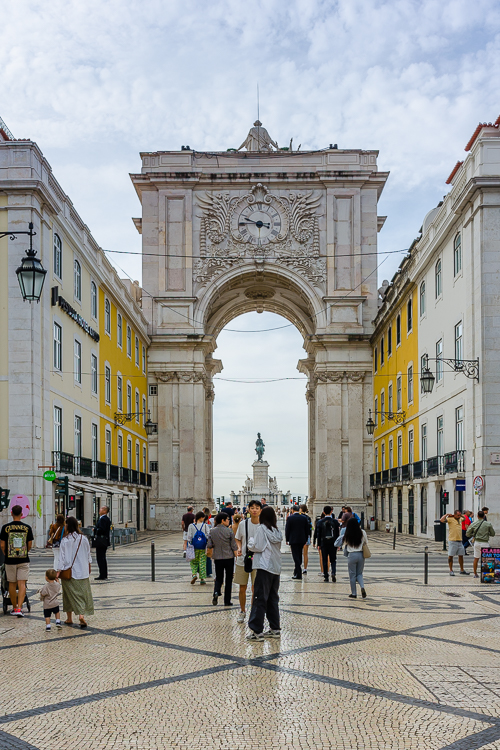
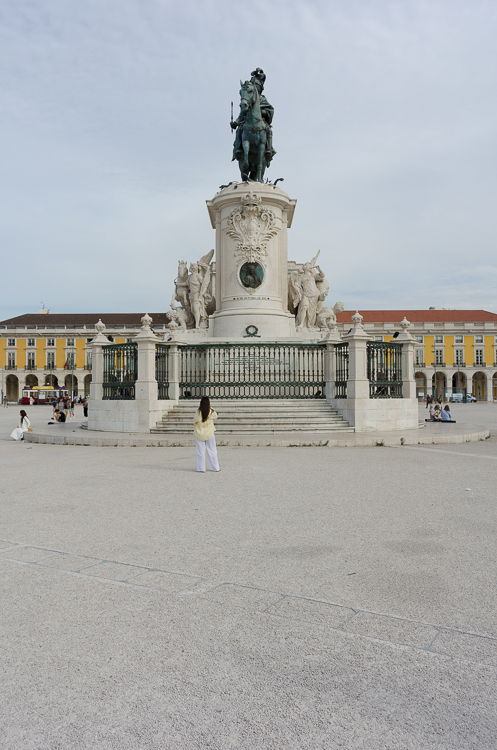
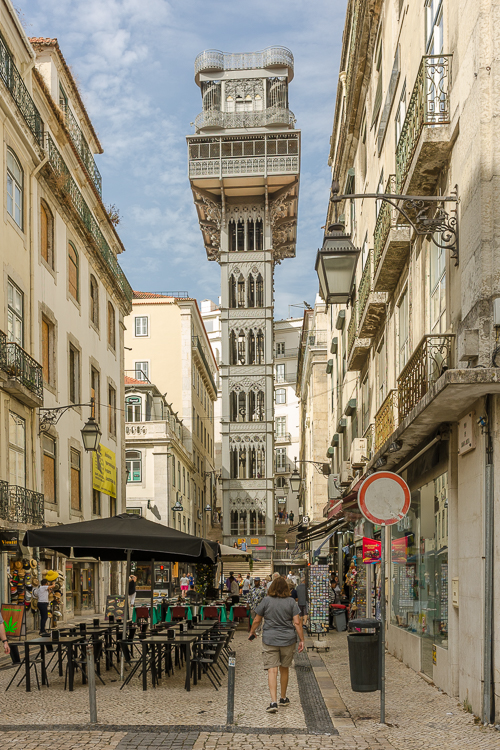
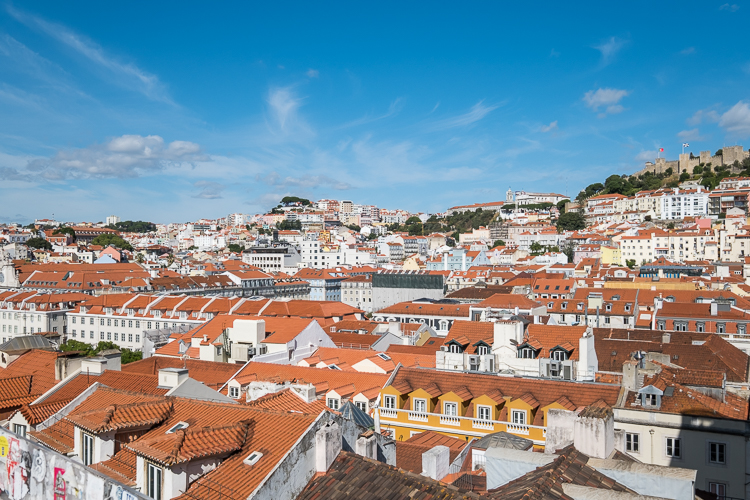
After a few days in Lisbon we finally ventured to the historic city center and explored the area a bit. We found several plazas, numerous tourist shops, even more restaurants and cafés, a few churches, and the cathedral. Really almost everything else – museums, overlooks, palaces, monasteries, cemeteries – is outside of the historic city center and requires some effort to reach.
We are definitely looking forward to exploring the area over the next month.
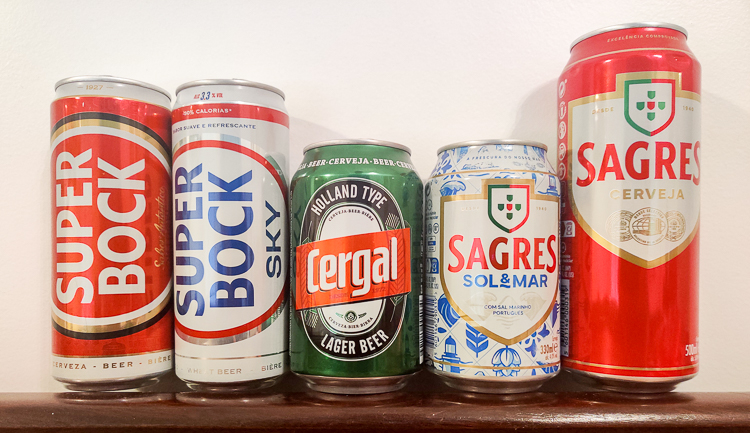
Our first few days would not be complete without the obligatory beer tasting. Sagres and Super Bock are the two major brewers in Portugal. We tried two beers from each, essentially the regular and light lager versions, along with a Cargal, from one of the smaller brewers.
Of those five, none was any good. Not dump down the sink bad, but definitely not good. Cargal and Super Bock Sky are barely tolerable. Cargal, at least, has the benefit of being cheap.
Import beers are not really an option. There is Heineken (which we don’t like) and, no surprise, Corona. Corona could have saved the day if it wasn’t €10 for a six pack.
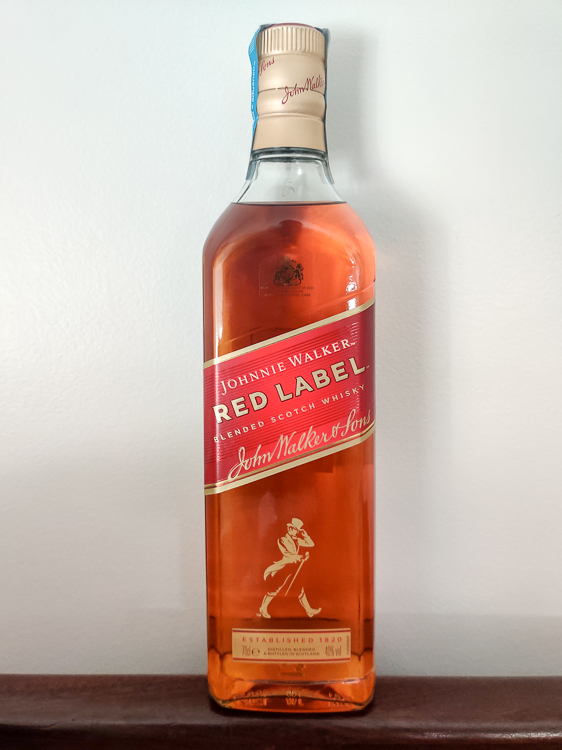
We always assumed France would be the beer wasteland of Europe. Wrong. It’s Portugal.
So, the beer tasting winner in Portugal is none other than Johnnie Walker Red Label.
Garrett and Stephanie
If you have not already done so, read our other posts about Lisbon:
Lisboa, Portugal (September, 2025, Part II). Just palaces: Queluz National Palace and Gardens; the National Palace of Ajuda.
Lisboa, Portugal (September, 2025, Part III). Just a pantheon, monastery, cathedral, church, and castle.
Lisboa, Portugal (September, 2025, Part IV). Striking out at two of the Seven Wonders of Portugal; redemption at Oceanário de Lisboa.
For additional posts about Portugal, or elsewhere in the world, check out our Travel Blog. It contains collected links to all of our travel posts.
Want to subscribe (or unsubscribe) for email notification of new blog posts? It is only two to three emails a month. Send your name and email address to slowtravelchronicles@gmail.com, and note subscribe (or unsubscribe) in the subject line. All email addresses will be kept confidential and not sold to any third-party. You won’t get any marketing junk or sales pitches from us.