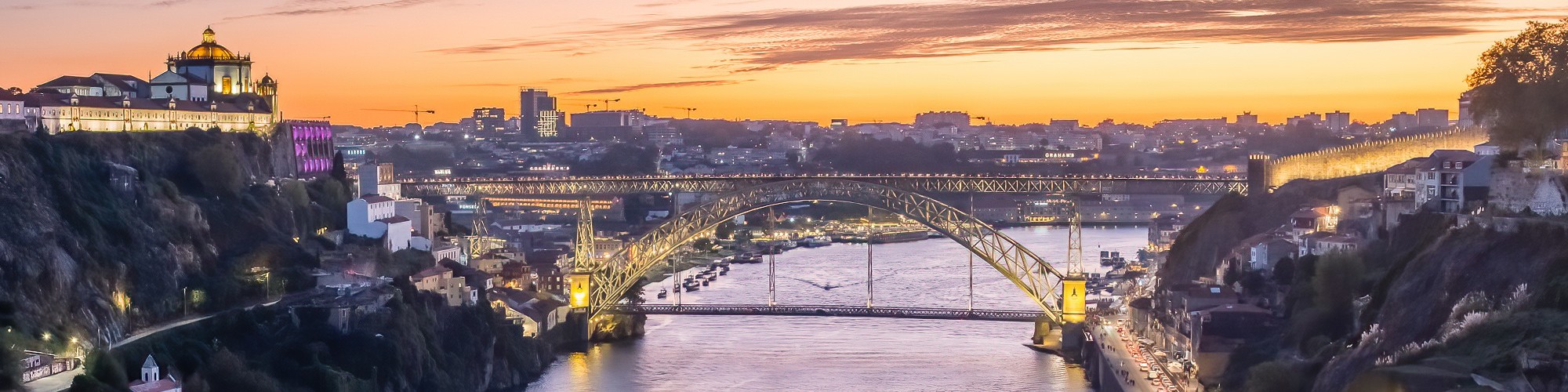
On short notice, upon invitation from friends (who had a free place to stay), we traded sun and warm weather in Porto for three days of cool, overcast weather in Dublin, Ireland.
We flew on Ryanair, a reasonably good low cost carrier in Europe, if you follow the rules regarding luggage carefully and check in online in the app. Ryanair’s base fares are a good price, but you will pay handsomely if you need any extras (luggage, printed boarding passes, insurance, seat selection, a drink, trip insurance, and so on).
Because this was a short trip, Stephanie and I were traveling with small backpacks only. We brought our own bottled water and snacks. And we weren’t interested in paying extra to sit next to each other for a 2.5 hour flight.
In fact, if you don’t pay extra to select a seat, Ryanair will split up your group. When we checked in for our flights, plenty of seats were available for selection. Even though most of the seats were open, Stephanie and I were still assigned seats 17 rows apart. This occurred on both of our flights on this trip.
After seeing your seat assignments you’ll be prompted again to consider paying to sit together. Ryanair really pushes folks to pay for upgrades. Be prepared to select “no” a lot as you work through purchasing tickets.
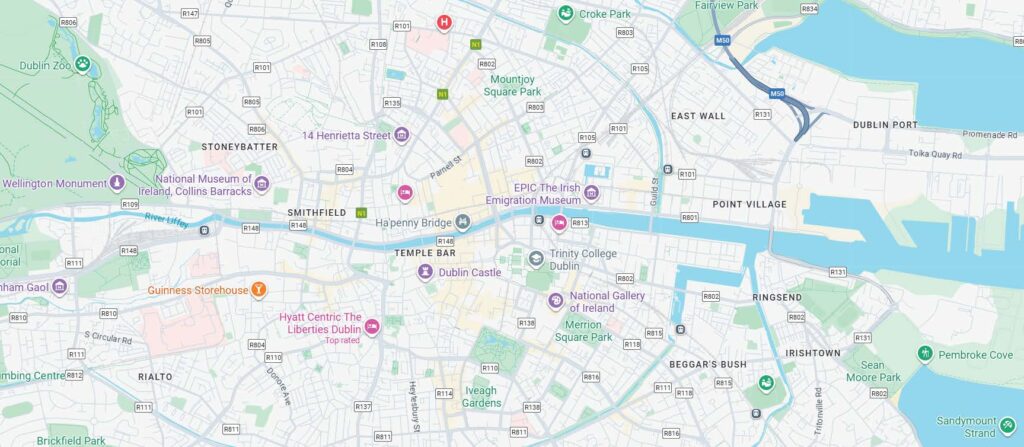
After landing in Dublin our first order of business was buying a Leap Card so we could pay for the bus rides to our destination in Knocklyon, a suburb on the south side of Dublin, about as far from the airport as you can go and still be in the city. (I made it clear to Stephanie before we left Porto that taking a taxi or Uber to Knocklyon would not be an option. Sure enough, the Uber price to Knocklyon was about €50. No, thanks.)
Transport for Ireland (“TFI”), the public transportation system, uses a Leap Card for contactless payment. You preload the card with funds, which are debited at €2 per person per ride. Unfortunately you can’t just tap and pay with a credit card. You must pay with either a Leap Card or coins. No bills. If you want to pay with coins, the ride price is €2.60. No change is given. There is no way we were going to carry around some €40 in coins to use for bus rides over several days.
For reasons unknown you cannot buy a Leap Card at a vending machine in the airport. A very helpful policeman directed us to Wrights Food Fayre, a convenience store across street from airport, as the place to buy a Leap Card. The only downside to buying a Leap Card is the cost, €5 for the card itself and another €0.50 processing fee. We bought one card and preloaded €15 onto it.
Stephanie and I shared a Leap Card. Instead of tap to pay, we had to tell the bus driver to charge us two rides. It was all very easy.
You can reload a Leap Card, in €5 increments, through the TFI Leap Card app.
The €5 paid for the card is technically a deposit. If you have a bank account in Ireland you can go online, disable your card, and get your €5 back. Alternatively, you can disable your card and ask that the €5 be donated to a local charity. Or just keep the card for future use, just in case, which is what we did.
After getting our Leap Card we walked over to the bus stops outside the airport. Identifying the correct bus and locating its stop was surprisingly easy using Google Maps. It helps greatly that the signs in Ireland are in English. Our journey to Knocklyon took us two hours on two busses (nos. 16 and 15). As this was our first time in Dublin, we rather enjoyed seeing the city from the bus, and the ride did not seem that long.
On our first full day in Dublin, we kicked things off with a walk to the nearby SuperValu grocery store to pick up breakfast and lunch supplies. Nothing says new city like a trip to the closest grocery store. Being able to read signs and labels in a grocery store was quite a positive experience after months in Portugal.
Generally our plan was to relax in the mornings and explore the city each afternoon. With only a few days in the city, we decided to take it easy and see only a few places rather than rush around in an effort to see it all.
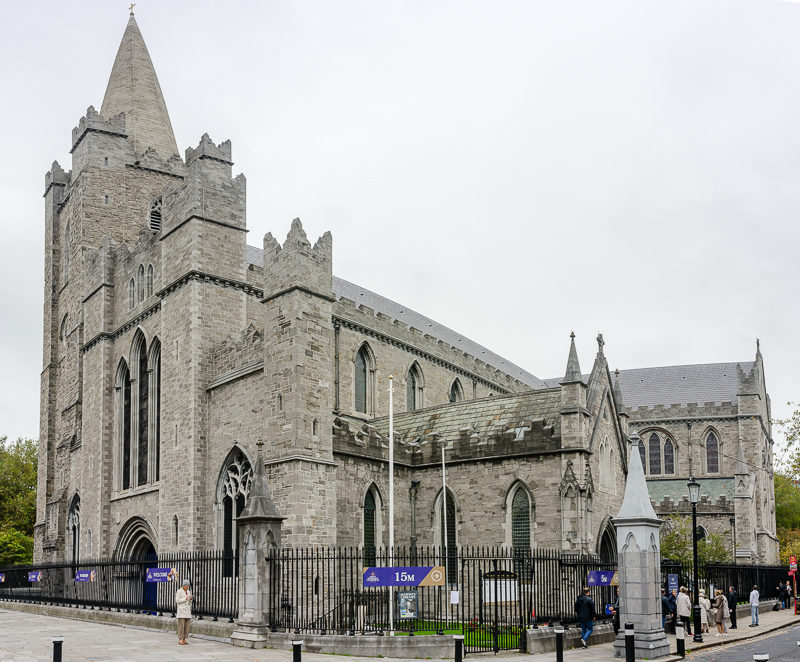
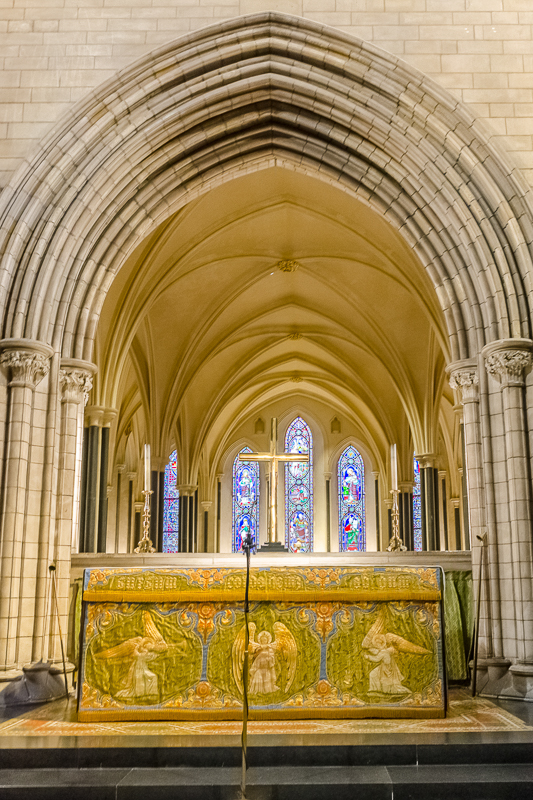
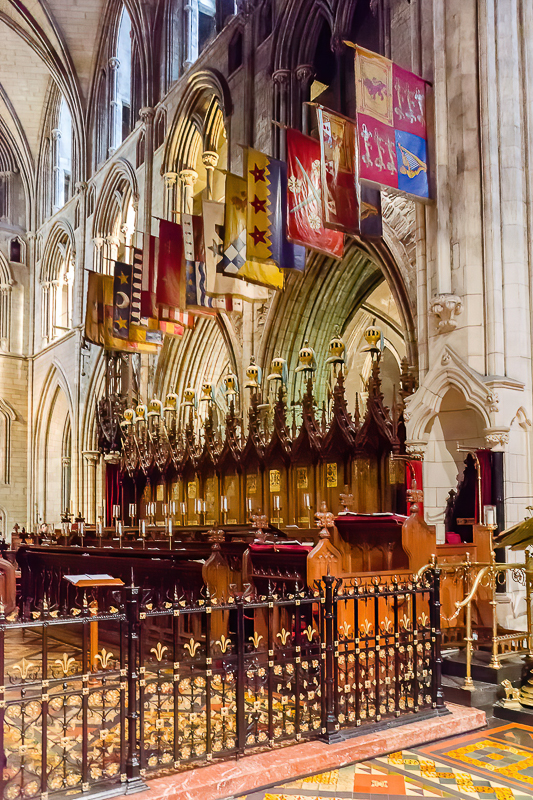
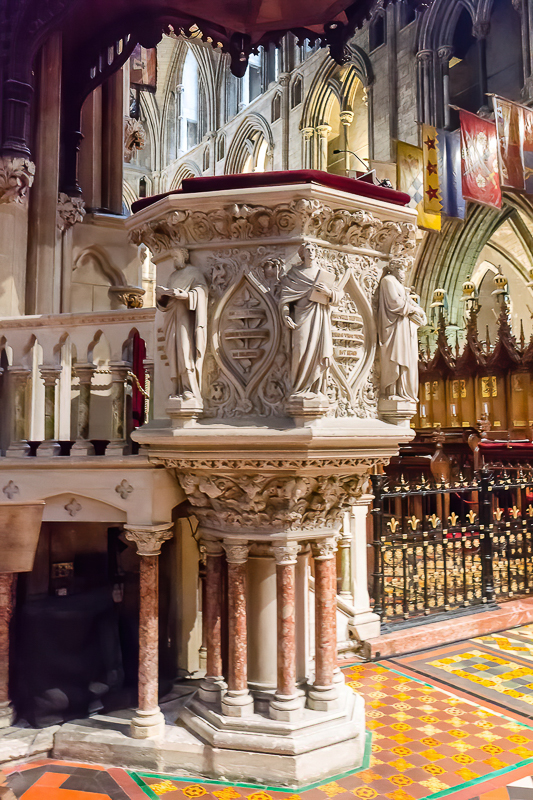
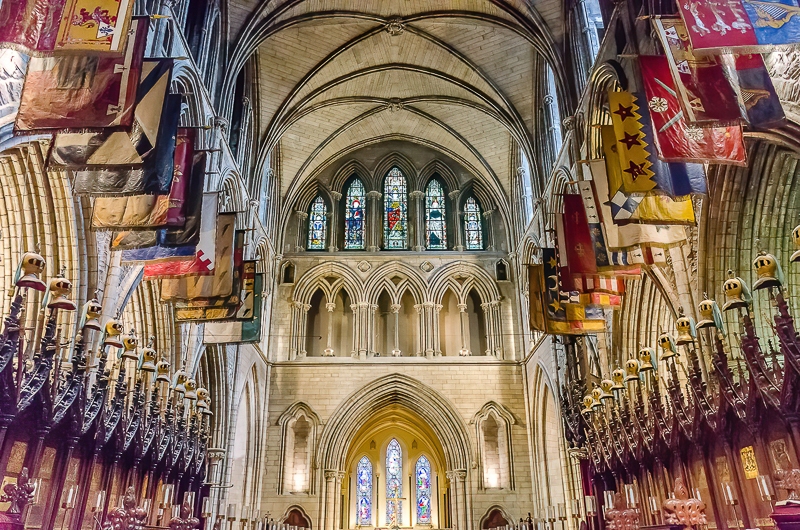
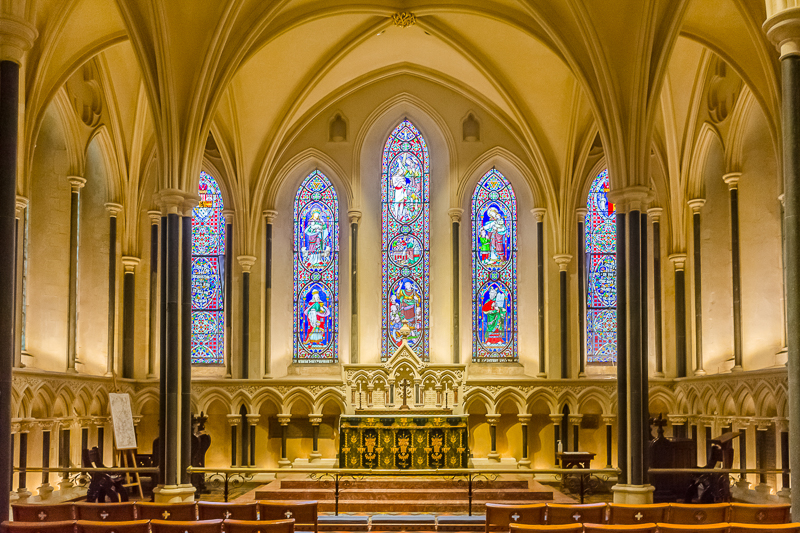
St. Patrick’s Cathedral, the National Cathedral of the Church of Ireland, was our first attraction. After paying €11 each for a ticket, we were ushed inside to the gift shop set up in the rear of the nave. If there is anything positive about buying a ticket and finding a gift shop in a church, it is that we don’t feel bad about acting like (reasonably polite) tourists inside.
The Gothic structure was constructed in the early- to mid-1200s. As expected modifications and renovations took place over the ensuring centuries, with the most recent major modifications occurring in the mid-1800s. It’s a beautiful cathedral and we enjoyed visiting it.
In addition to regular services, St. Patrick’s Cathedral offers specialized tours and hosts concerts quite frequently. As an aside, I wonder if the gift shop is removed when services are held?
From St. Patrick’s Cathedral we made the short walk to Christ Church. We poked our heads inside but decided against paying for €12 tickets as extensive renovations were ongoing. The next time we are in Dublin we will stop by for a visit, assuming the renovations are completed.
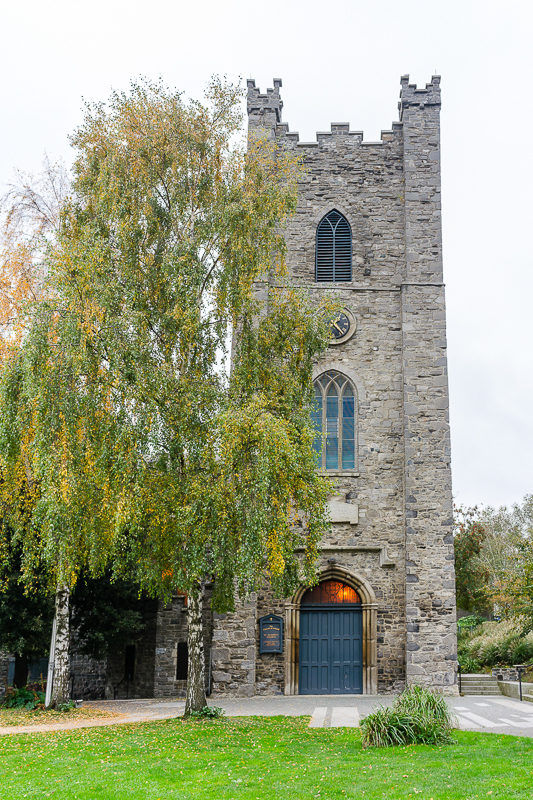
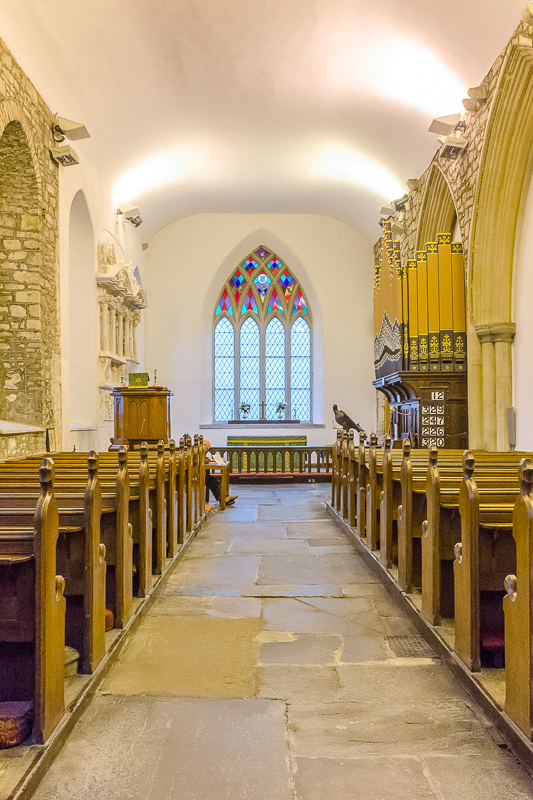
Our third and final church to visit was St. Audoen’s Church. This small church was first built in late 1100s, undergoing several expansions over next 400 years. Thankfully the church still retains some of its original medieval features. After falling into disrepair in 1800s, St. Audoen’s later become a National Monument. It is free to visit and definitely worth a 15 minute walk around.
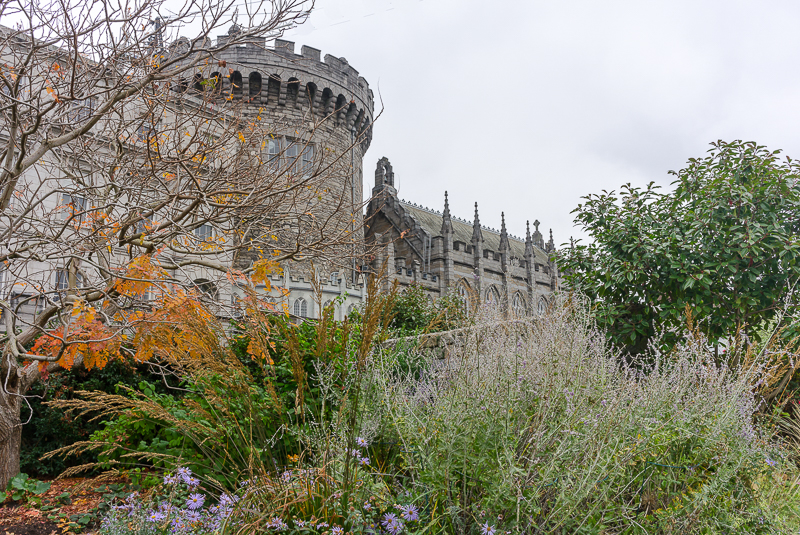
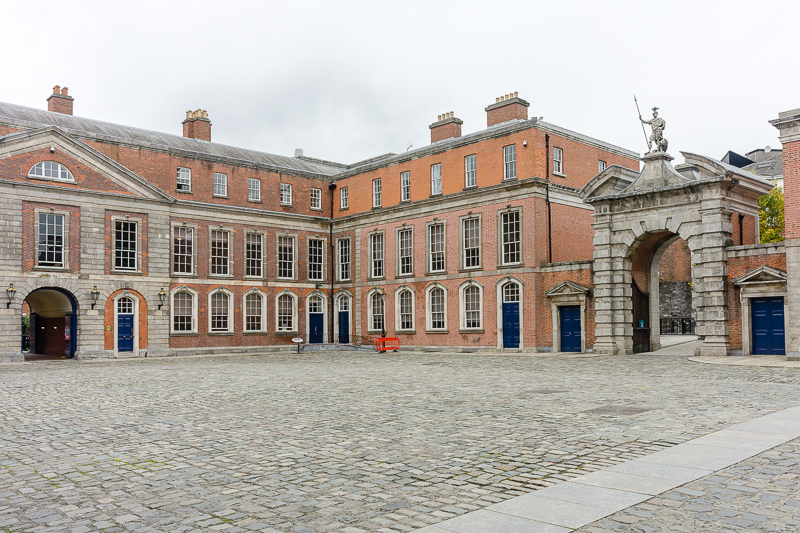
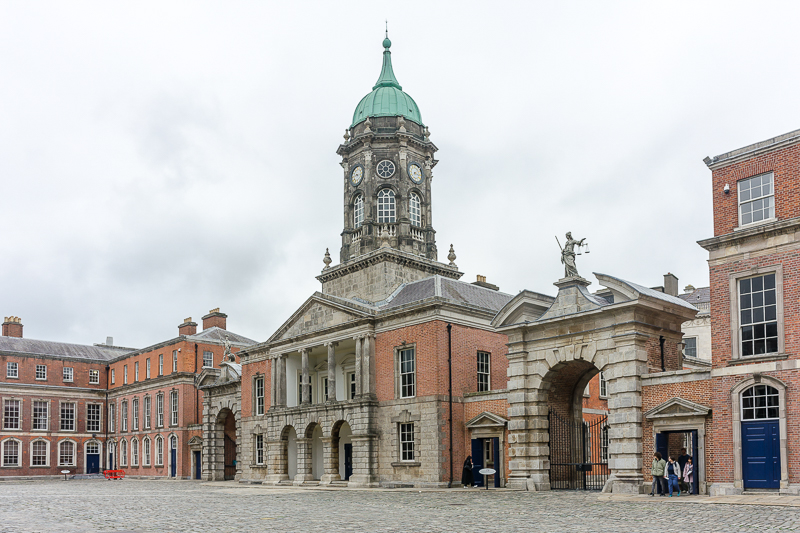
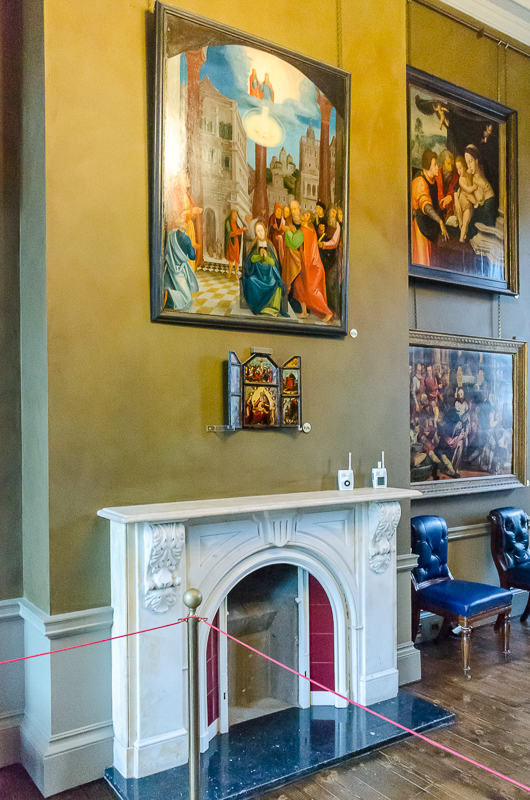
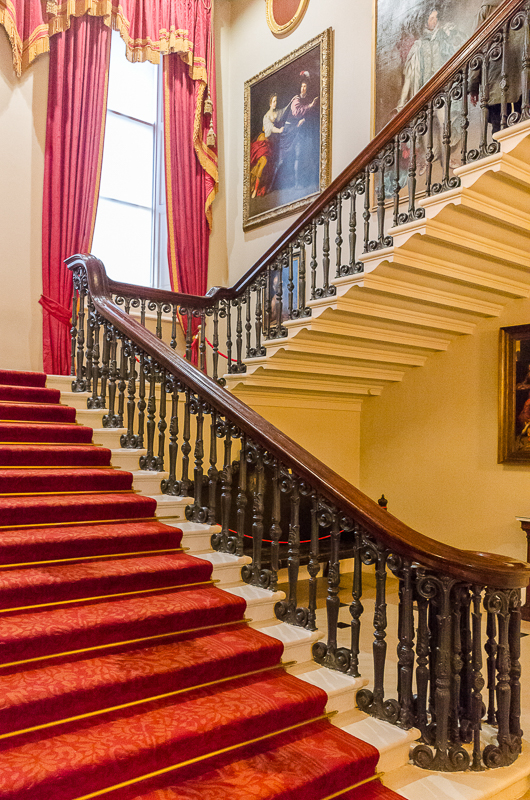
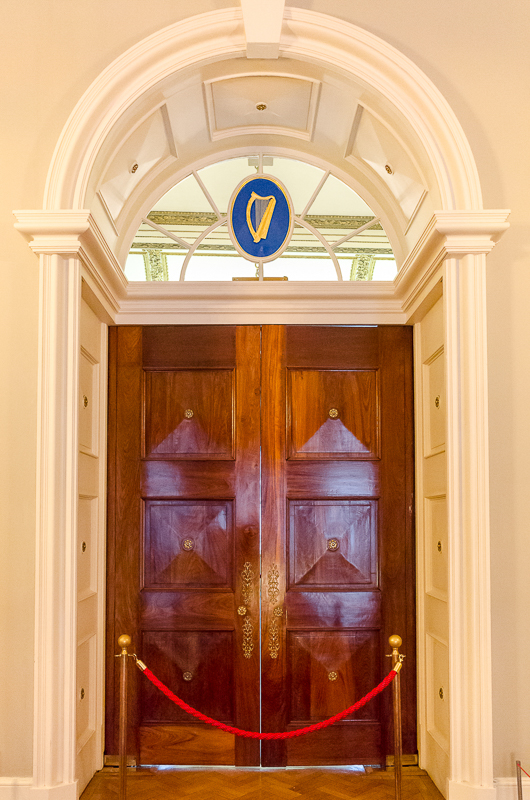
Our second day exploring Dublin began at the Dublin Castle. Okay, it’s more like a small palace than a castle. We overheard a tour guide comment that calling it a castle is a bit of a misnomer. The original structure from the 1200s was a typical castle with four towers and walls, but it suffered major fire damage in the late 1600s when one of the towers, storing ammunition, blew up. It was after this event that a new Georgian Palace was constructed for the residence of the Viceroy, who represented the British monarchy in Ireland until 1922.
After Ireland obtained its independence, the palace began hosting important national events among other governmental functions, like tours. Guided tours are offered every hour for €12 per person. The tour goes through the State Apartments and the Royal Chapel.
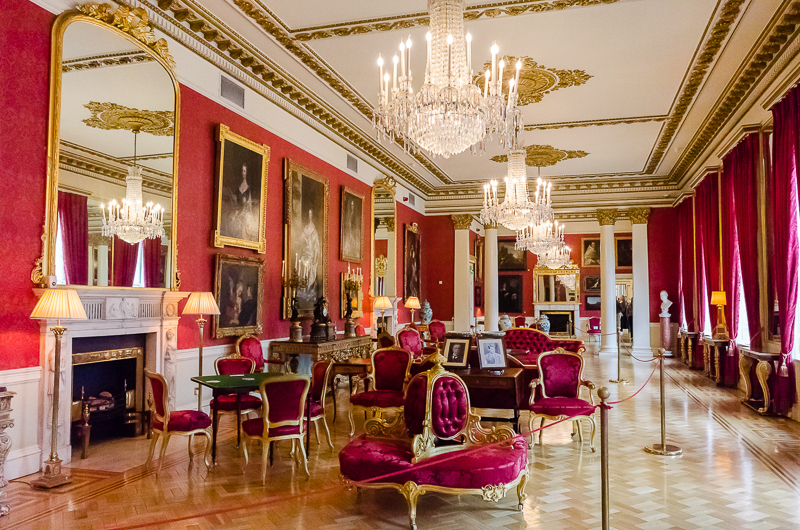
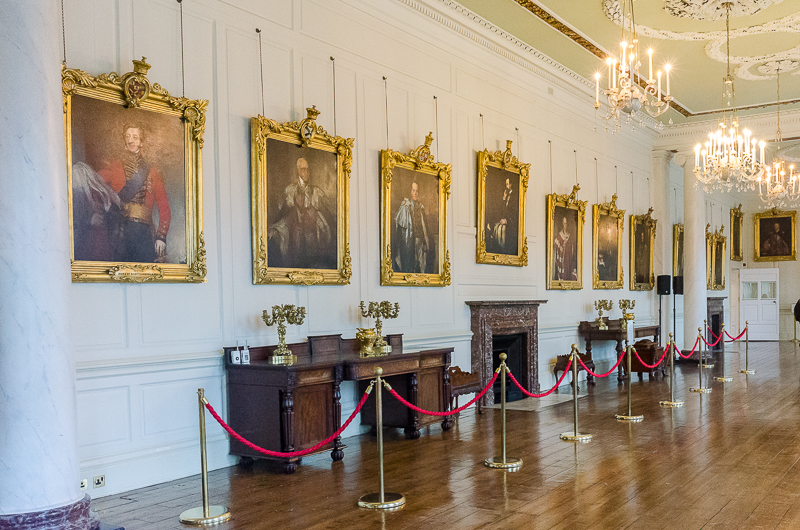
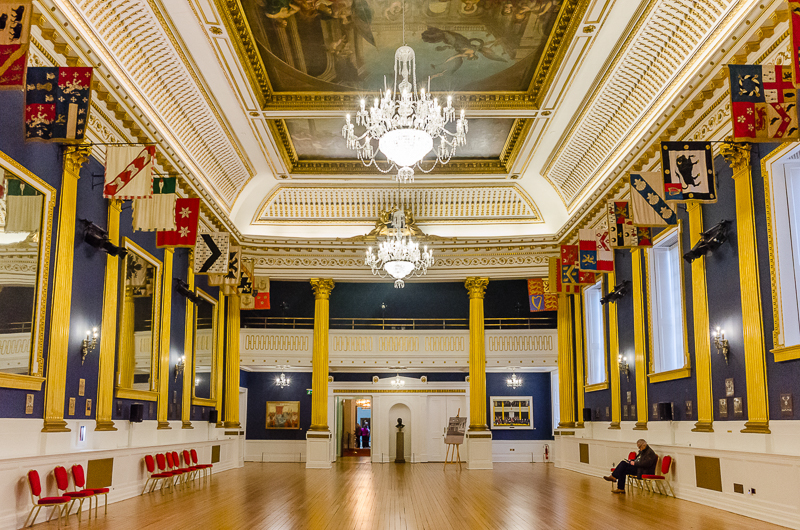
When we arrived the next guided tour was not scheduled to start for 40 minutes. Instead of waiting, we opted to pay €8 to take the self-guided tour of the State Apartments only. Though we would have preferred to pay more to see the Royal Chapel, we did not have the patience to wait 40 minutes.
After our thirty minute walk through the eight or so rooms of the State Apartments, we made the short walk down the street to the Temple Bar district. This is the epicenter of tourist pubs in Dublin. I doubt any self-respecting Dubliner would ever be seen paying for an overpriced pint of beer in this neighborhood.
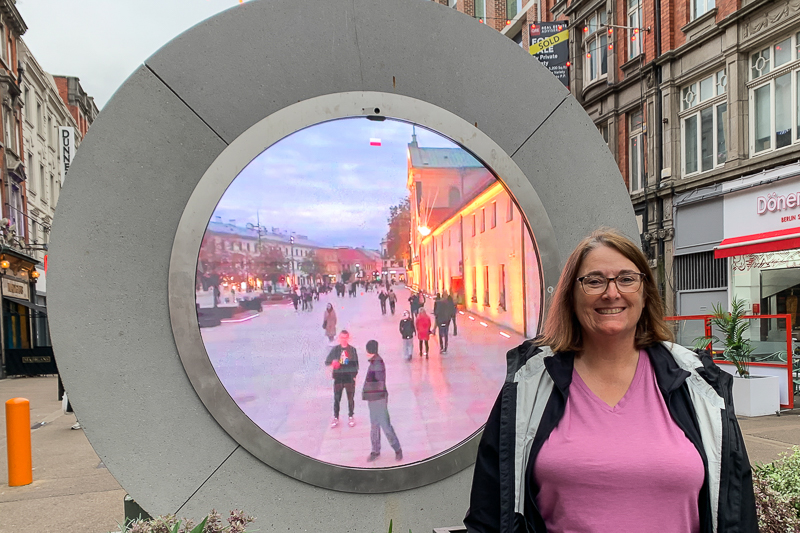
We walked through the Temple Bar district without slowing once, on our way to the Dublin Portal. The Portals are a network of live video cameras (no audio) linking several cities across the world. At the time of our visit the Dublin Portal connected with Lublin, Poland. Basically you can wave to folks looking into the portal in the other city. And take selfies. That’s about it.
For reasons unknown we walked over to the campus of Trinity College. The place is crawling with tourists. I couldn’t imagine going to school in a place where tourists probably outnumber students. Maybe the campus is beautiful on a nice day, but in gray overcast weather, it’s just gray.
Trinity College hosts the Book of Kells Experience. Put bluntly, for €25 you can go into what is probably a beautiful old library and see a really old book described as Ireland’s greatest cultural treasure.
We love old libraries and old books, but not for $60 (€50 at the current exchange rate). That’s a large pizza and several cases of beer.
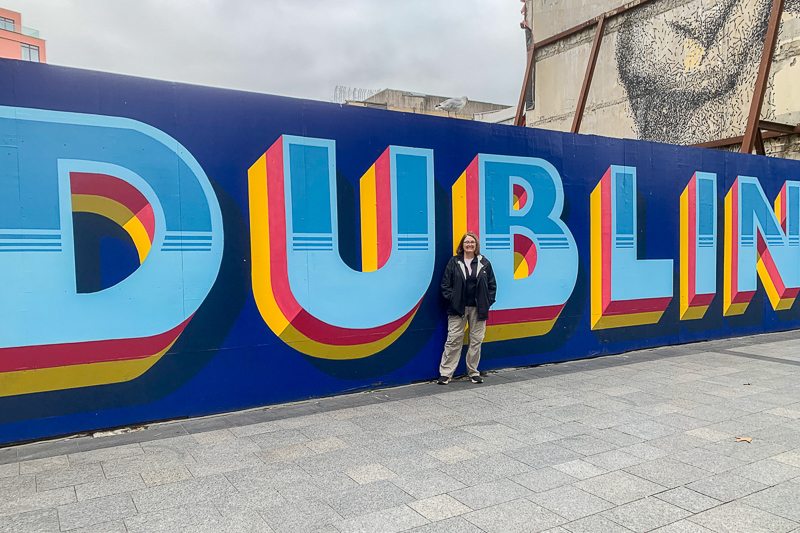
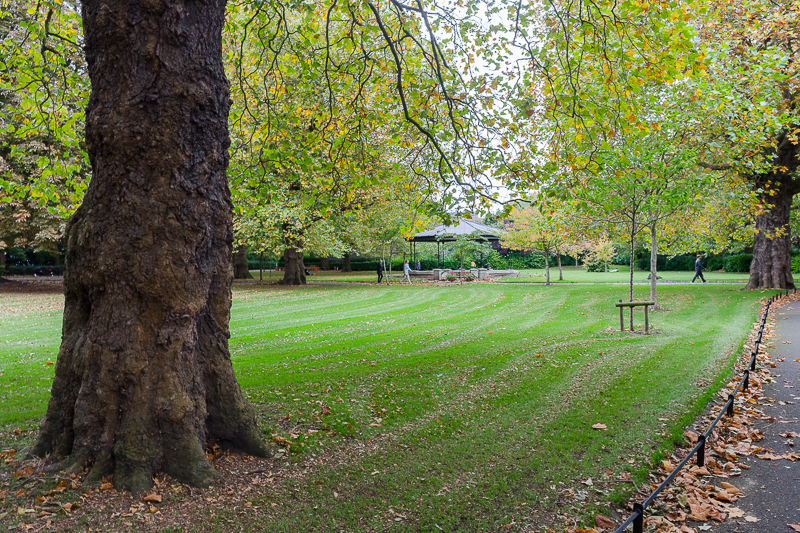
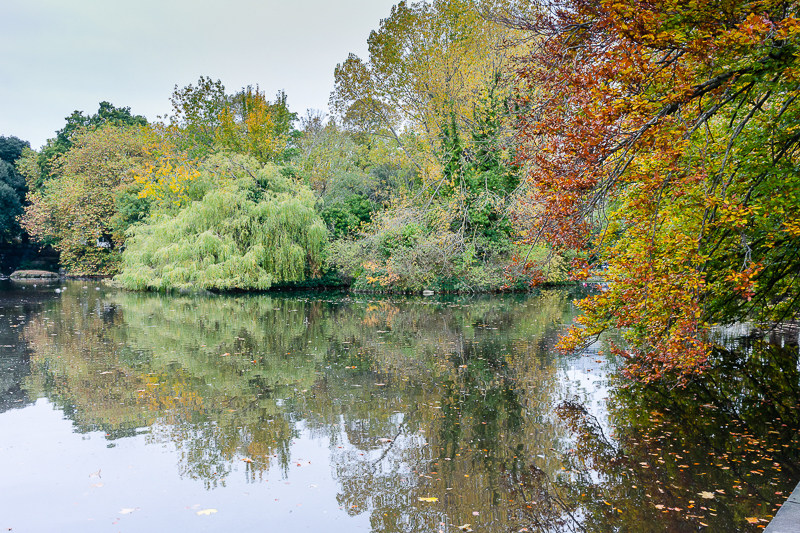
Nearby is St. Stephen’s Green, a really nice park with walking trails, benches, fountains, a lake, and playground. Even though it was overcast and dreary out, we probably spent more time walking around the park than at any other place we visited in Dublin.
After an enjoyable afternoon exploring Dublin’s city center, we decided to find a reasonably priced pub for drinks and dinner. Reasonably priced is relative. Surprisingly most of the pubs in the suburbs cost about the same as the pubs in the city. So we stayed in the city and went to Darkey Kelly’s for several hours. The beer and food were good, and not priced any more exorbitantly than other places around town.
Our waitress spoke fluent English with a foreign accent we could not place. So our group tried to guess where she was from. I think the guesses were France, Italy, Austria, and the Netherlands. When we asked, she was from Spain. She liked working at Darkey Kelly’s because almost everyone who worked there was from Spain.
Between the employees and customers, I doubt anyone there was from Ireland.
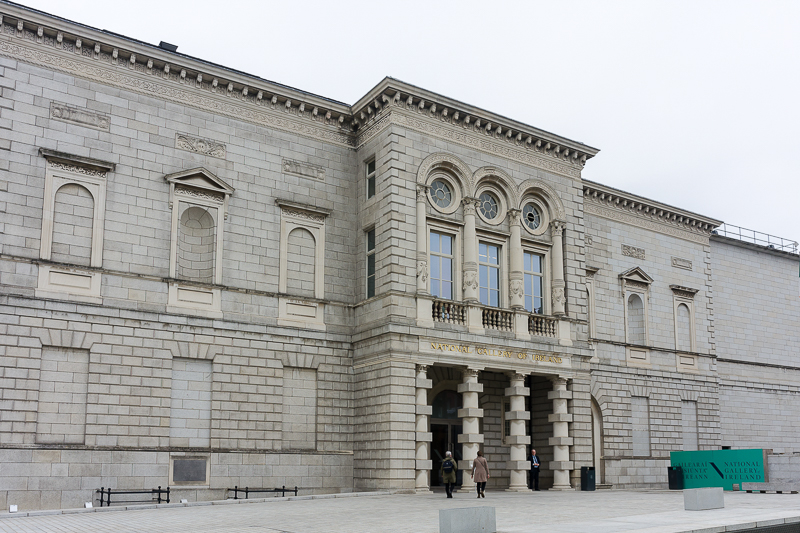
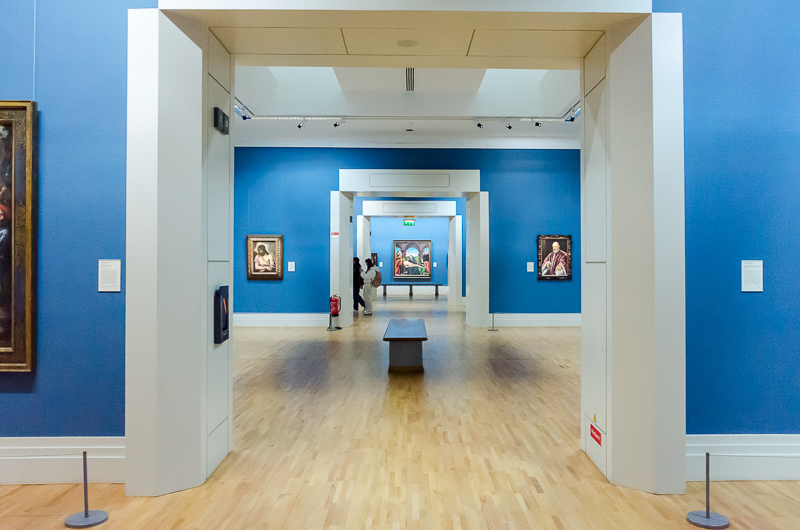
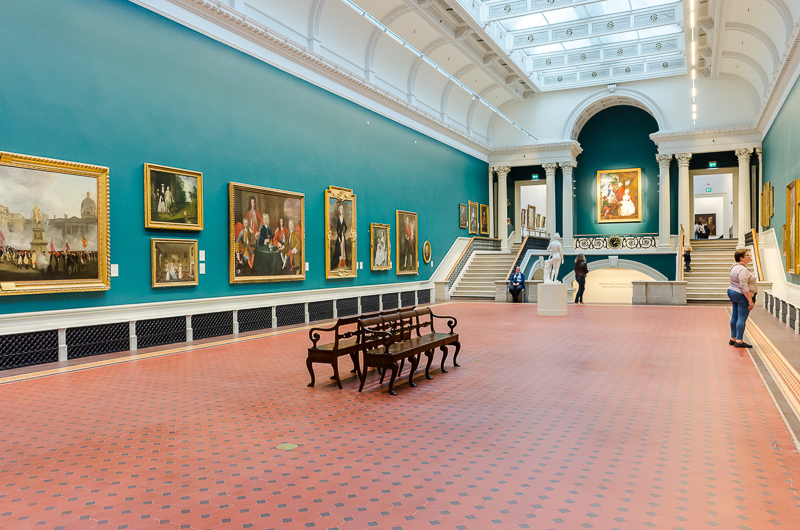
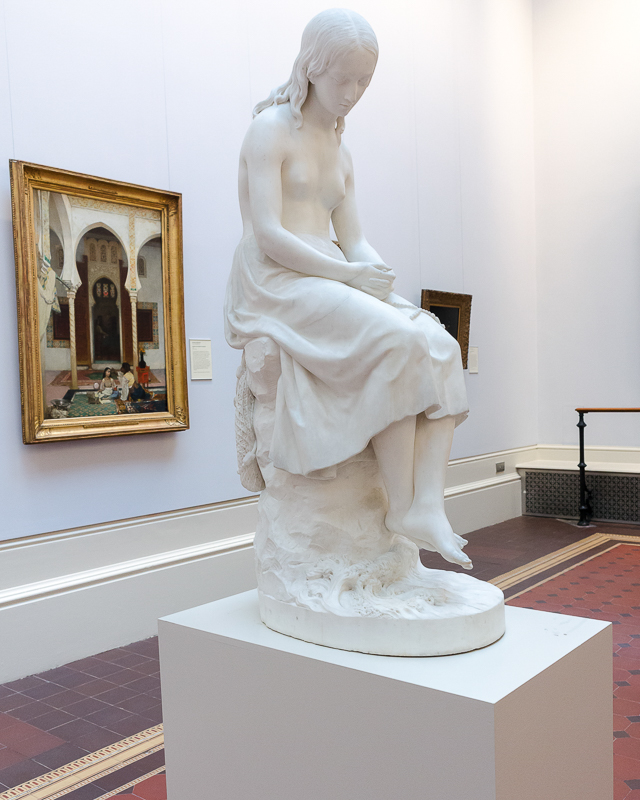
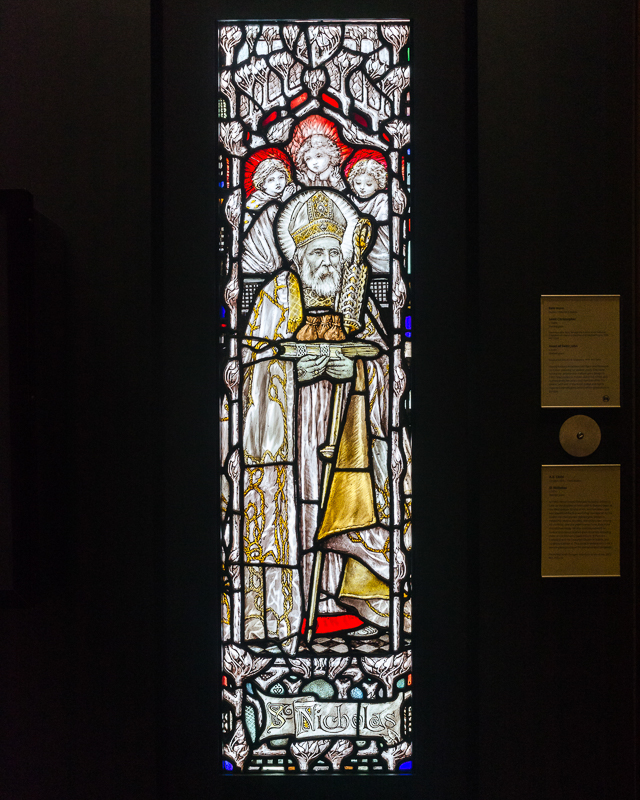
On the morning of our final day, we visited the National Gallery of Ireland, the fine arts museum. As with all national museums in Ireland, it is free to visit. Most of the works are portraits and religious art, with some still life and landscape paintings here and there.
This place is popular with school groups, as we ran into quite a few. This was not a problem except in the small rooms that house contemporary paintings from the early 1900s. Those benches were overwhelmed with elementary school kids trying to sketch out their favorite painting. It was a zoo.
Anyway, the National Gallery is definitely worth a visit, but might be better on a weekend or when school is out.
After the National Gallery we caught a bus back to the airport to catch our return flight to Porto.
While waiting at the airport we totaled up our transportation costs on TFI. Even after paying €5.50 for a Leap Card, and having a balance of €1.50 remaining, we still saved a few dollars versus paying with coins per bus ride. Our cost per ride averaged out to €2.20 (compared to the full price of €2.60).
The breakeven point for buying a Leap Card is somewhere around 10 to 12 rides, depending on the balance remaining on the card at the end of your trip.
After cooling our heels with a two hour flight delay in Dublin, we landed in Porto at 12:40 AM … just as the final metro ride of the day was leaving the airport station. So much for taking the metro back into town.
Luckily signs to the ride share pickup point at the Porto airport are clear and easy to follow, and several Bolt drivers were there waiting to pick up customers even at 1:00 AM. The ride to our Airbnb was a surprisingly inexpensive €11, so my frustration at the two hour delay in Dublin quickly dissipated.
The only overnight public transportation option to and from the airport is the 3M bus route that travels to and from Avenida dos Aliados in central Porto once an hour from 12:30 AM. I was ready to tell Stephanie to get on the 1:30 AM bus and prepare herself for a 10 minute walk across town at 2:00 AM, but with the cheap Bolt ride, we didn’t have that conversation.
Garrett and Stephanie
For additional posts about our travels elsewhere in the world, check out our Travel Blog. It contains collected links to all of our travel posts.
Want to subscribe (or unsubscribe) for email notification of new blog posts? It is only two to three emails a month. Send your name and email address to slowtravelchronicles@gmail.com, and note subscribe (or unsubscribe) in the subject line. All email addresses will be kept confidential and not sold to any third-party. You won’t get any marketing junk or sales pitches from us.