
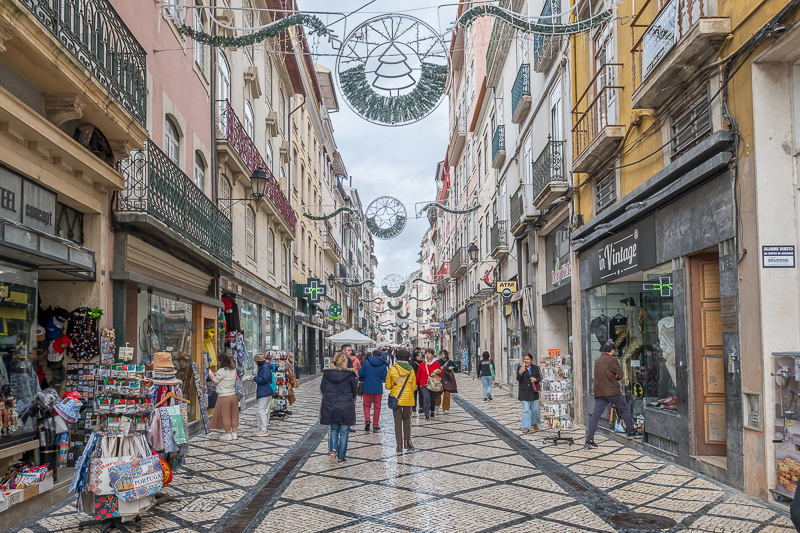
A few days after our visit to the University of Coimbra, we headed back up the hill to explore further. Although it was not our intention at the start of the day, we ended up going to four separate churches on our walk downhill, bypassing everything else.
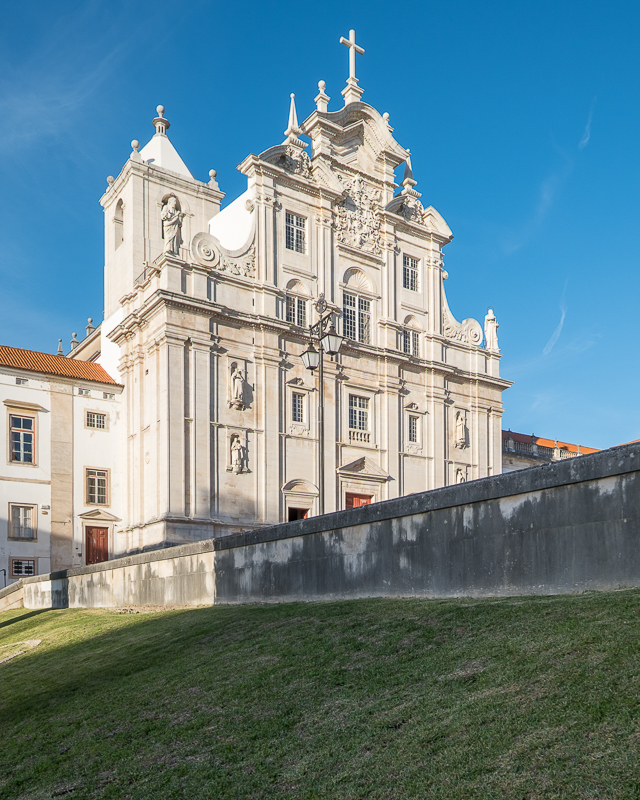
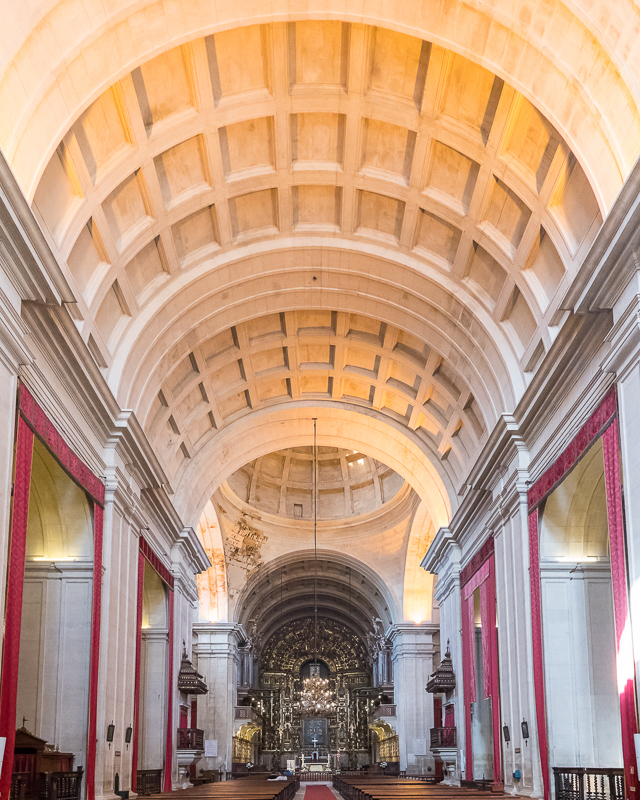
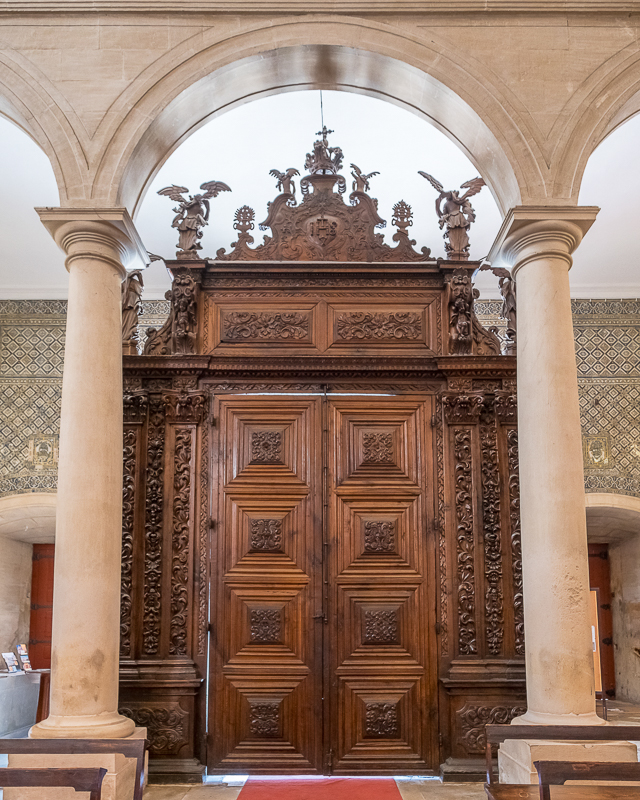
Starting at the top we made our way to Sé Nova do Santíssimo Nome de Jesus de Coimbra, the New Cathedral, a 17th century Baroque cathedral. Tourists are asked to give a “donation” of €1.00 each, which was vigorously enforced by the lady sitting behind the desk when we entered. No “donation”, no entry.
We didn’t mind paying €1.00 each, but really the sign needs to be changed from “donation” to “tourist fee”. Call it like it is. (The “donation” is a common complaint among Google reviewers, so we were prepared for it.) Regardless, the New Cathedral is really nice, and the visit includes a small sacristy with exhibits showcasing vestments and sculptures.
Just downhill is the Museu Nacional Machado de Castro, which we skipped. While the museum gets rave reviews, it is primarily religious art and roman ruins, neither of which particularly interest us.
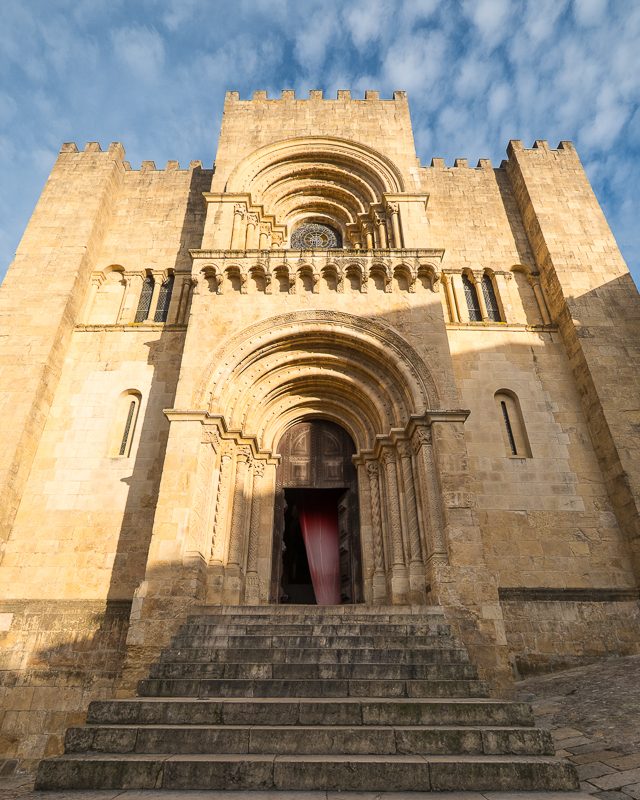
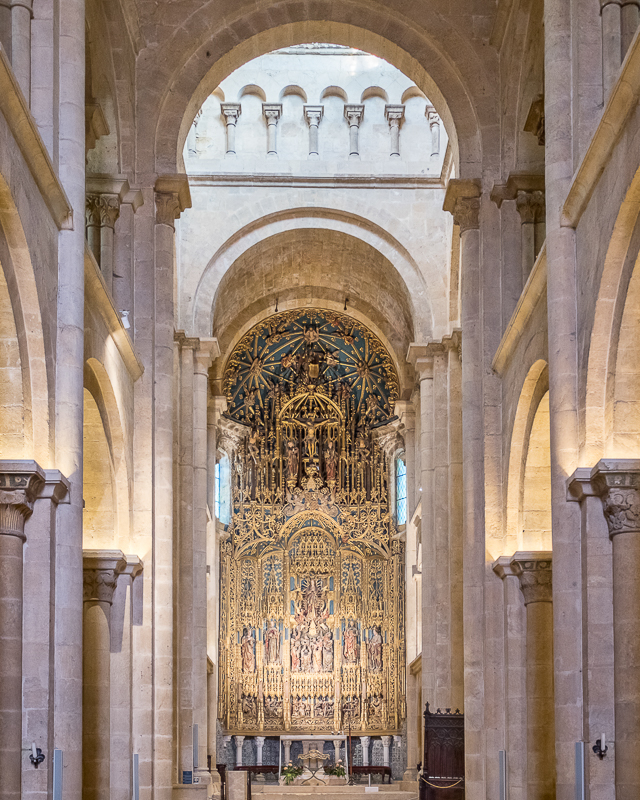
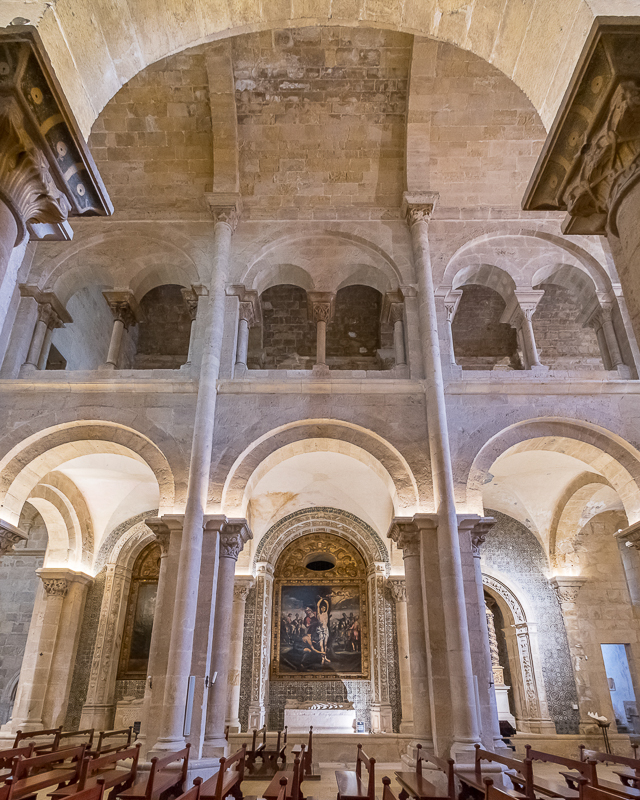
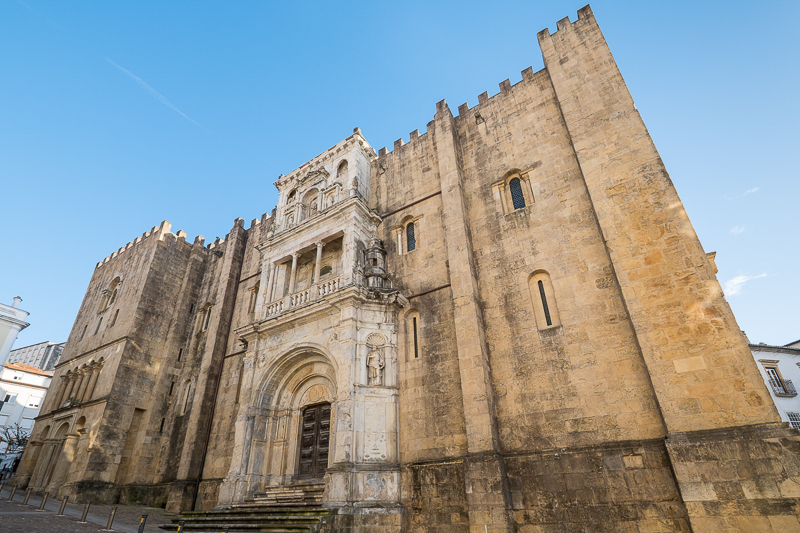
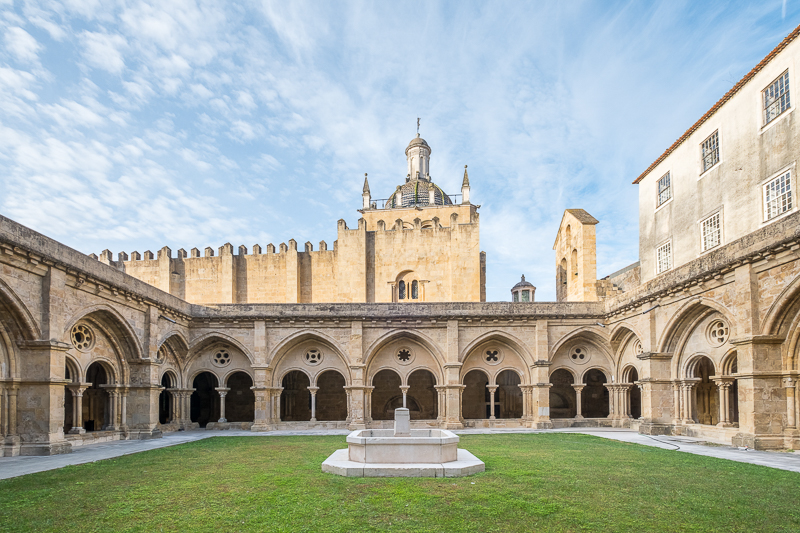
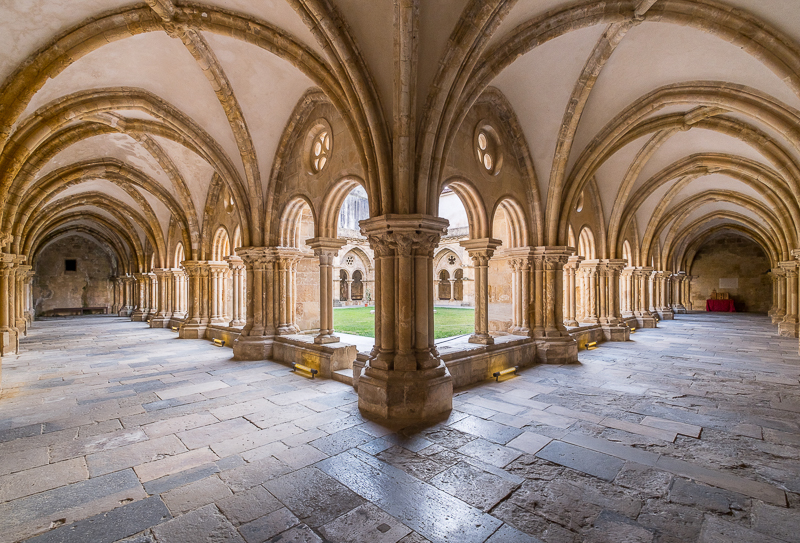
Instead we continued downhill to Sé Velha de Coimbra, the Old Cathedral, a 12th century Romanesque / Gothic / Moorish influenced structure. Here tickets cost €2.50 each. And it is a ticket, not a “donation”. The cathedral is rather plain instead of ornate, which I tend to appreciate. Admission includes a visit to the small cloisters, which most of the other tourists seemed to skip or miss for some reason.
Continuing our downhill stroll, we ran into the Museu da Santa Casa da Misericórdia de Coimbra (the Museum of Holy House of Mercy of Coimbra). The sign out front advertised a church, sacristy, and museum for €2.00 per person, or all that plus a walk to the top of the bell tower for a mere €2.50 per person.
While this was not on our list of places to go in Coimbra, Stephanie figures that anything costing only a couple of dollars is a good deal, and I enjoy climbing up towers, so in we went. After paying for tickets (cash only), we walked through the museum, the church, and sacristy in about 10 minutes – or less. Honestly, it’s just not that interesting.
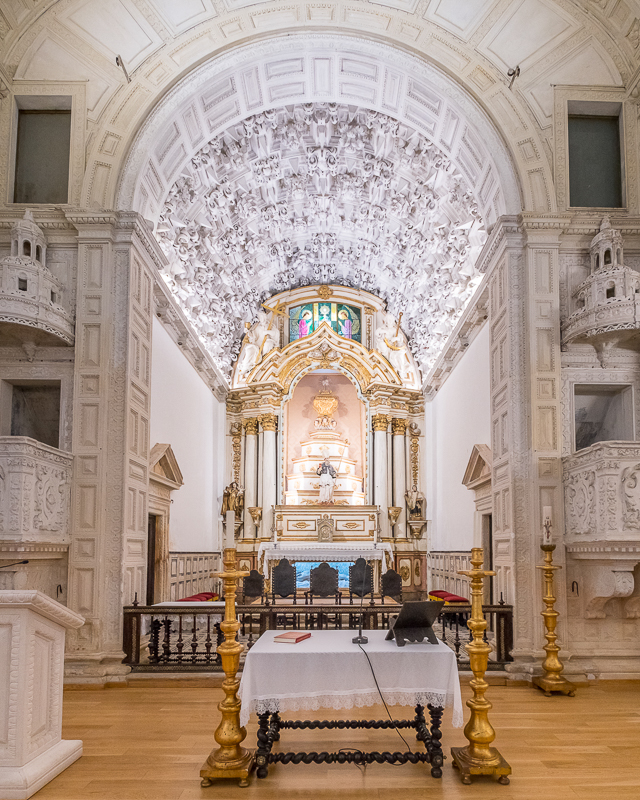
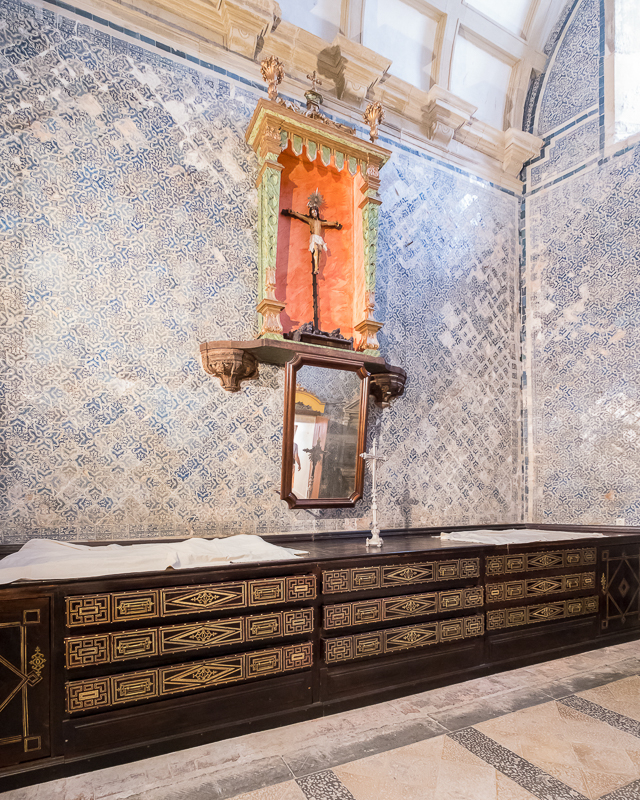
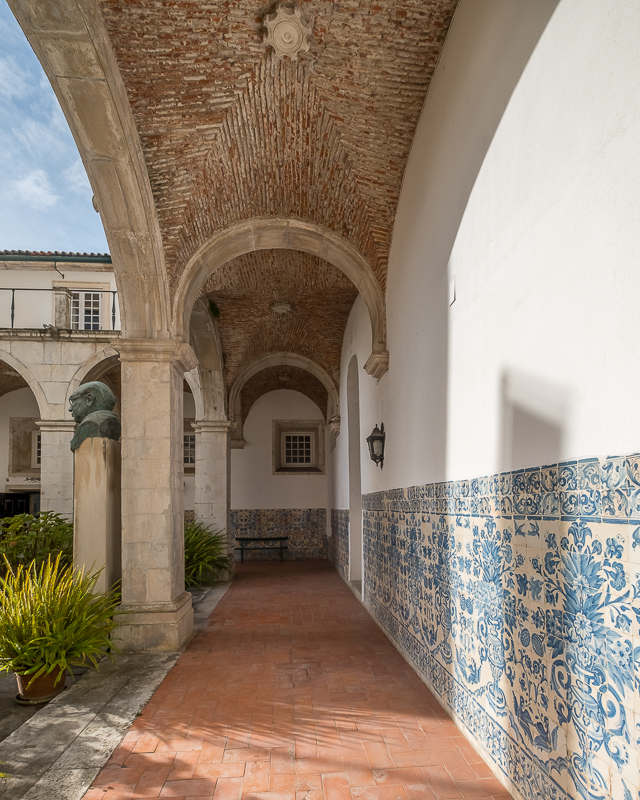
The bell tower, though, makes up for it. A warning sign advises that there are 88 steps to the top, and that the staircase is narrow and confining. Yes, it is. And dark. The spiral staircase is too narrow for two people heading in the opposite direction to easily pass. Luckily we were the only folks there that afternoon.
If you have claustrophobia, these stairs are probably not for you.
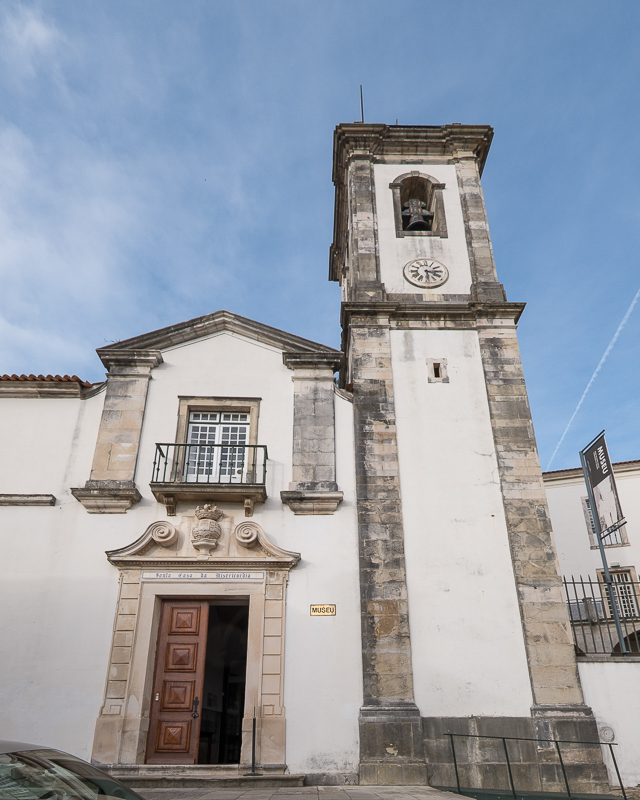
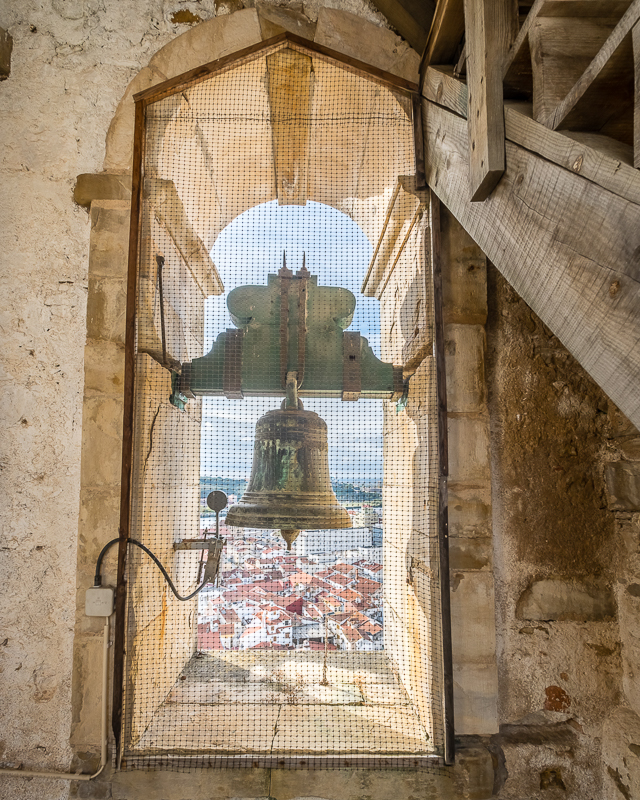
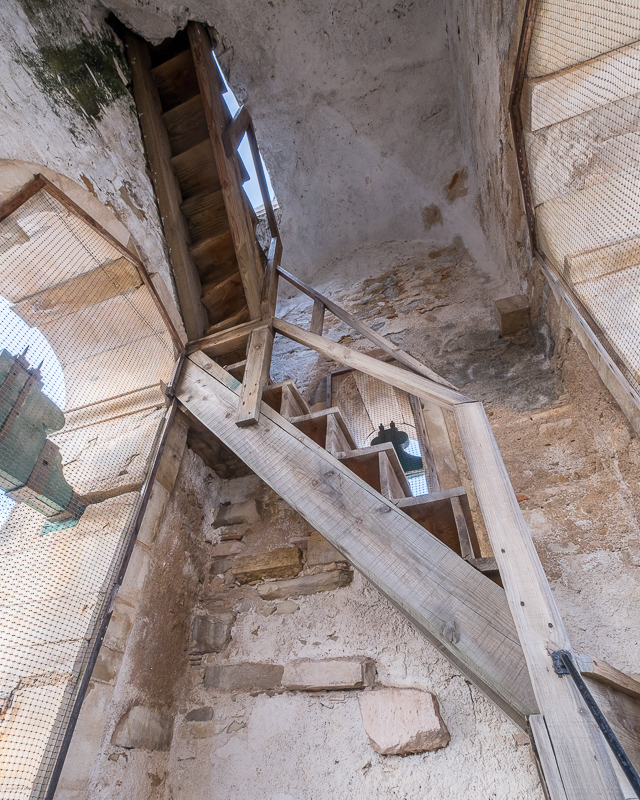
The spiral staircase ends with a steep set of stairs to the bells, which is how far Stephanie made it. From there a short, and quite steep, set of wooden stairs goes to the roof of the bell tower. If you make it this far, you are rewarded with probably the best views of the city. It would be great to be up there at sunset, though you’d need a headlamp to get back down safely.
After surviving the bell tower without incident, we decided to take a break at Café Confeitaria Doce Meu. Here we parted with €14.00 for God only knows how much sugar: two Cokes, a monstrous meringue cookie, passion fruit tart, and one pastel de nata. It’s pricey, but you can’t beat a good variety of cakes, cookies, coffees, tarts, and tables with a view.
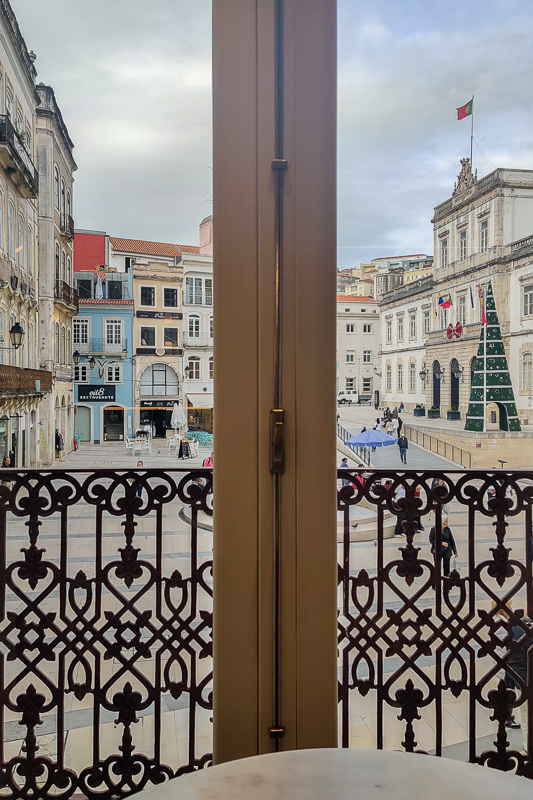
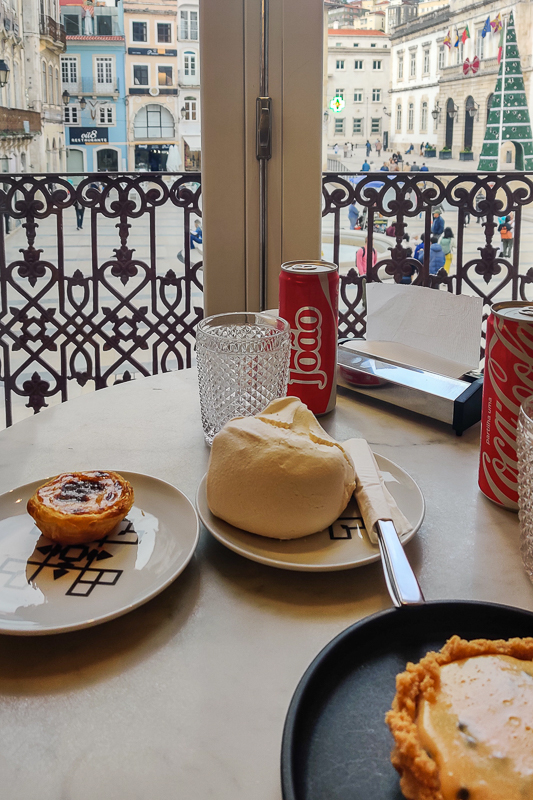
Across the street from the café is Igreja de Santa Cruz (Church of the Holy Cross). The church and monastery were founded in the 12th century, and contain the tombs of King Afonso Henriques, the first King of Portugal, and King Sancho I. For this reason the church is also a National Pantheon. The current church, chapel, and cloisters were rebuilt during the renaissance in the 16th century.
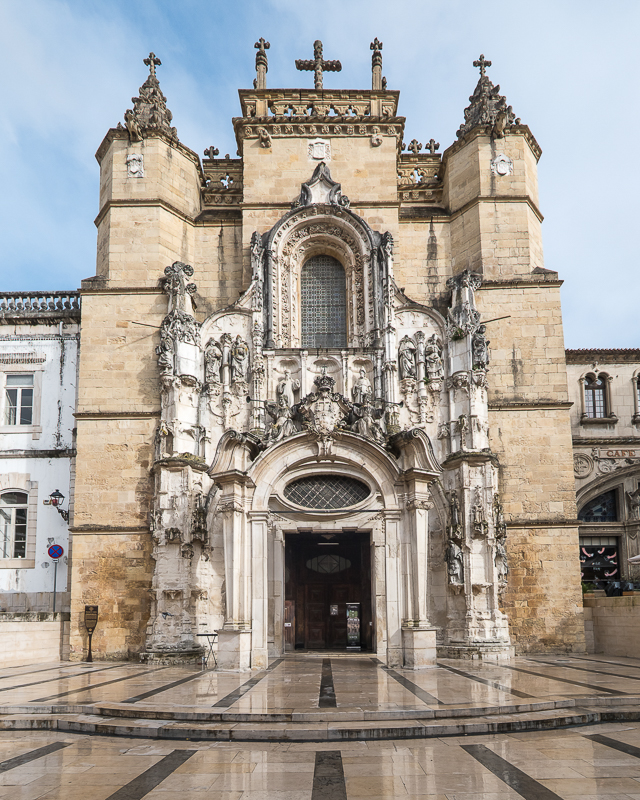
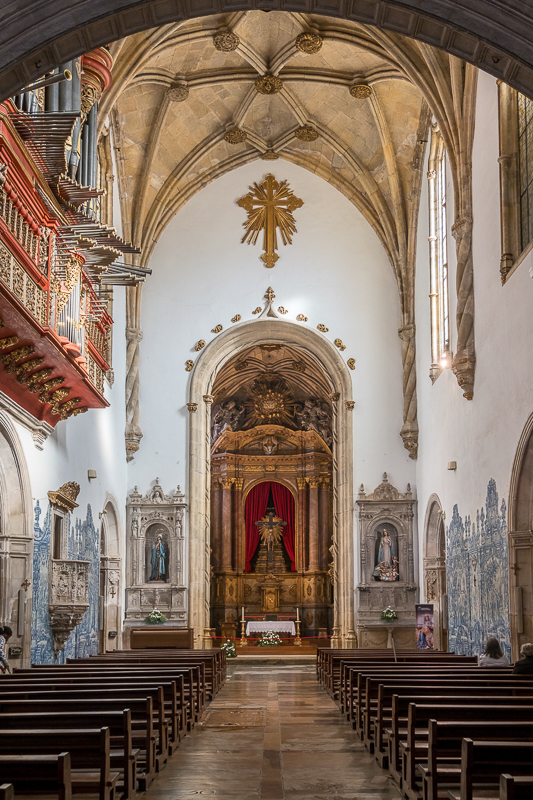
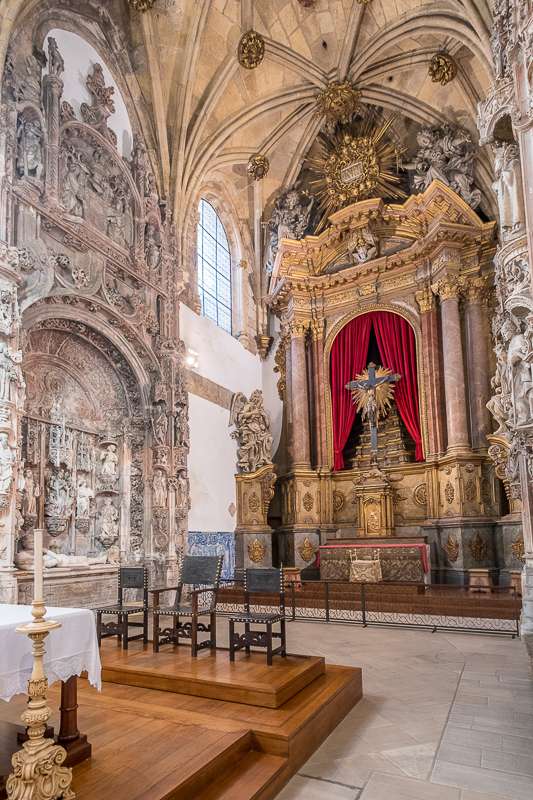
The church is free to enter; however, it costs €4.00 per person to visit the Museum of Sacred Objects, chapel, cloisters, sanctuary room, and upper choir. If you find yourself at Igreja de Santa Cruz, definitely pay the €4.00 to extend your visit.
After paying the entry fee, we were directed first to the tombs of the Kings, not realizing that the tombs are in the apse of the church. As several tourists were lining up to take pictures of the alter, Stephanie and I just walked right out there and into their photographs. I didn’t want to be rude, but we paid for the privilege to be there.
There is no better way to frustrate a bunch of tourists than by walking out into the middle of a seemingly off-limits area when they’re trying to get photographs.
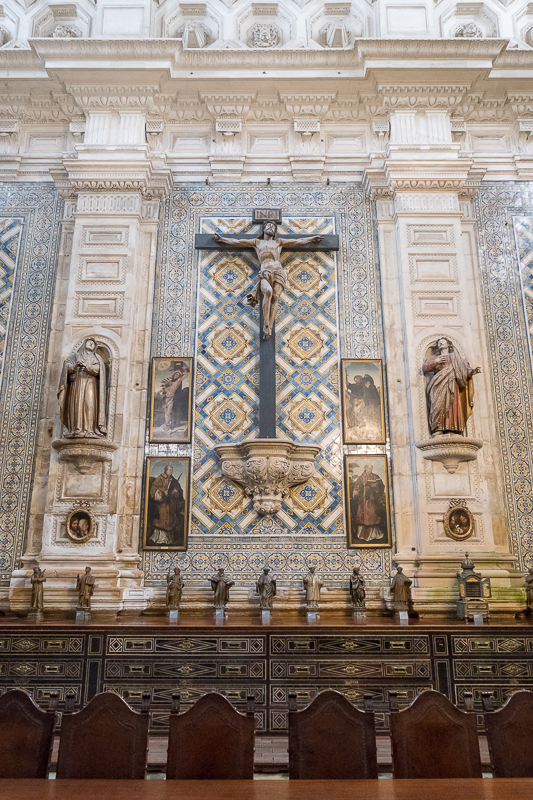
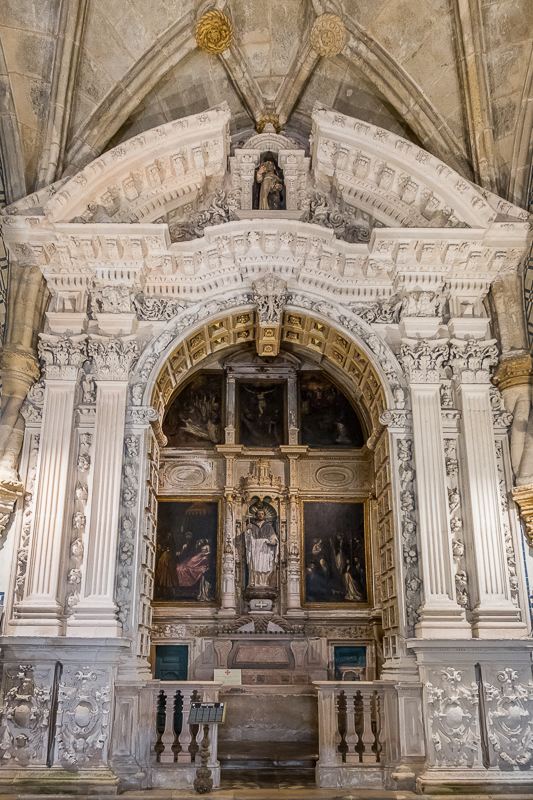
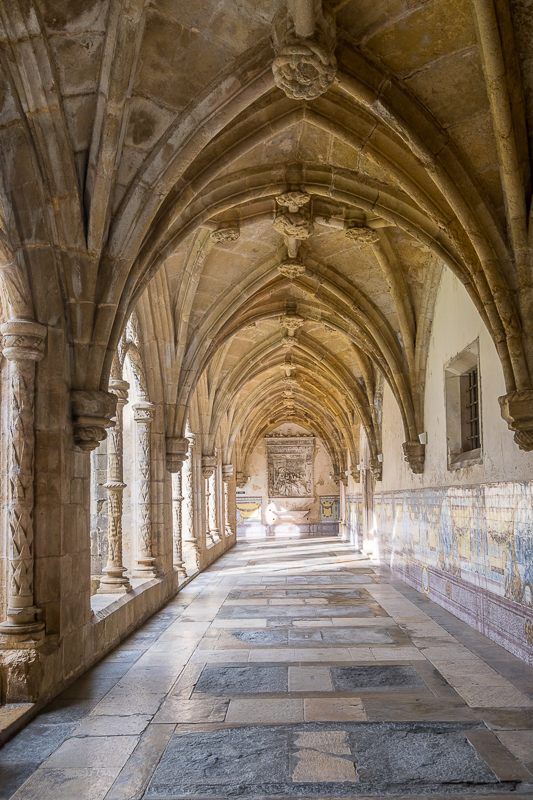
The Museum of Sacred Objects is a large room containing, you guessed it, mostly paintings and sculptures. From there we passed through the small chapel and entered the two level cloisters. After circling the cloisters we were directed to a Sanctuary Room of mild interest. Lastly the visit ended in the upper choir, with a great view of the church from above.
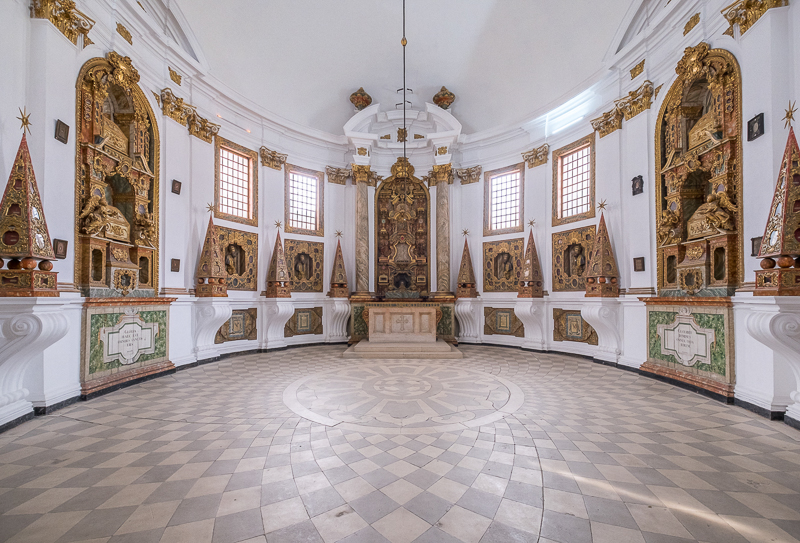
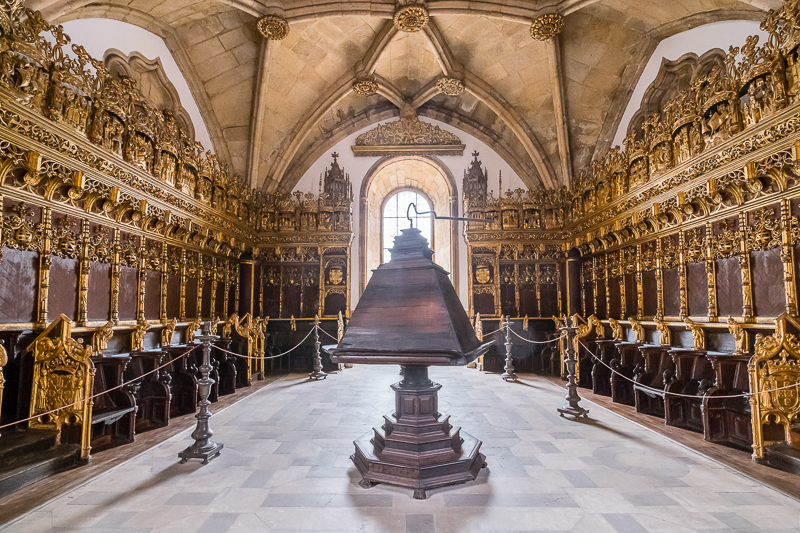
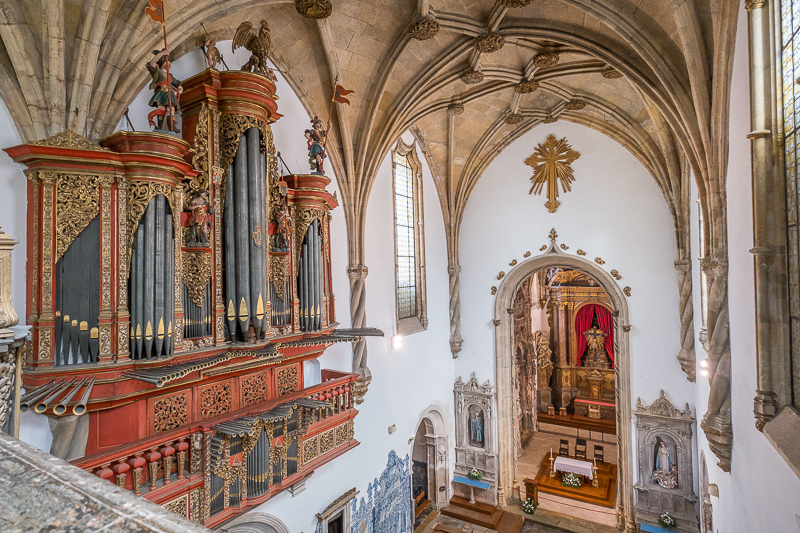
Towards the end of our stay in Coimbra, while out wandering nowhere in particular one day, Stephanie looked down the street and saw a sign inviting visitors to the Seminário Maior de Coimbra (the Major Seminary). After a bit of research to confirm we weren’t getting suckered into another theater tour, as happened in Porto, we decided to check it out.
Guided tours at the seminary come in two varieties, short and full. The short tour is to the library and church only, for €2 per person. The full tour also includes classrooms, dorm rooms, a restaurant, St. Michael’s Chapel, and the former bishop’s suite, all for €5 per person. It is worth the extra few euros for the full tour.
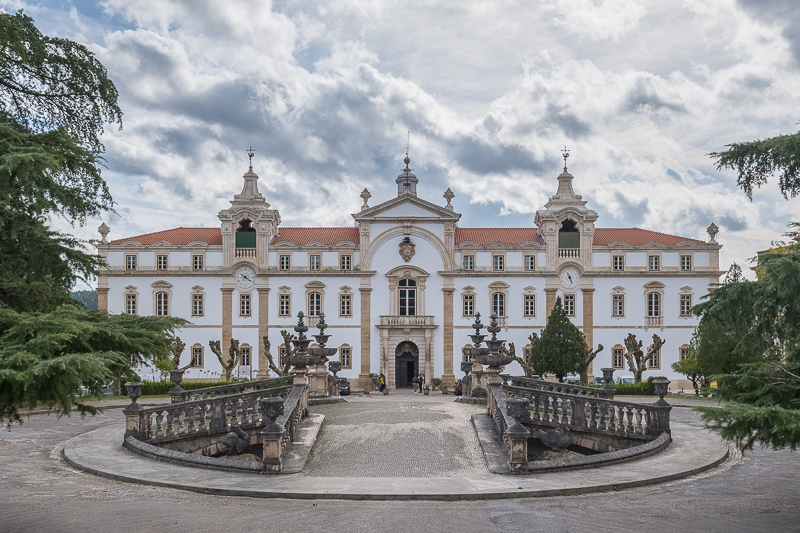
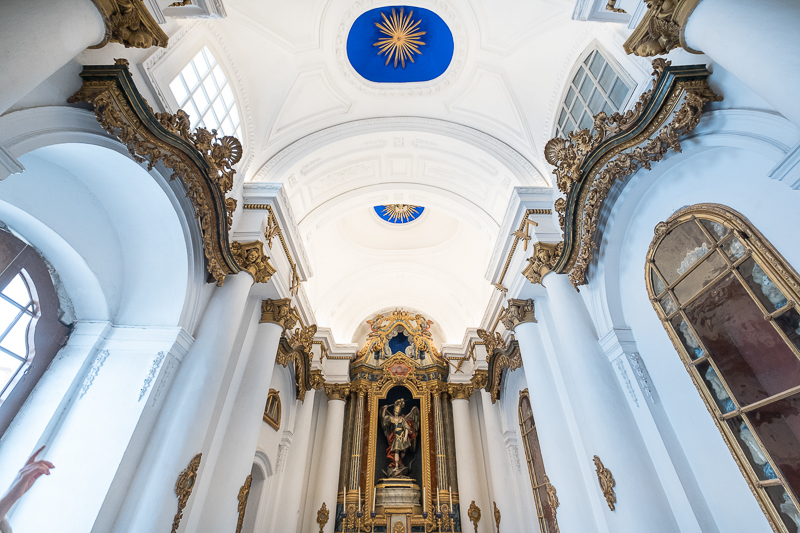
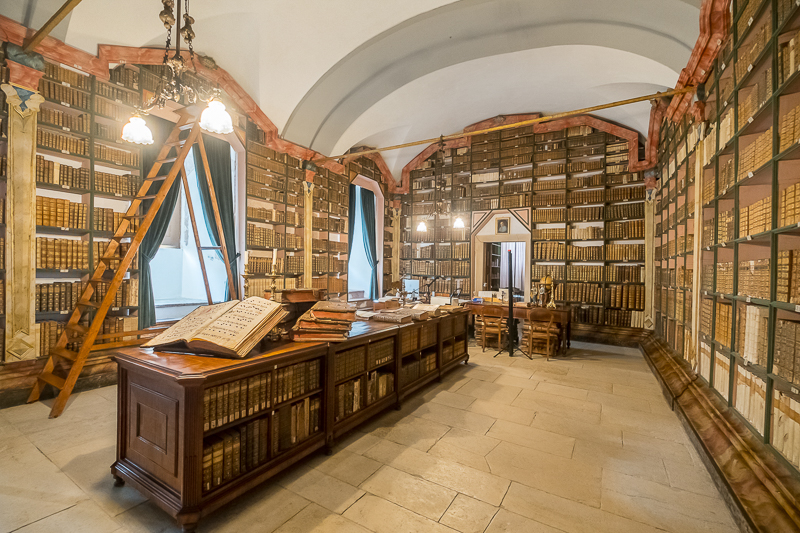
The seminary was built in the mid-1700s, with its final students leaving in 2012 to continue their studies in Lisbon. For the past decade the seminary has been a multi-use space, with hotel rooms, a public restaurant, event space (mostly for lectures and small gatherings), and tours of certain preserved areas.
Several retired priests apparently live on site as well.
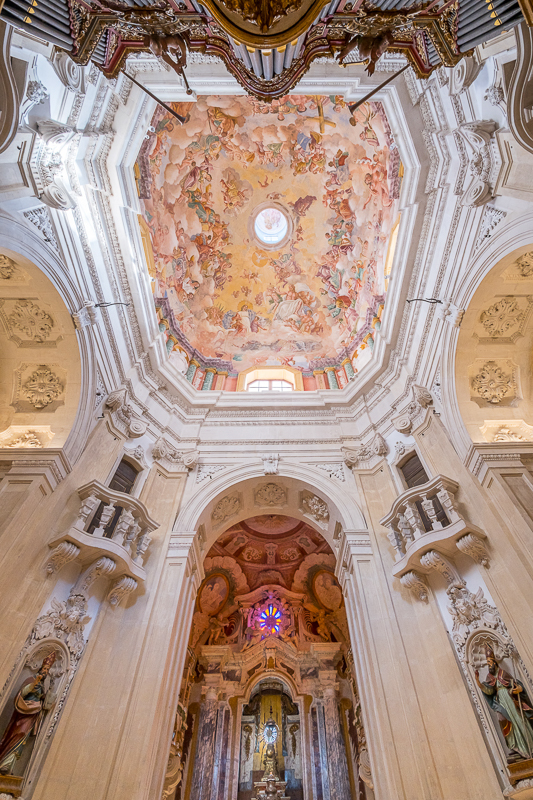
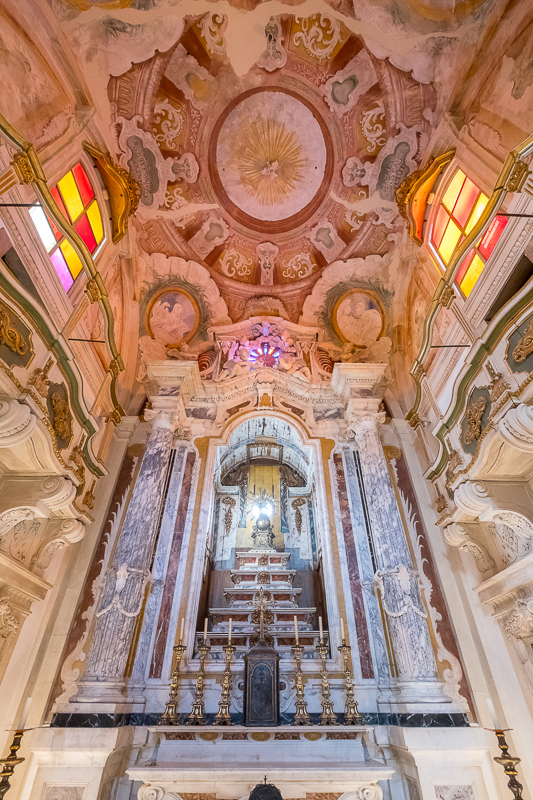
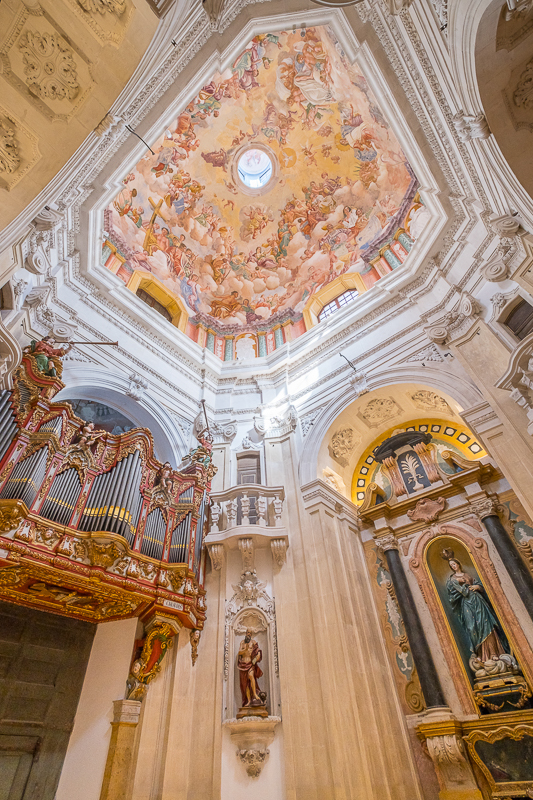
We were the only ones there for the afternoon tour, which begins at 2:00 PM. So we got the benefit of taking a reasonably quick full tour (about 35 minutes) in English. The highlights are the old library, full of handmade books from the 17th century, and the church.
After the tour we walked across the street to the Jardim Botânico da Universidade de Coimbra, the botanic gardens. The university founded the gardens in the 1770s as part of the medical sciences curriculum. Now it remains a large, well-kept park that is free to walk through.
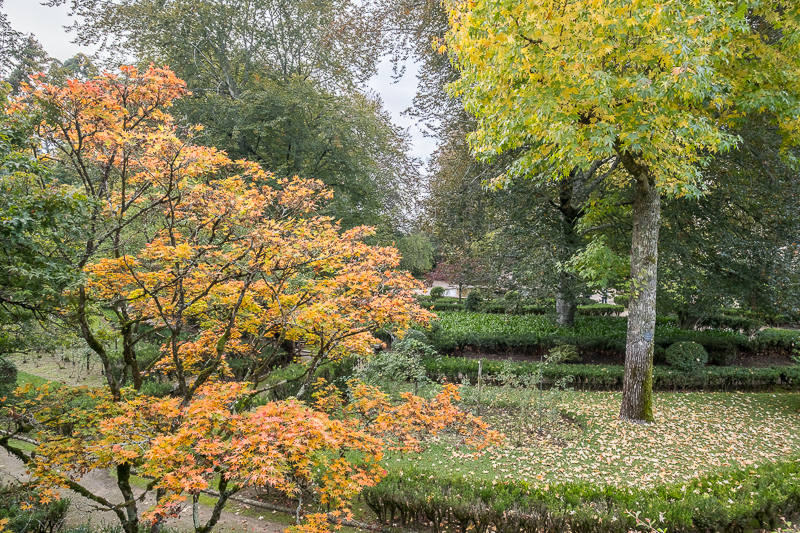
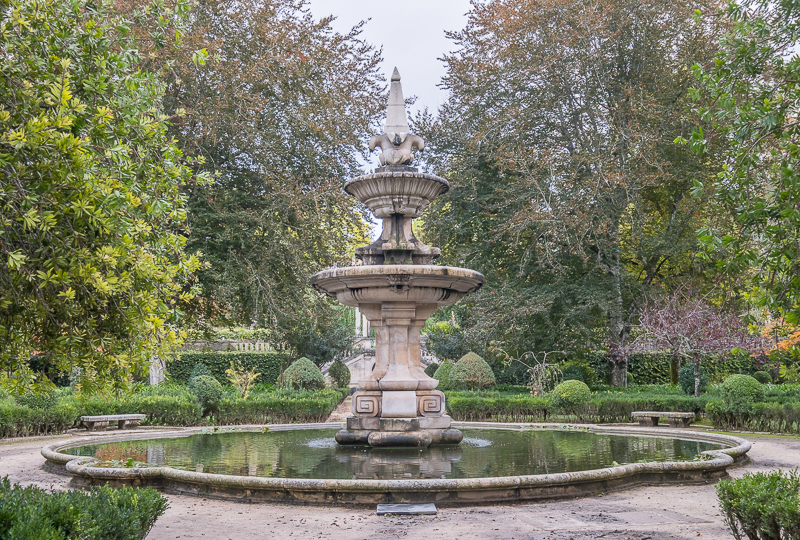
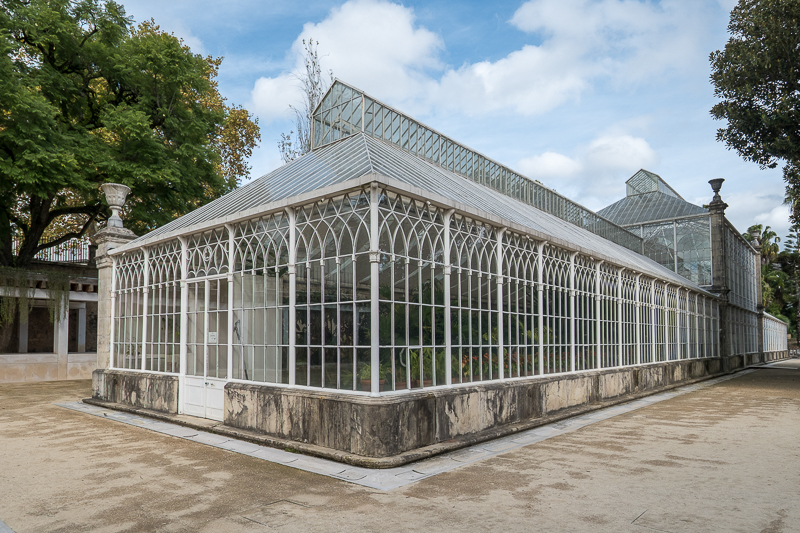
The park contains a large fountain, a couple of greenhouses, picnic tables, and numerous benches. It is adjacent to the university and easy to visit after touring the university sites.
Even in November the park is mostly green with a few flowers. I’ll bet it’s spectacular in late spring.
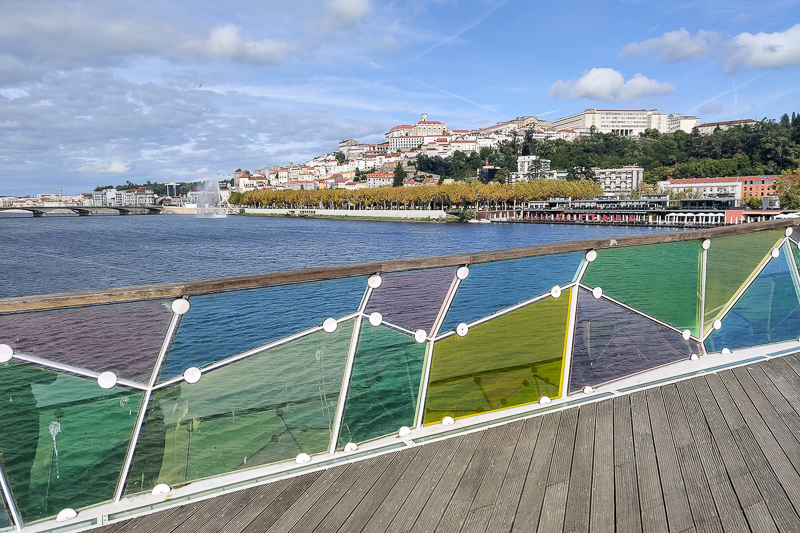
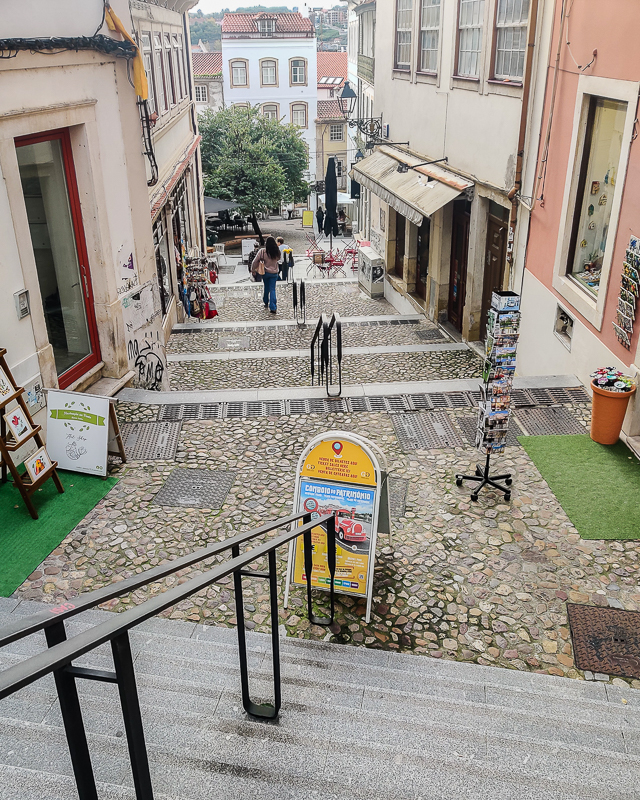
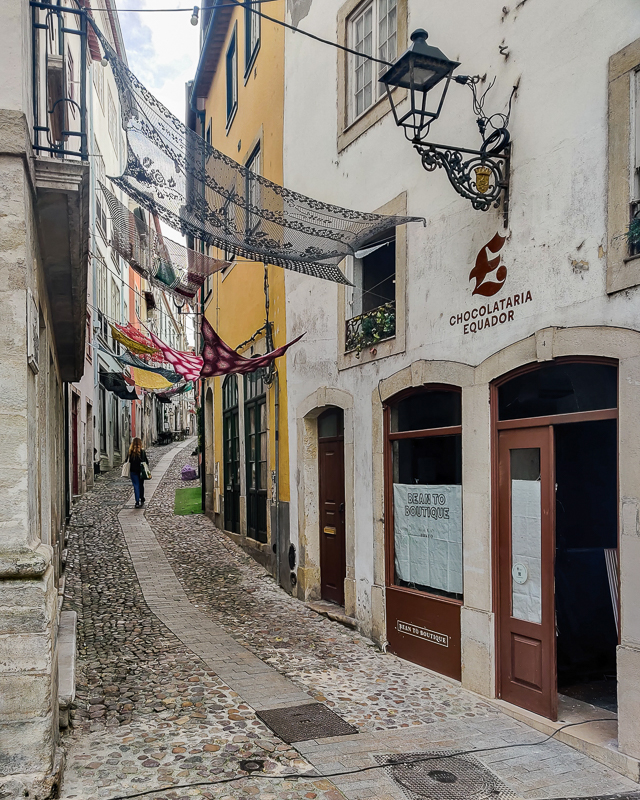
For us the botanic gardens was as much a path as a destination. Walkways through the park lead downhill to the promenade along the Mondego River. From there it was an easy walk through Parque Verde do Mondego (the Green Park) and across the pedestrian bridge back to our Airbnb in Santa Clara.
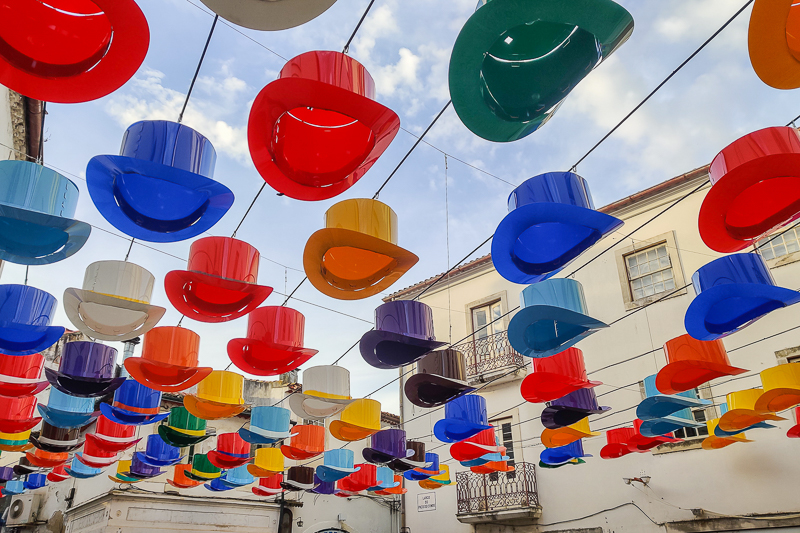
After leaving Coimbra, returning to Lisbon to catch our flight, we planned to spend one night in Tomar. We wanted to visit the Convento de Cristo (Convent of Christ) and Castelo de Tomar (the Tomar castle). Unfortunately weather conspired against us. With steady rains forecast for a few days, we cancelled our night in Tomar. I guess we should have made Tomar a day or overnight trip from Lisbon. Oh well.
Instead of seeing the convent and castle in Tomar, we dodged rain storms in Lisbon and had a celebratory end of trip dinner at Taco Bell.
Garrett and Stephanie
If you have not already done so, read our other post about Coimbra:
Coimbra, Portugal (November, 2025, Part I). Touring the University of Coimbra; dinner at Star Kebab & Pizza.
For additional posts about Portugal, or elsewhere in the world, check out our Travel Blog. It contains collected links to all of our travel posts.
Want to subscribe (or unsubscribe) for email notification of new blog posts? It is only two to three emails a month. Send your name and email address to slowtravelchronicles@gmail.com, and note subscribe (or unsubscribe) in the subject line. All email addresses will be kept confidential and not sold to any third-party. You won’t get any marketing junk or sales pitches from us.