
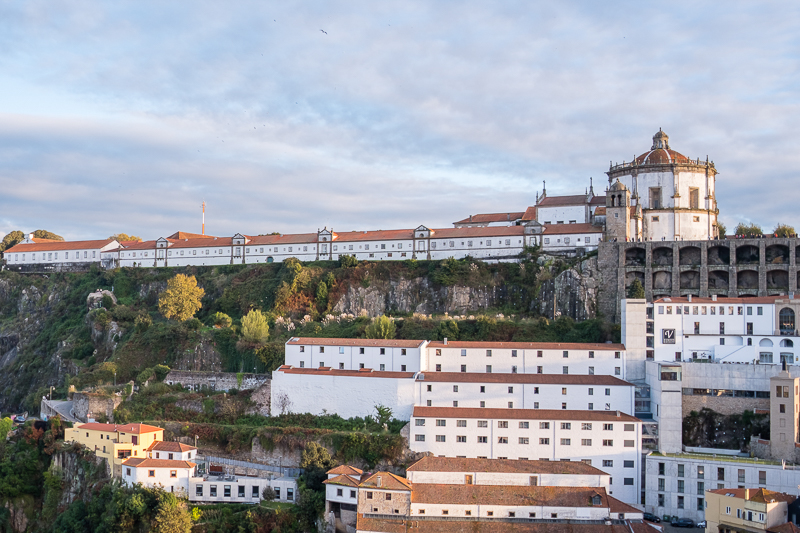
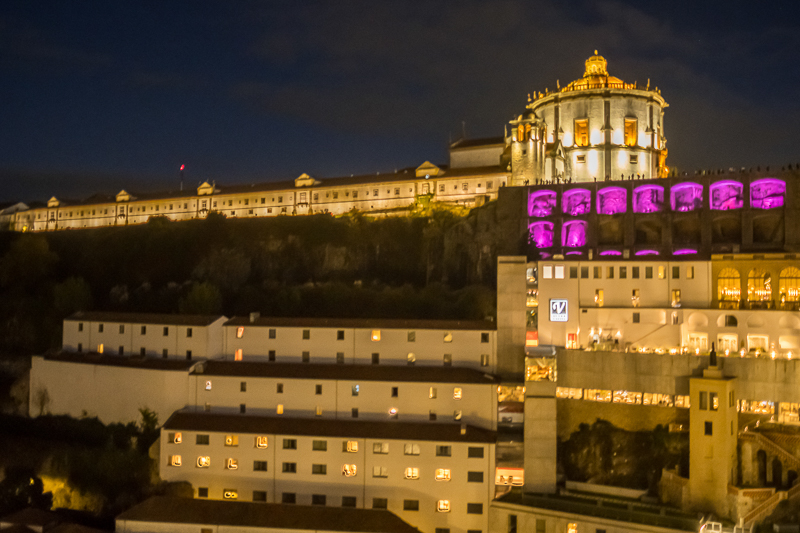
Several times Stephanie talked up a building that she admired from afar, Igreja e Mosteiro São Bento de Vitória (Church and Monastery of St. Benedict of Victory). Even though this was not on our to do list for Porto, a quick Google search revealed that the church and monastery is open for a short period of time on Monday, Wednesday, and Friday afternoons, and that the cost to visit is €10.
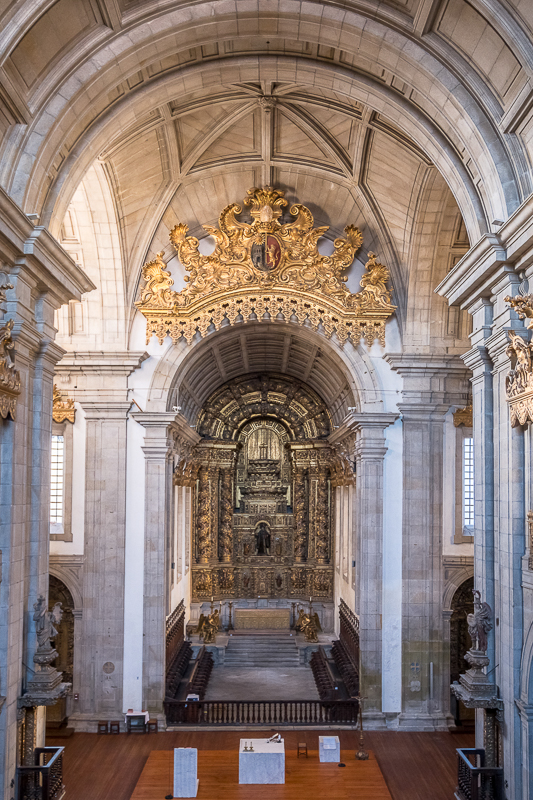
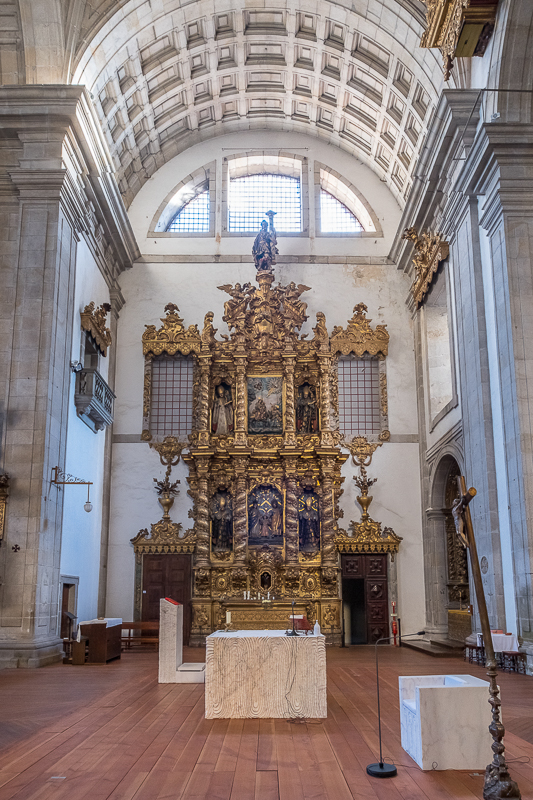
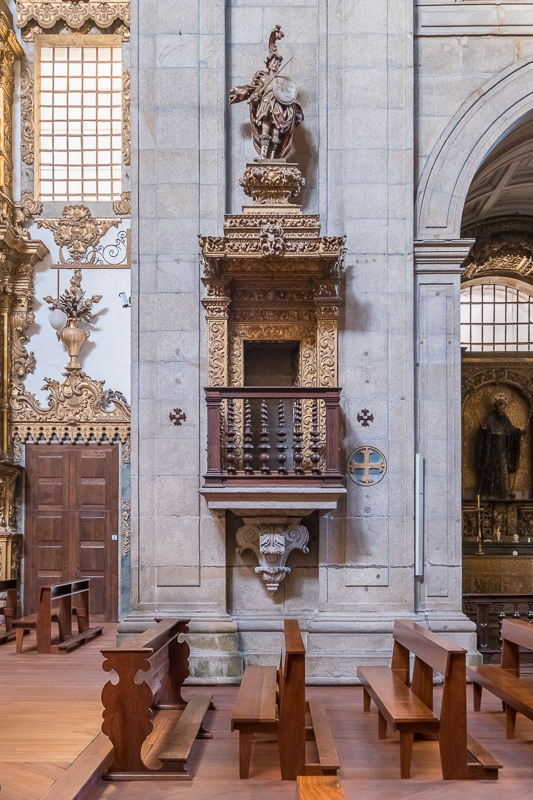
We stopped in on a Monday afternoon about 3:45 PM and were told to come back another day as the 3:30 PM tour already started. Okay, so a tour is required. A few days later we returned at about 3:15 PM and bought tickets for the tour.
It turned out to be a tour of four. One other couple, Portuguese, joined us. Unfortunately this meant the tour was going to be in Portuguese. Had it just been us, I think the guide would have opted for English instead. Stephanie and I got headphones to listen to the pre-recorded audio guides.
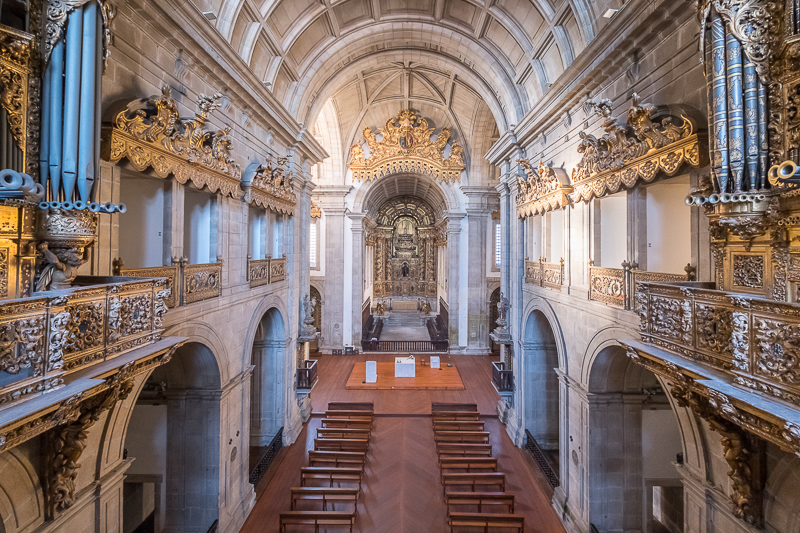
The tour started in the church, which is really beautiful. The audio guide is pretty informative about the construction, decorations, and history of the church. We later learned that the church also hosts Fado shows, which is probably a better option than the €10 tour if you just want to see the church.
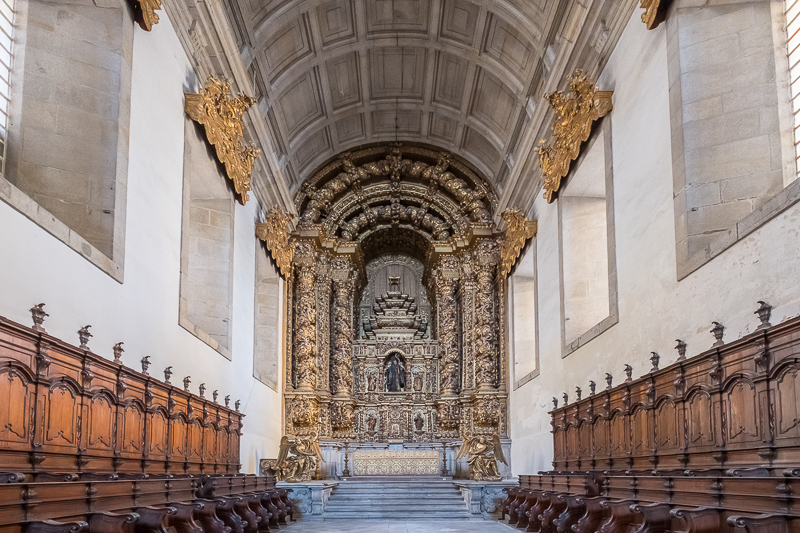
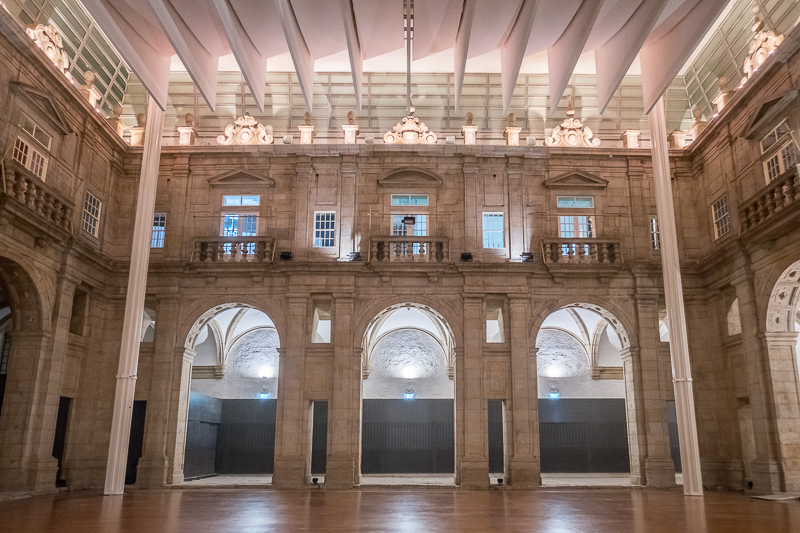
From the church the tour moved into the monastery, specifically the Major Cloister. Again, the audio guide is reasonably good, as it gave a history of the cloisters from its time in the monastery, being used by the military, and converted to an indoor concert and theater space.
Theater? Hmmm. Maybe we should have done some better research.
By this point we were about 40 minutes into the hour long tour. According to our audio guide, the next tour stop was the Documentation Centre. Basically a small room with books and computers. We didn’t bother to listen to the recording in here. Similarly we did not listen to the recordings about the Stairways and Corridors. I mean, it was a twenty second walk up the stairs.
The final stop of the tour was on the upper floor of the cloisters, the White Nights Exhibition. I started laughing when we walked into the exhibition space. It was bizarre. The guide also laughed and told us, in English, that this was a display of exhibits and posters illustrating past shows put on by the Teatro Nacional São João (“TNSJ”).
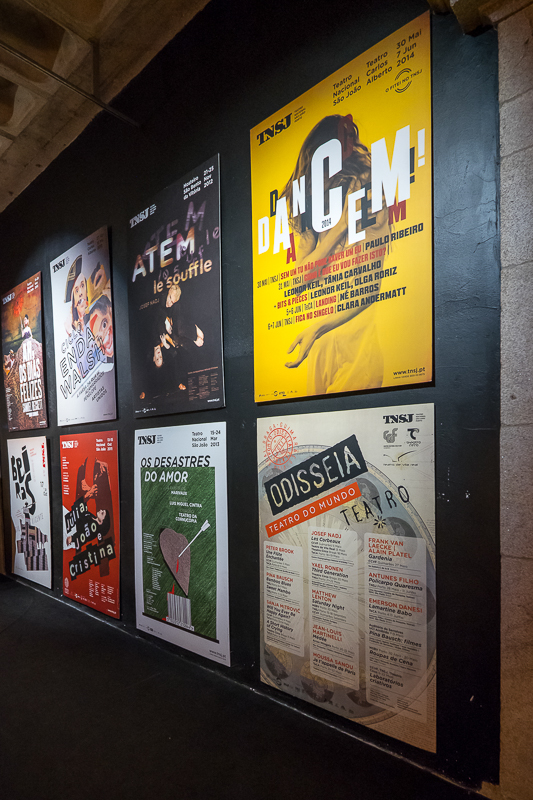
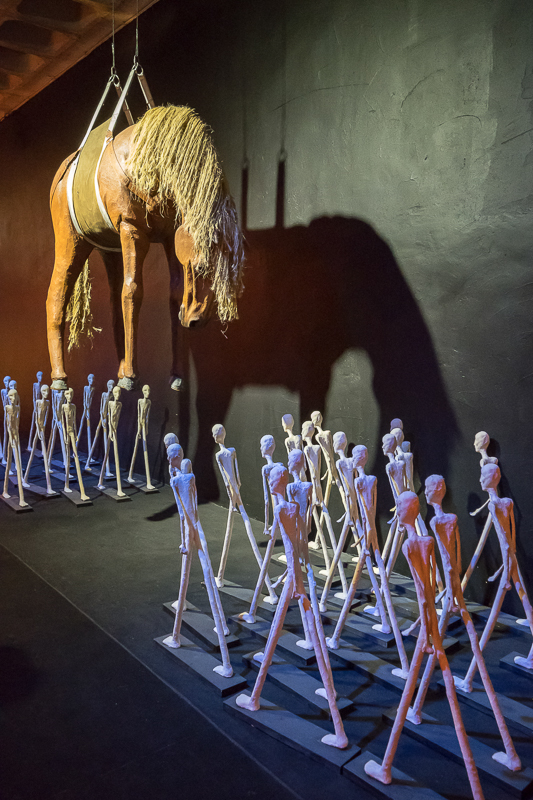
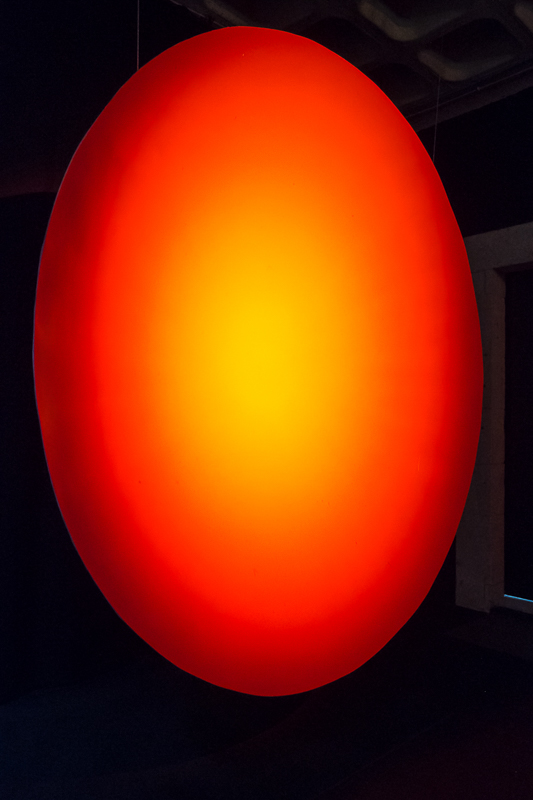
Finally we understood. The Monastery is occupied by the TNSJ, and is the location for its concerts and performances. And some of the shows must be pretty damn odd judging by the displays.
This is probably mentioned in those parts of the audio guide that we skipped.
Visiting the church was great, but afterwards the tour was not at all what we expected. At least it went by fairly quickly.
This is the last time we do something just because Stephanie likes the outside of the building.
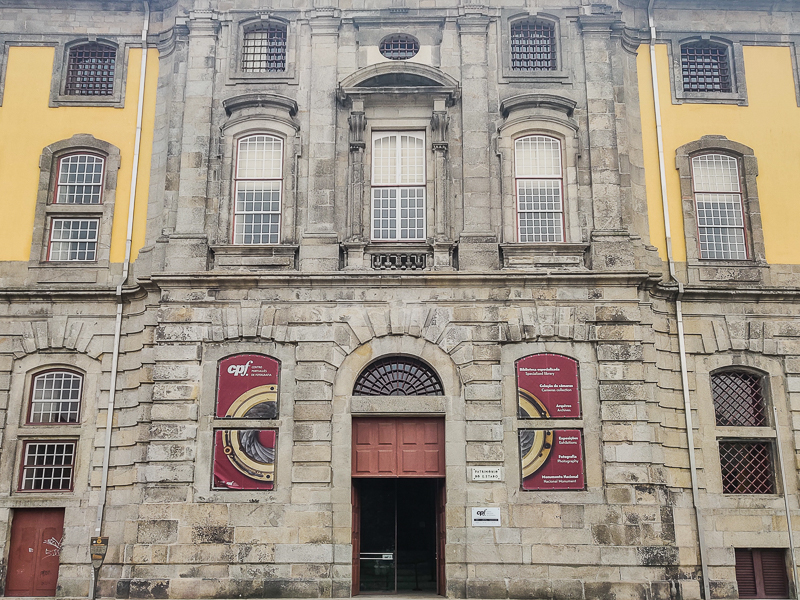
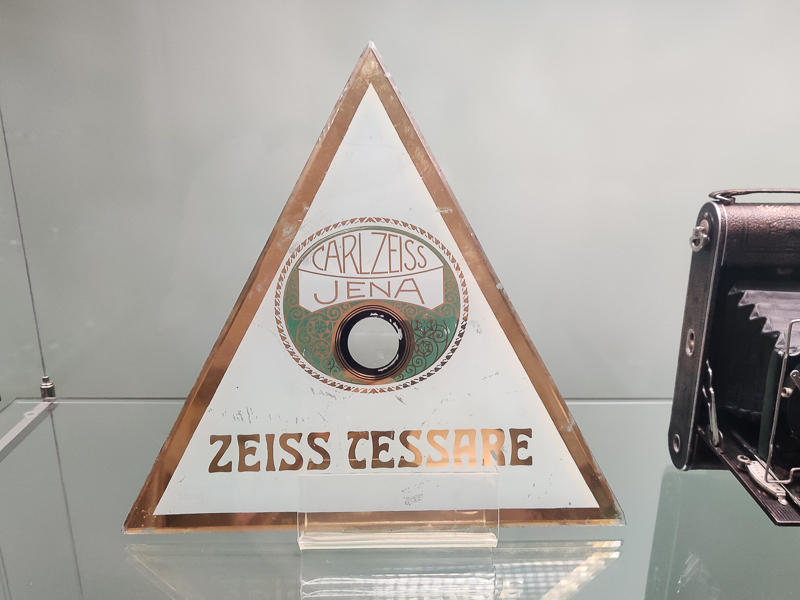
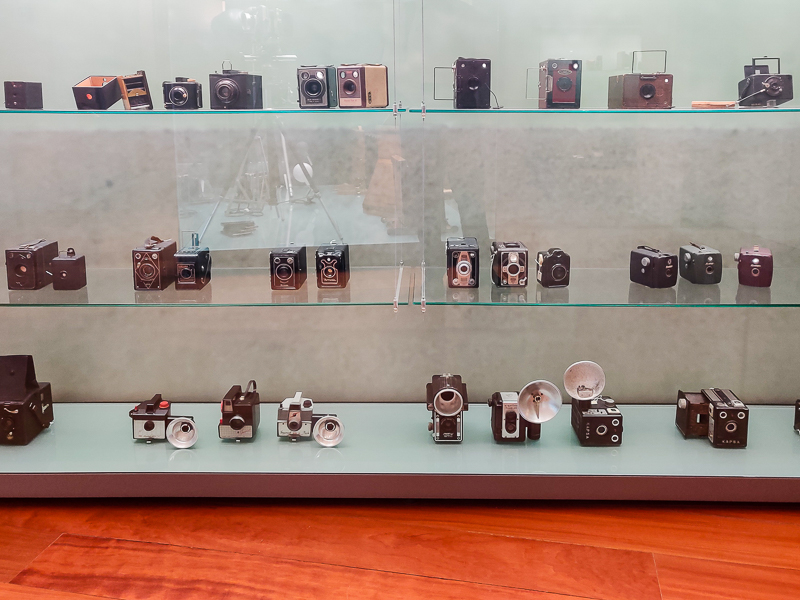
Next door is the Antiga Cadeia da Relação do Porto (a former court and prison), which now houses the Centro Portugués de Fotografia, a photography exhibition center and museum.
At the time of our visit, which was free, the exhibition consisted of two rooms. One room contained black and white portraits of prominent locals. The second contained a few, weird, avant garde type photos and a slide show. The exhibition portion of our visit took about five minutes in total.
Signs directed us up two flights of stairs to the museum. Along the way we appreciated the old building, which itself was more interesting than the two exhibit rooms.
The museum consists of about seven rooms with glass cases filled with cameras and darkroom equipment from early- to mid-1900s. I really enjoyed it. Stephanie wasn’t as big a fan, but at least it was free and did not require a tour in Portuguese or by audio guide.
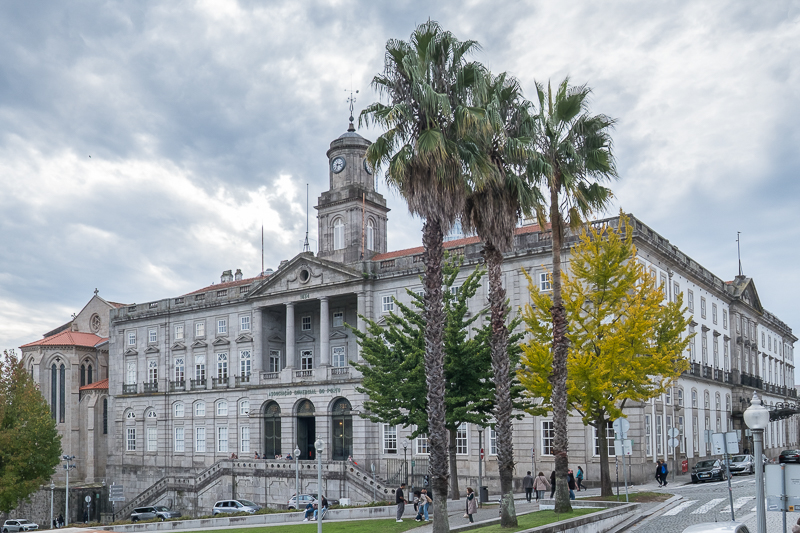
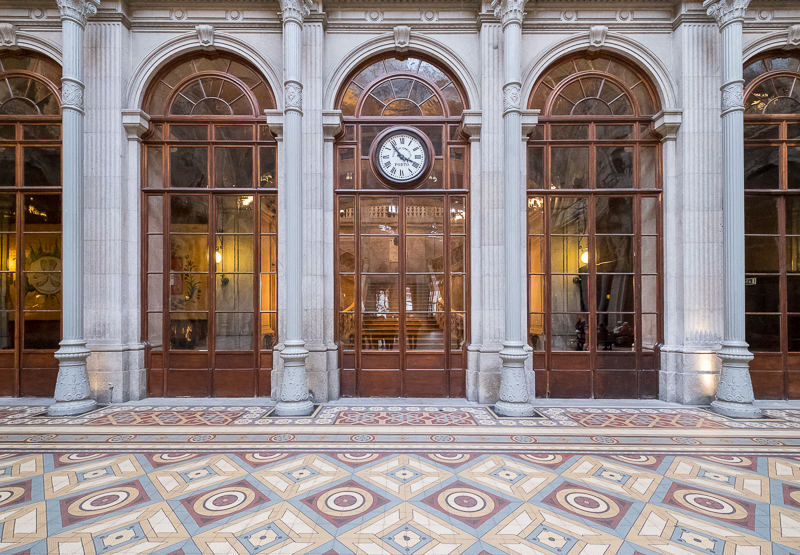
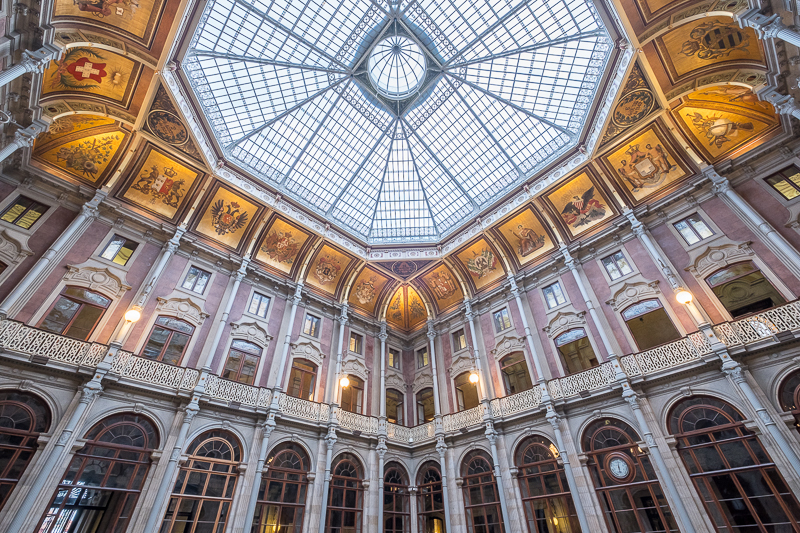
Our favorite tour in Porto was of Palácio da Bolsa (the Bolsa Palace), home to the Associação Comercial do Porto (Commercial Association of Porto). The original building on this site was a convent connected to the adjacent church, Igreja de São Francisco. It was destroyed by a fire. In the 1840s, the current palace was constructed. Queen Maria I donated the palace to Porto’s Commercial Association for use as its headquarters, a purpose that it still serves to this day.
Because many financial offices are found here, guided tours are required. Tours run throughout the day on a staggered schedule. Language options include Portuguese, English, Spanish, and French. The cost is €14 per person for a thirty minute tour. Each tour is limited to 50 individuals.
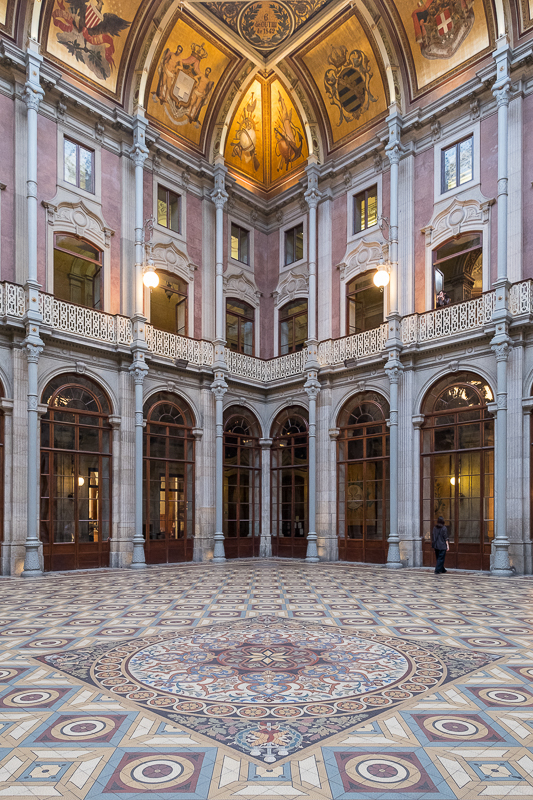
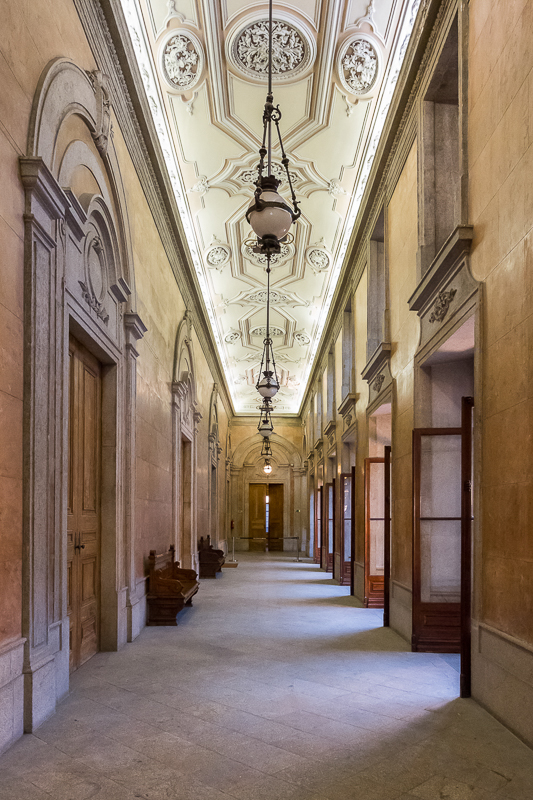
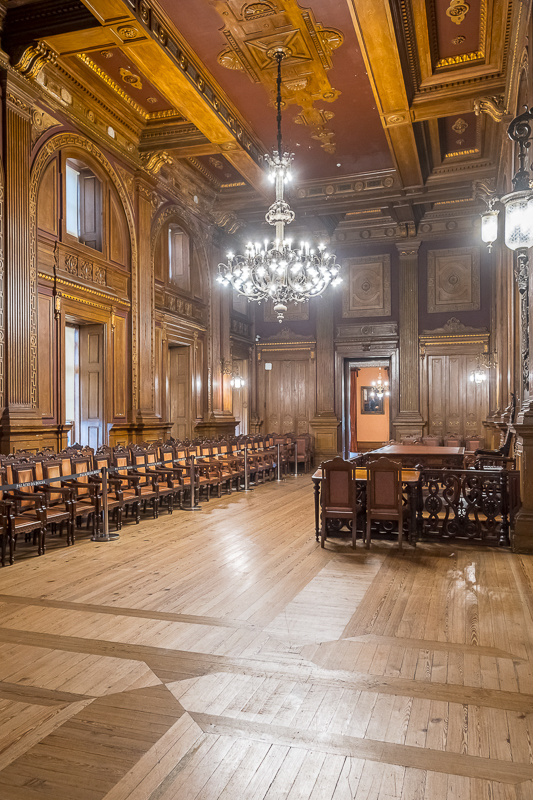
We arrived – accidently but conveniently – about 40 minutes before the next English language tour. Instead of taking the earlier Portuguese tour (with an audio guide), we decided to kill some time at the nearby Mercado Ferreira Borges.
The market is small, and features clothing and jewelry sellers. One place sells beer and pastries. We walked slowly through the market in about two minutes. The outdoor patio looks like a nice place to sit and have a beer, but otherwise there is zero reason to go here.
Most of our time waiting for the tour was spent in the small park in front of the palace, Praça do Infante Dom Henrique, watching tour groups exit their busses and file into the Palace. Ugh.
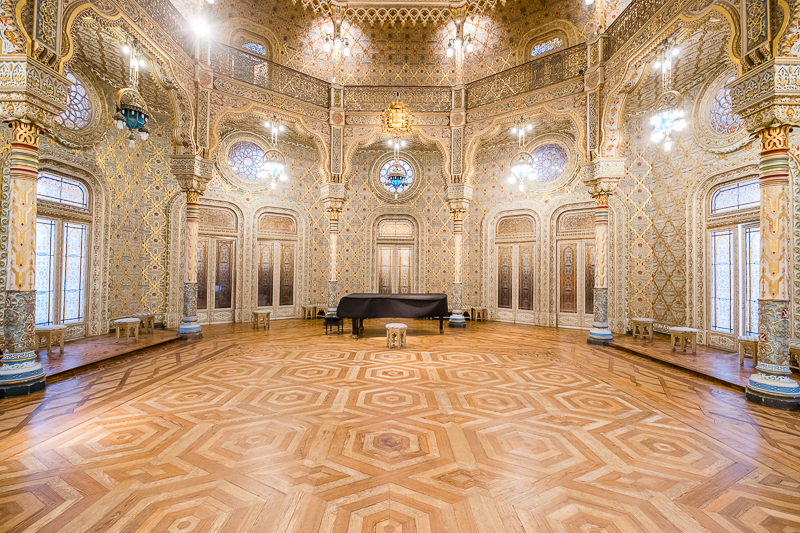
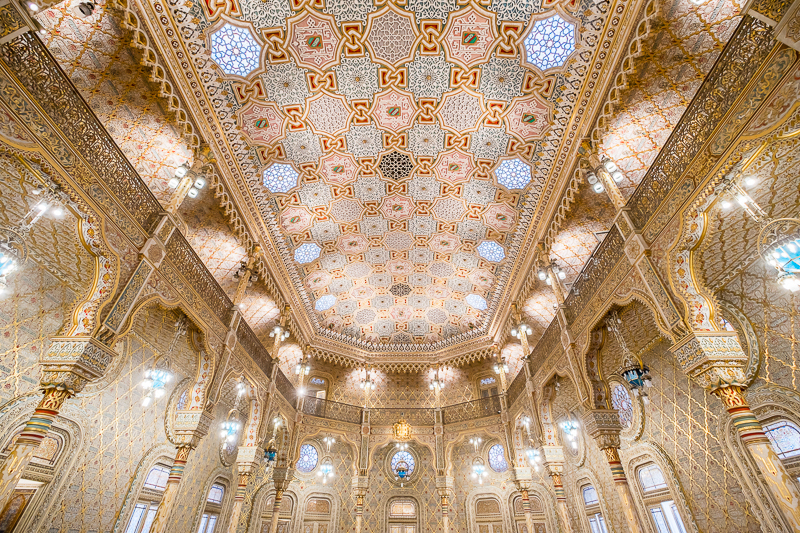
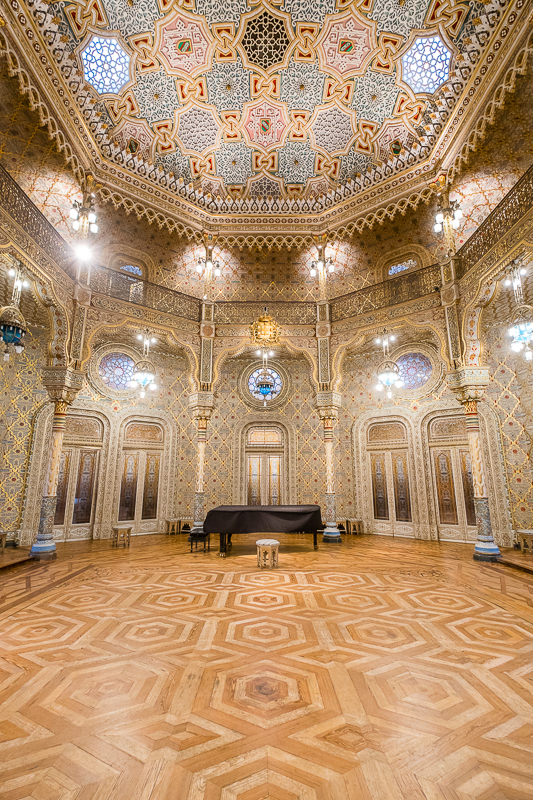
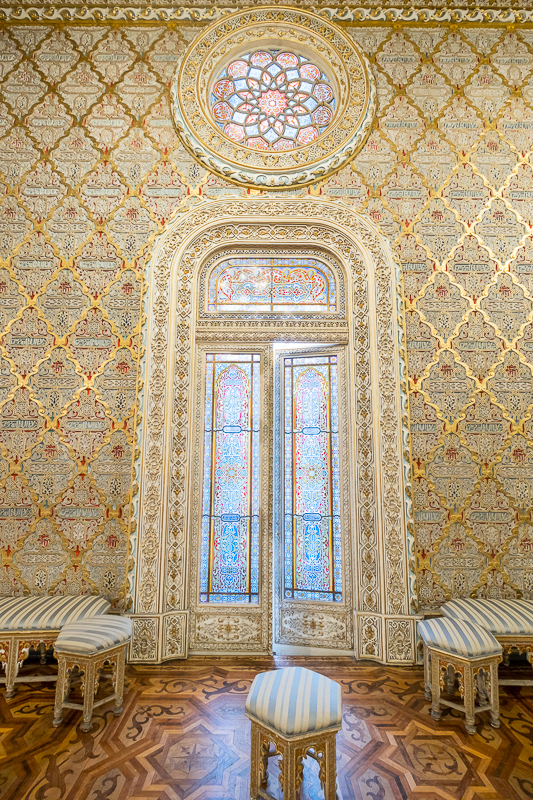
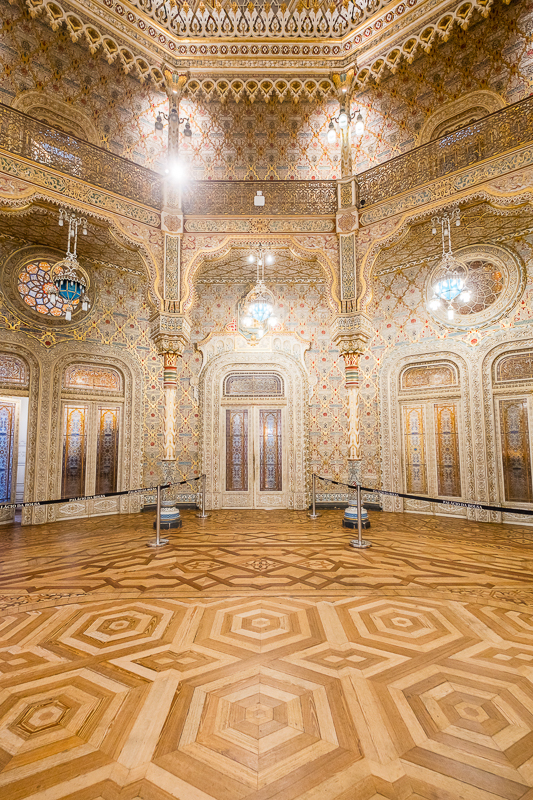
Of the 50 individuals on our tour, I’d guess that no more than 10 to 15 of them (if that many) were native English speakers. Judging by the languages being spoken in casual conversation, the vast majority knew English as a second language. Several folks used audio guides. Stephanie and I wondered if it would have been better to try to join a smaller tour in a different language with an audio guide instead. Tough call.
At the outset, the guide told us that the tour moves fast and that we couldn’t linger long for photographs. The speed of the tour wasn’t as bad as she made it sound. We only visited a handful of rooms, most of which are quite large, and it was easy to hang back to take photographs.
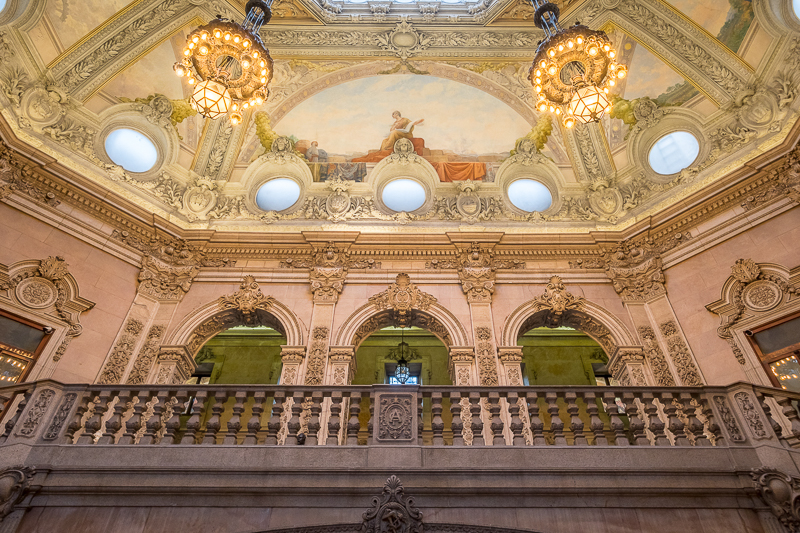
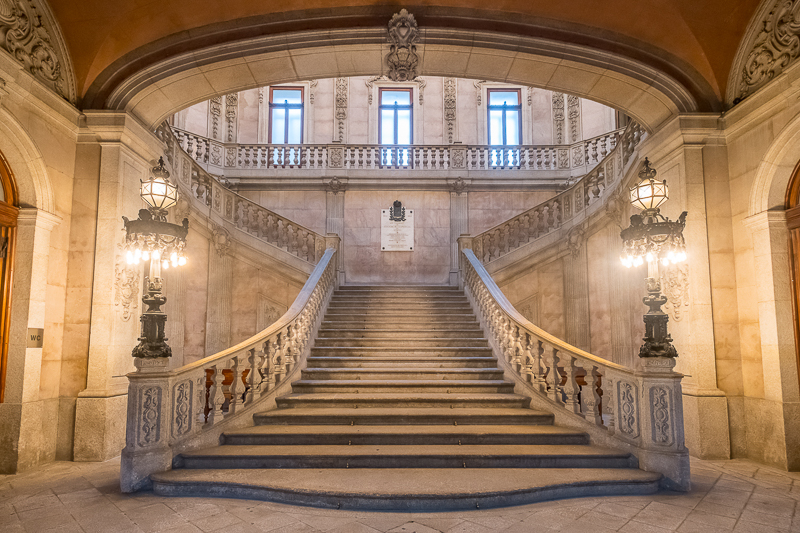
Without a doubt, the Arab Room is the highlight of the tour, with the Courtroom being runner up. The Nations’ Courtyard and grand staircase are likewise worth seeing. The other rooms, including a small office occupied by Gustave Eiffel, are of modest interest.
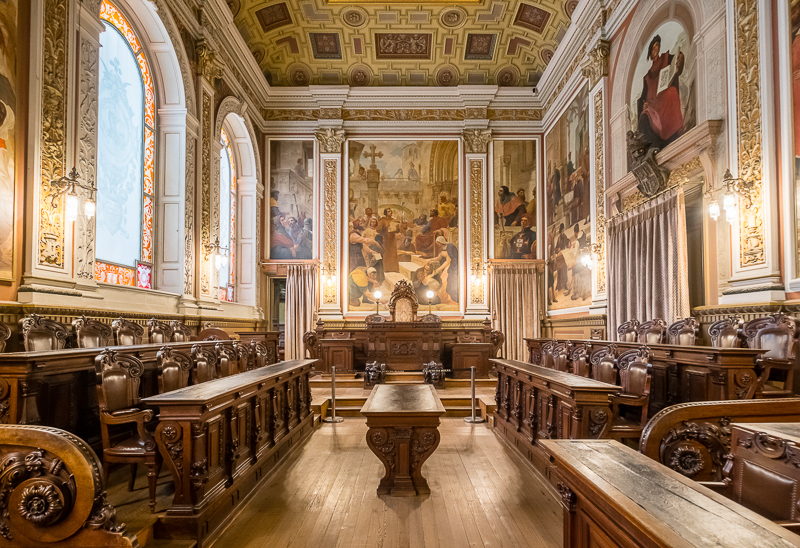
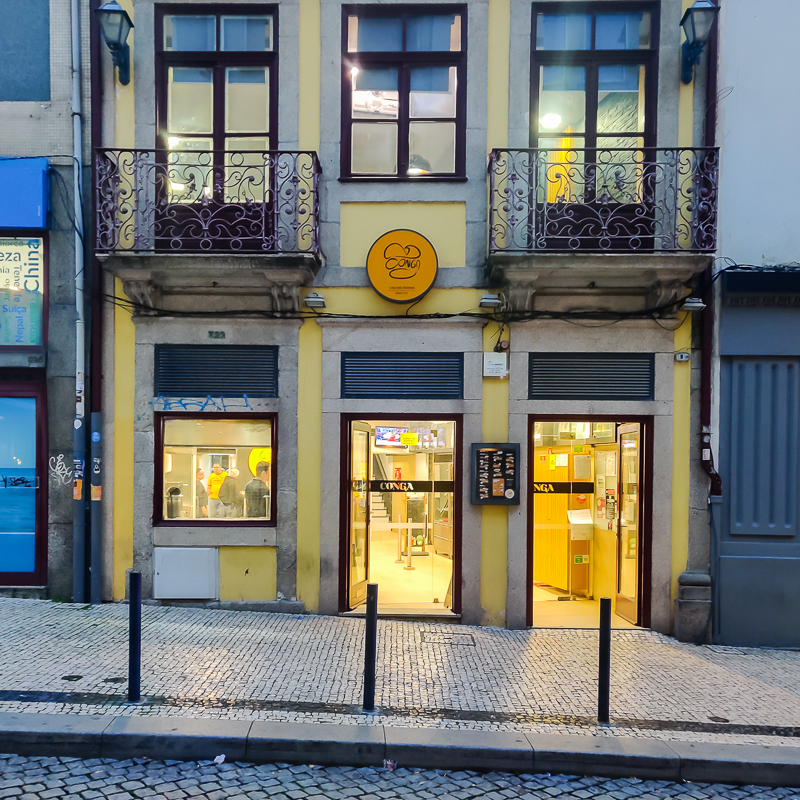
Sure enough, the 4:00 PM tour ended at exactly 4:30 PM. This worked out well for us as we had a twenty minute walk to Conga Casa das Bifanas for dinner. Conga specializes in two types of popular Portuguese sandwiches, the bifana and Francesinha.
The bifana originated as a cheap street food sandwich. It is about as simple as you can get – thinly sliced marinated pork on a bun. Variations might also include cheese, sausage, or tomatoes.
Francesinha, meaning little French girl, is a Porto creation. It is a meal unto itself. Basically it’s a sandwich with some combination of ham, sausage, and either steak or pork, covered in cheese with a fried egg on top and drowned in a (somewhat) spicy tomato and beer sauce. Most restaurants in town have some version of this dish on their menu.
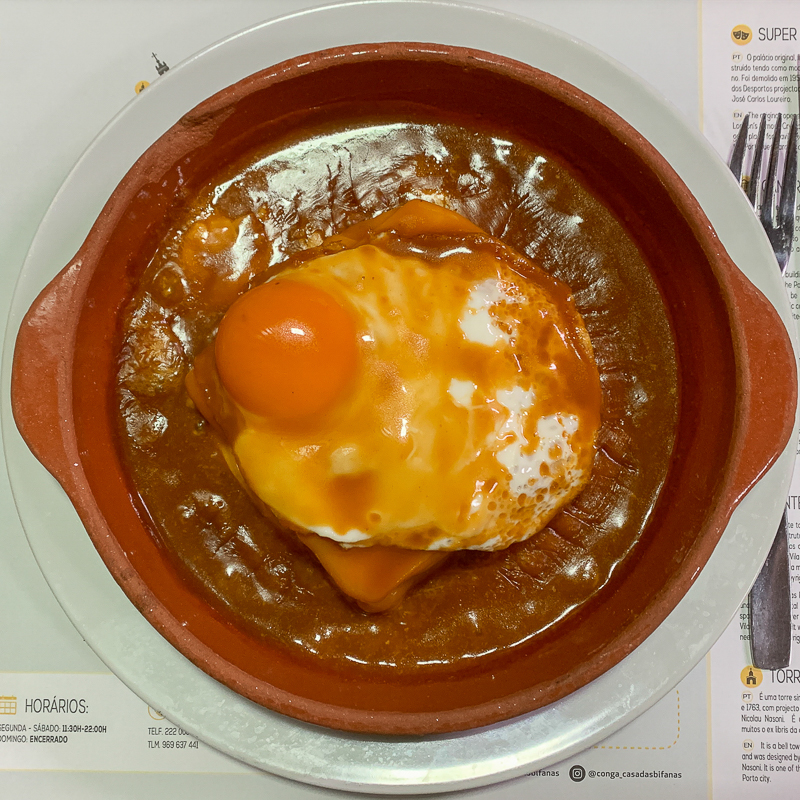
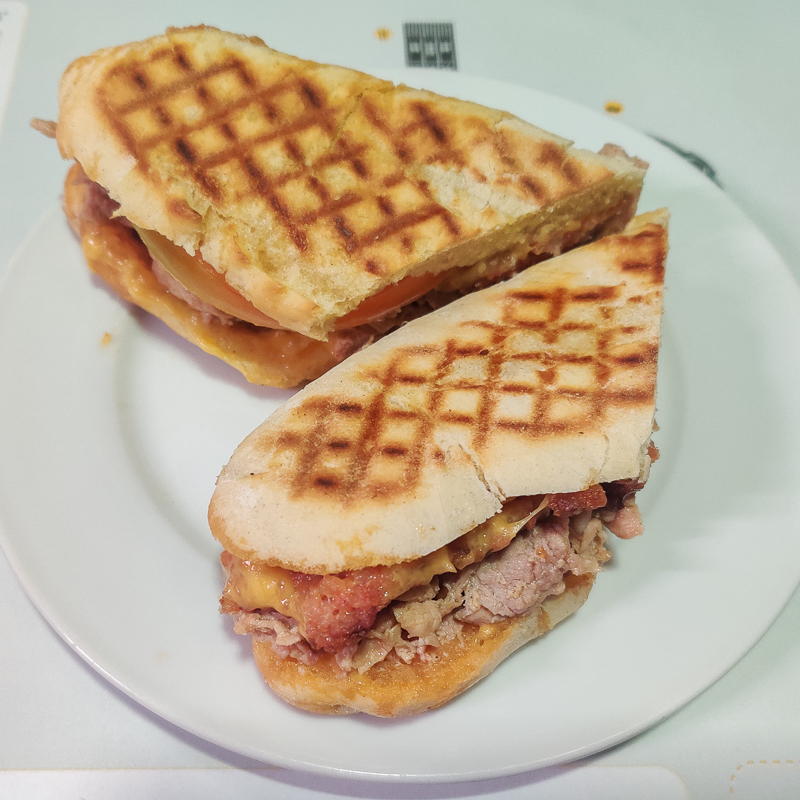
Stephanie and I split a Francesinha à Conga and a Sandwich Conga, which is basically a panini style bifana with sausage and tomato added. Both are stupid good. In fact, we returned a few days later to eat the same meal a second time. FN 1. Overall we preferred the Sandwich Conga, as the Francesinha was a bit overwhelmed by sauce. Really you can’t go wrong with either.
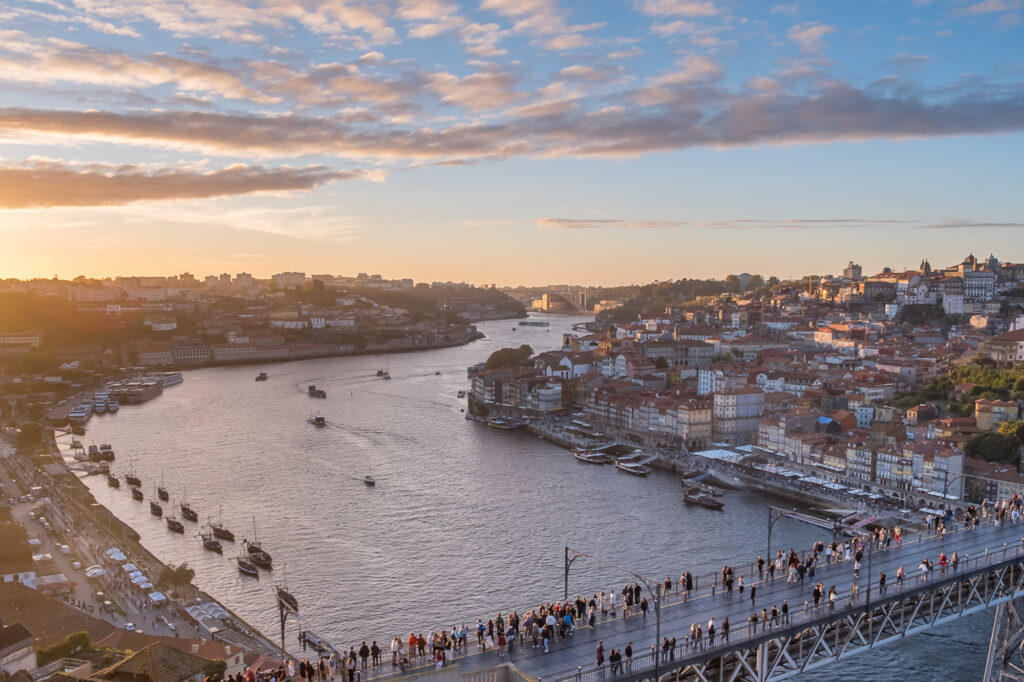
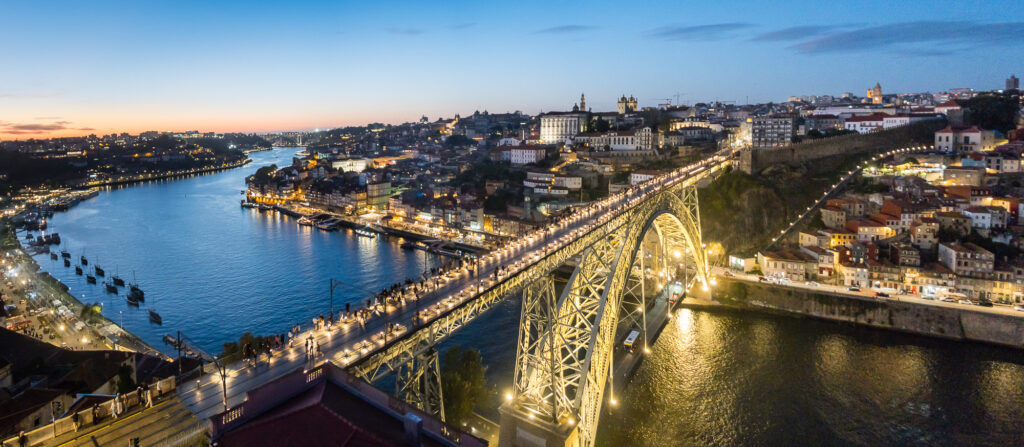
Towards the end of our stay in Porto we finally ventured across Ponte Luis I to visit Gaia, the town on the opposite side of the Douro River. Gaia has several things going for it. It has awesome views of Porto, especially from Miradouro da Serra do Pilar, the overlook at Mosteiro Santo Agostinho da Serra do Pilar (the Monastery). Instead of a funicular it has cable cars connecting the upper city to the promenade. And the promenade itself is wide and flat, with plenty of space for vendors and seating along the river.
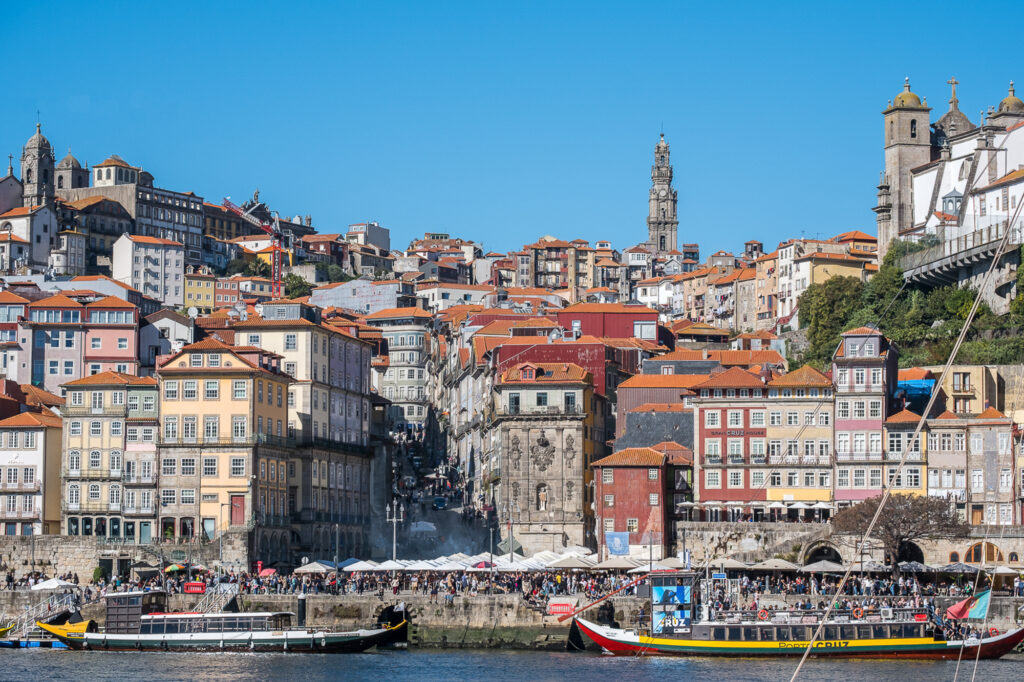
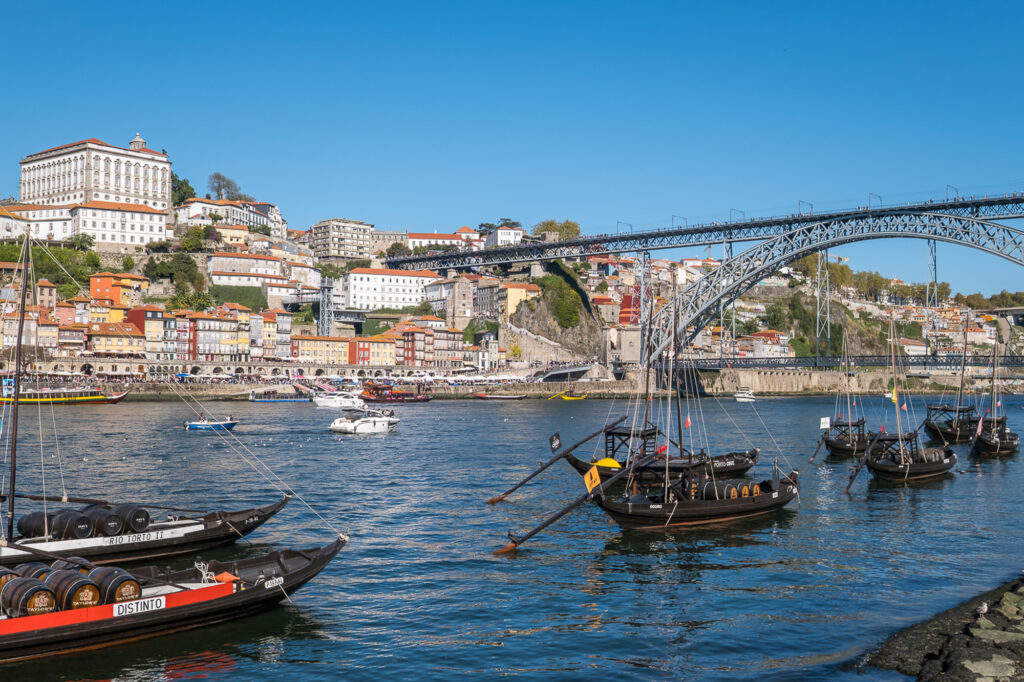
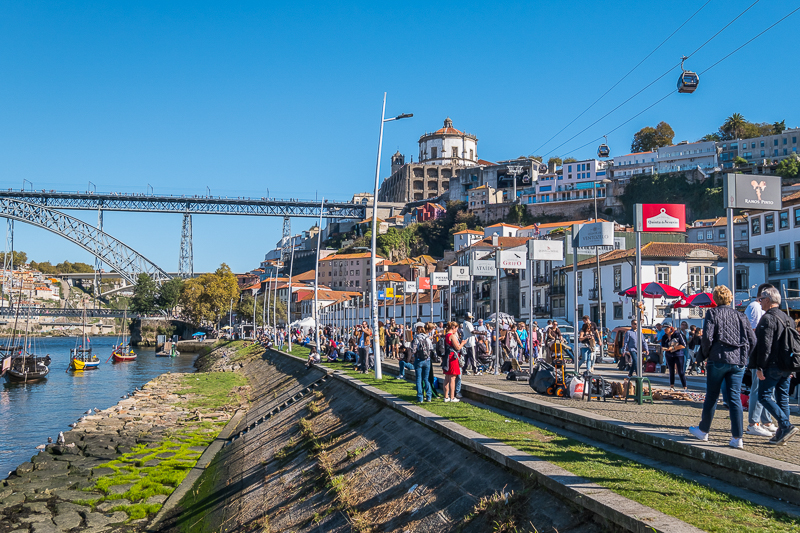
On the negative side this is where the river cruise ships dock, as do most of the river day tour boats, so there are a lot of tour groups coming and going through the area.
We walked across the lower level of Ponte Luis I into Gaia and strolled back and forth along the promenade. We thought about getting a drink in Mercado Beira-Rio, but it was too crowded.
Across from the market is Teleférico de Gaia, a cable car station. Stephanie looked longingly at the easy cable car ride up to the Monastery, a mere €7 per person for a one-way ride.
So we played one of my favorite travel games: Transportation or Beer? Pick One. Does Stephanie want to pay for transportation or beer? Here even she intuitively knew that €14 is enough to cover beer for the weekend. We skipped the cable car.
The walk up to the Monastery in Gaia was surprisingly easy, much easier that hoofing it uphill in Porto. After spending some time at the Miradouro da Serra do Pilar, we had a short walk across the upper level of Ponte Luis I back to our Airbnb in Porto.
Perhaps not coincidently, on the return walk we stopped into My Auchan and bought €14 worth of Carlsberg.
Garrett and Stephanie
FN 1. Conga Casa das Bifanas joins Gustapino (Florence, Italy), Taquitos Acapulco-Vallarta (Puerto Vallarta, Mexico), and “Mama’s” (Luang Prabang, Laos) as the only foreign restaurants we have eaten at multiple times.
Yes, “Mama’s” is a nickname for a lady cooking meals in her garage. We have no idea what the name of her restaurant is, or even if it has a name. She doesn’t speak English and we don’t speak Lao. It’s located next to the Cold River Hotel and worth a visit.
Three other restaurants easily merited returning for a second meal, but we did not for one reason or another: La Locanda Gesu Vecchio (Naples, Italy); Café del Fraile (Quito, Ecuador); and, Best Food Grill 4 (Graz, Austria).
If you have not already done so, read our other posts about Porto:
Porto, Portugal (October, 2025, Part I). Checking out some of the local hookers; Sé do Porto and the Bishop’s Palace, too.
Porto, Portugal (October, 2025, Part II). Churches and more churches, and Mercado do Bolhão.
For additional posts about Portugal, or elsewhere in the world, check out our Travel Blog. It contains collected links to all of our travel posts.
Want to subscribe (or unsubscribe) for email notification of new blog posts? It is only two to three emails a month. Send your name and email address to slowtravelchronicles@gmail.com, and note subscribe (or unsubscribe) in the subject line. All email addresses will be kept confidential and not sold to any third-party. You won’t get any marketing junk or sales pitches from us.