
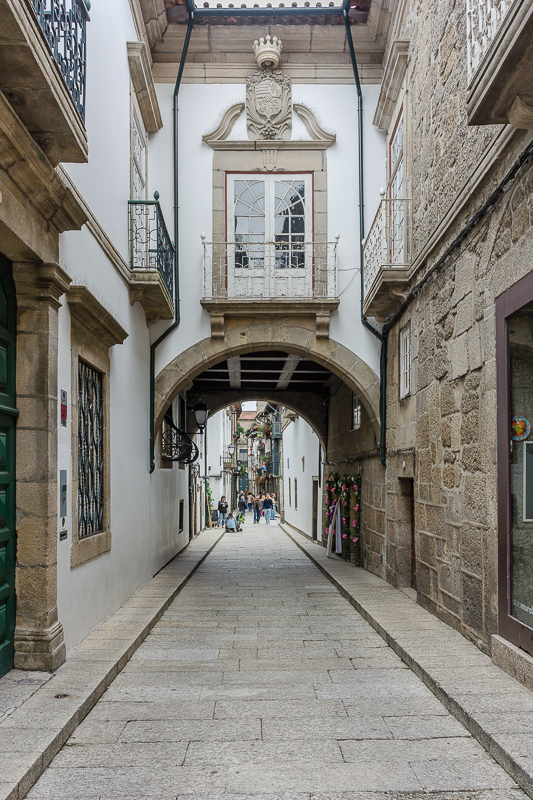
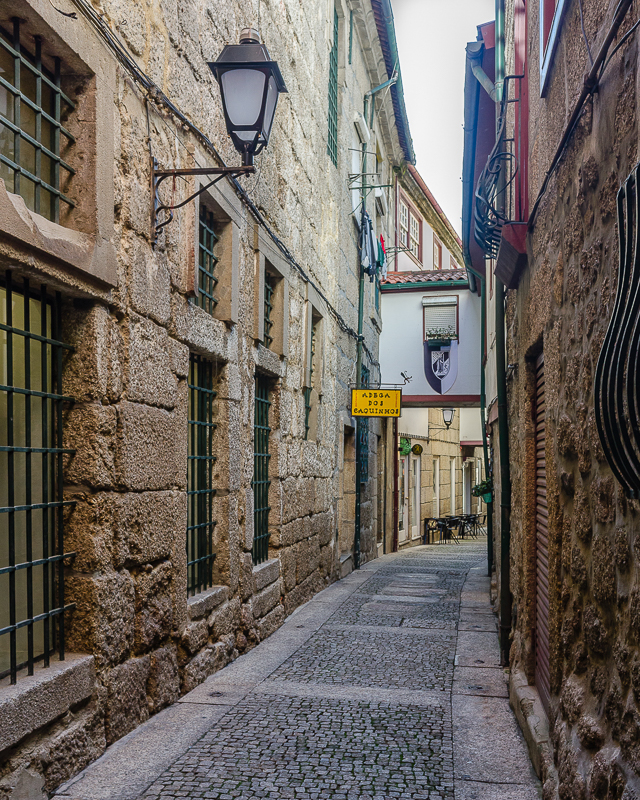
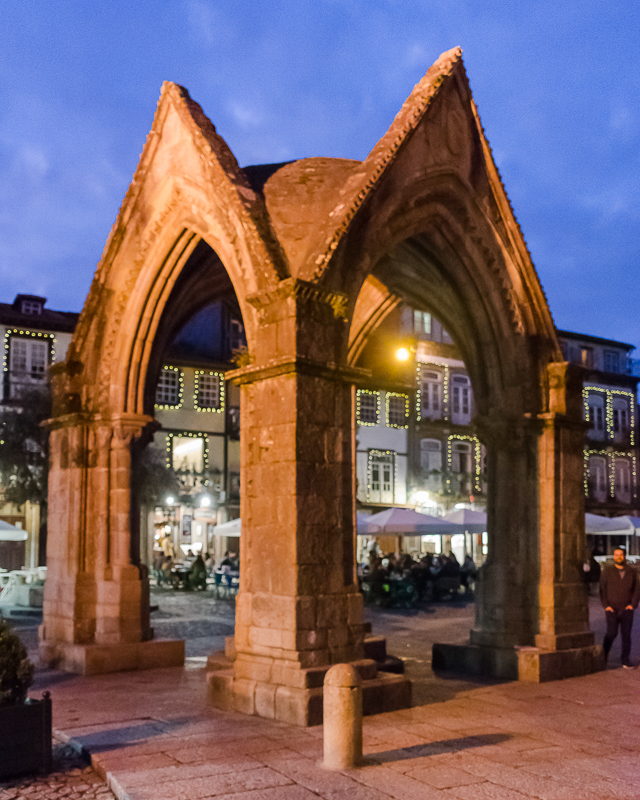
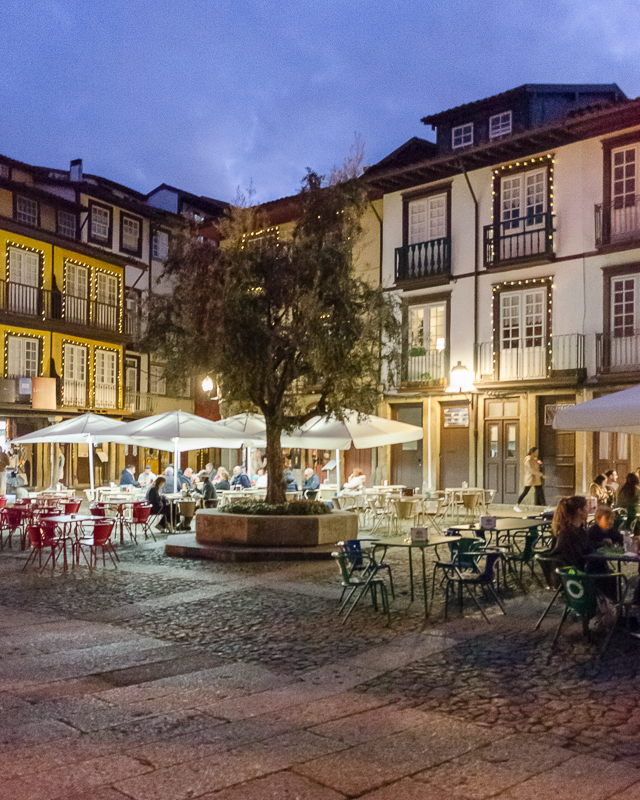
Guimarães, located a little north of Porto, is commonly known as the birthplace of Portugal. Its well-preserved medieval town center led the city to be named a UNESCO World Heritage Site. Small medieval town center with a castle and palace? Yep, we had to visit Guimarães.
While Guimarães is close enough to be a day trip from Porto (1.25 hours by train), it is far enough and interesting enough to justify an overnight trip. After watching the weather for a couple of weeks, a two-day break in the rain finally arrived. Booking accommodations, at Hotel Toural, and buying train tickets, on Comboios de Portugal (“CP”), took about five minutes.
As in Lisbon, the ticket machines in Porto add €0.50 to every printed train (or metro) ticket. Instead of using a ticket machine, buy CP train tickets either online or through its app. Setting up an account is easy and you’ll save a few bucks along the way.
Our journey began on the 10:25 AM train from Porto’s São Bento train station, arriving in Guimarães about 11:45 PM. After taking a few minutes to get our bearings, we began the short walk downhill into town.
Along the way, we stopped in at Marbs Burger Shop for lunch. Good burgers, chicken sandwiches, and fries. Reasonably priced, too. After lunch we crossed into the historic old town, entering Hotel Toural at just after 1:00 PM. We planned to drop our backpacks at the front desk and go exploring. Luckily our room was ready and available so we checked in early.
It was Sunday, so we hoped that tourists would be at a minimum. I’m not sure that was the case. We saw quite a few tour groups, other obvious tourists like us, and a lot of families out and about. The historic city center of Guimarães was nowhere near packed full of tourists, but there were more than we expected.
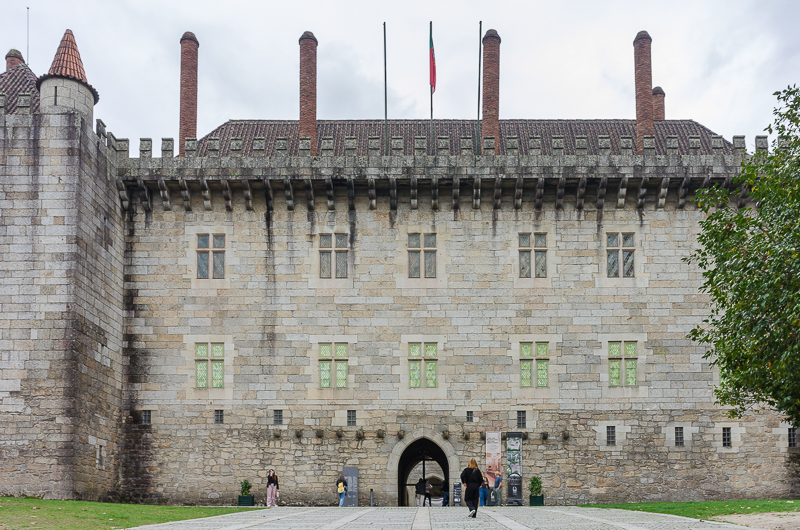
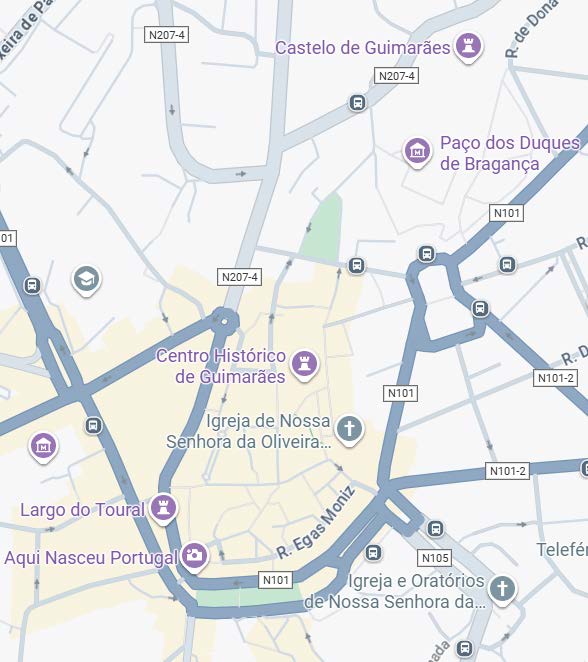
After a ten minute walk we were through the small historic city center, heading uphill towards the palace. At Paço dos Duques de Bragança (the Palace of the Dukes), we bought combination tickets for €13 each giving us entry into the palace, Castelo de Guimarães (the castle), and Museu de Alberto Sampaio (the religious art museum).
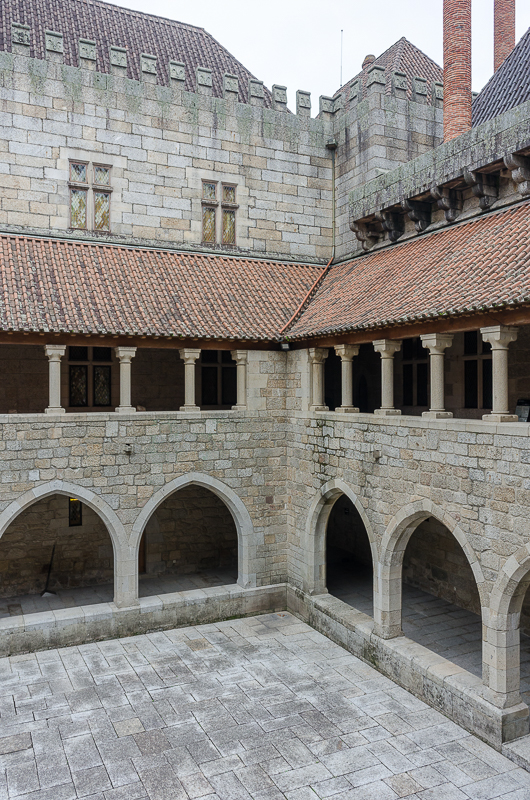
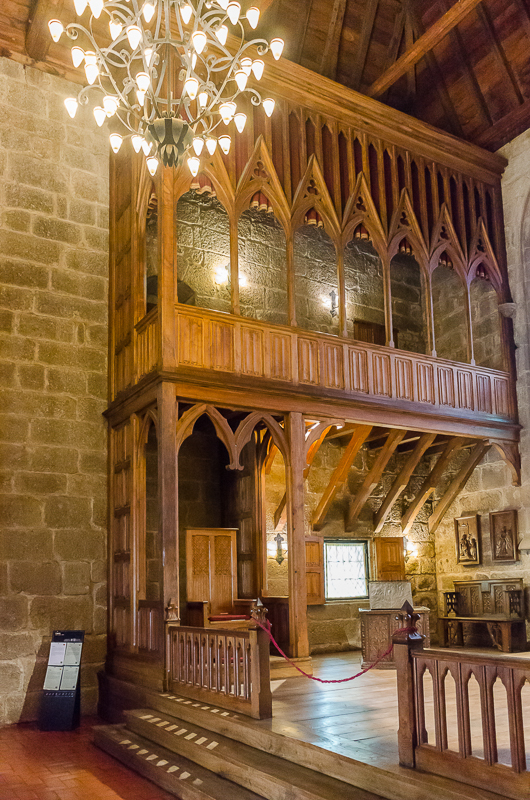
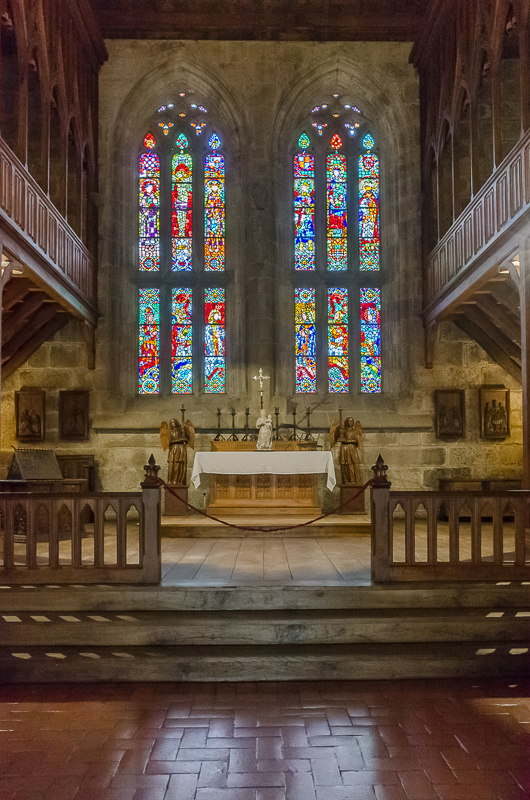
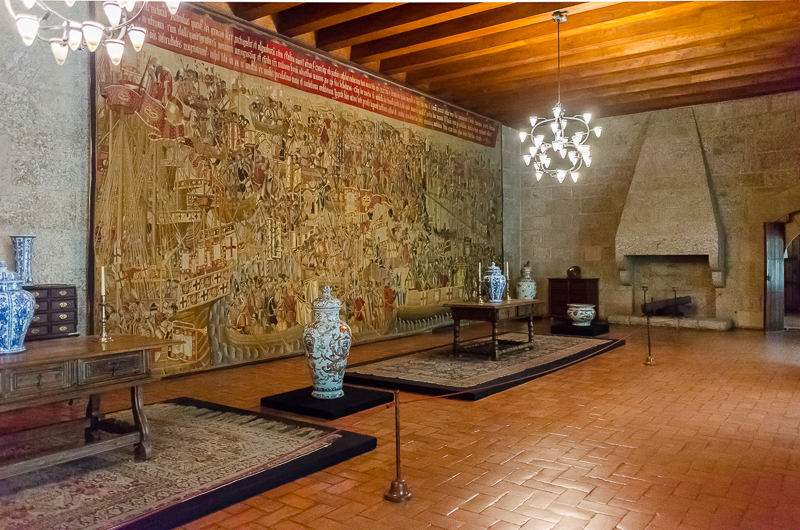
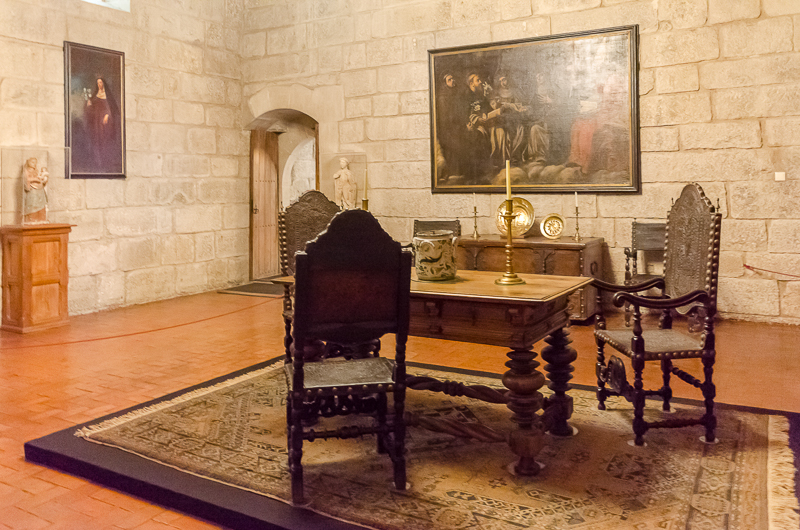
Our tickets were slightly discounted because a portion of the palace is undergoing renovations and half the rooms are currently inaccessible.
The palace, originally constructed in the early 1400s, was used as a residence for several centuries before inevitably falling into disrepair and ruin. The palace in its current state was substantially rebuilt in the early- to mid-1900s.
A half dozen rooms, the courtyard, and chapel were seen during our visit. It’s a really nice tour. Instead of audio guides, each room has laminated information sheets in multiple languages (Portuguese, Spanish, French, and English). Stephanie made the astute comment that the interior, with its stone walls and dark rooms, feels more like a castle than a palace.
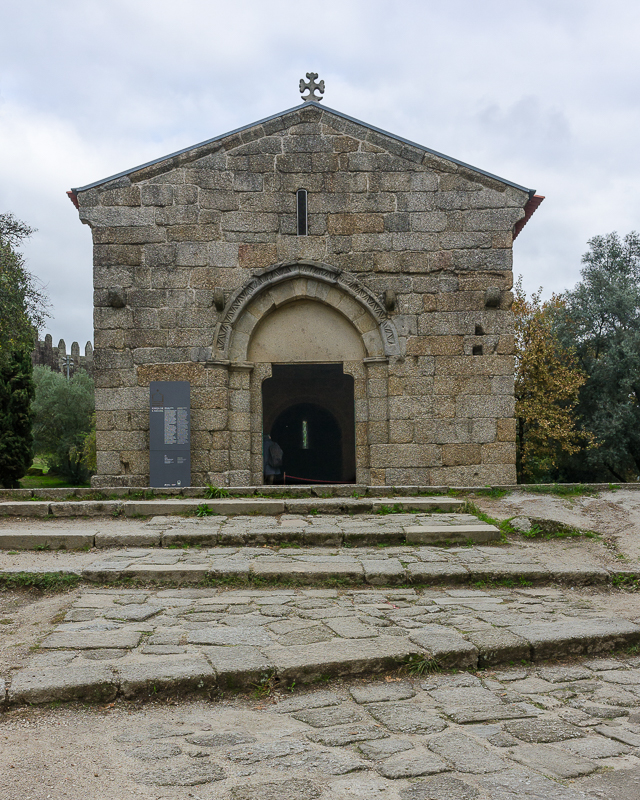
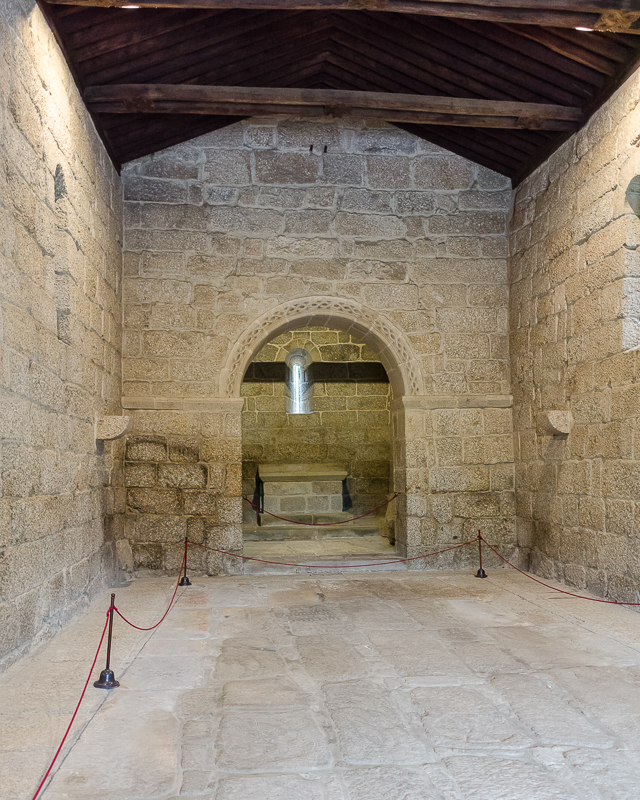
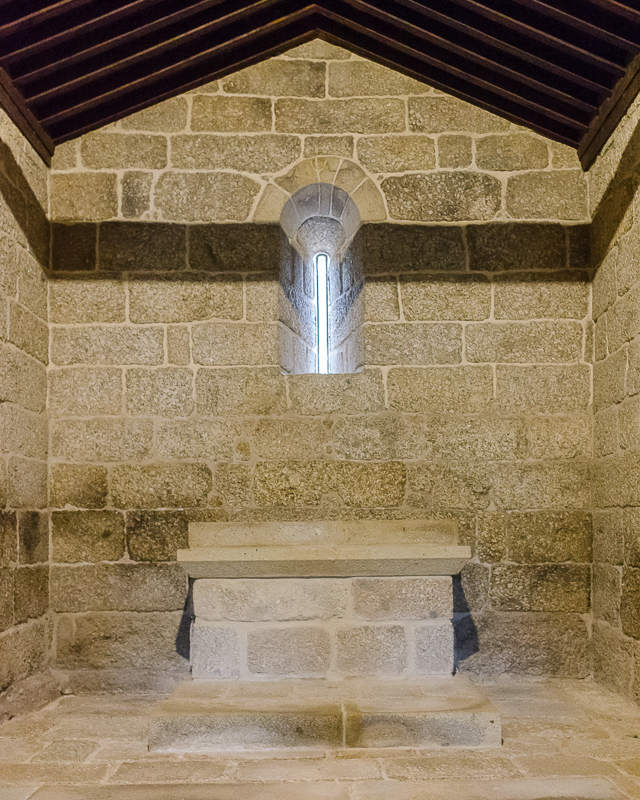
After leaving the palace we walked around the corner to Igreja de São Miguel do Castelo (the Church of Saint Michael), a simple, Romanesque, medieval castle church. It’s a small open church, costing nothing but five minutes of your time to walk through.
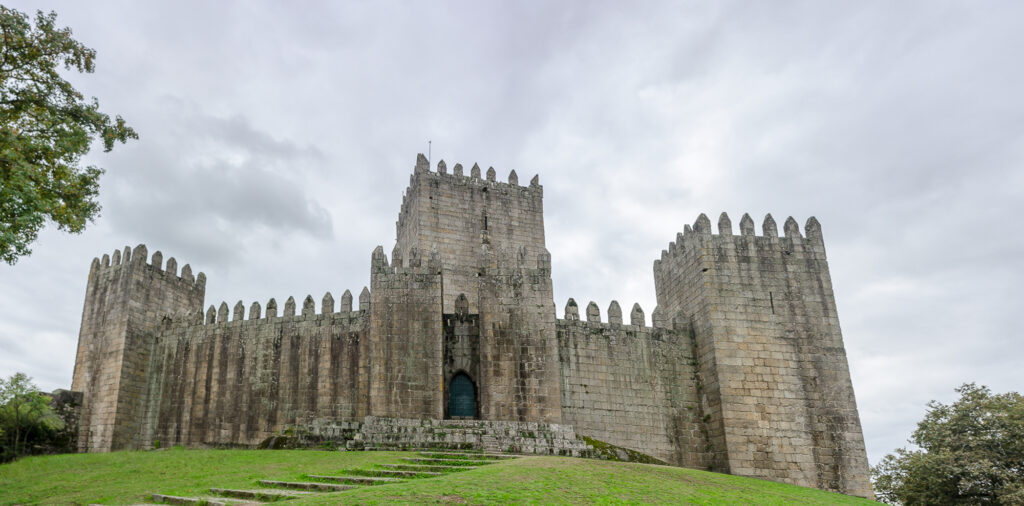
Then at the top of the small hill is Castelo de Guimarães, a medieval castle recognized as one of the Seven Wonders of Portugal. Its origins date to the 11th century, with later renovations and modifications, particularly Gothic reforms in the 13th century, giving the castle its current shape and appearance.
Today visitors can walk around the top of its walls on a wide steel walkway, with railings. Unfortunately the towers are closed off, except for one which houses vending machines. Admittedly those vending machines probably sell a decent number of water bottles when it is hot out.
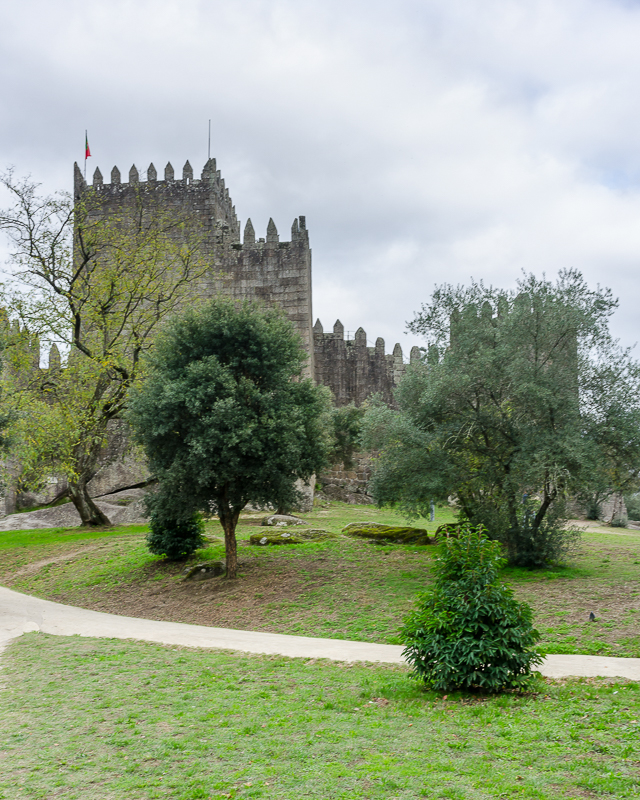
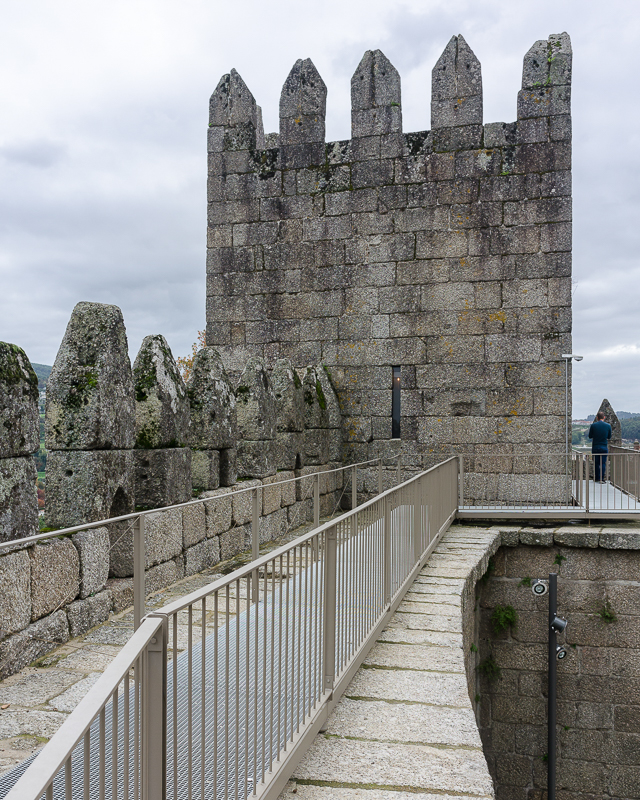
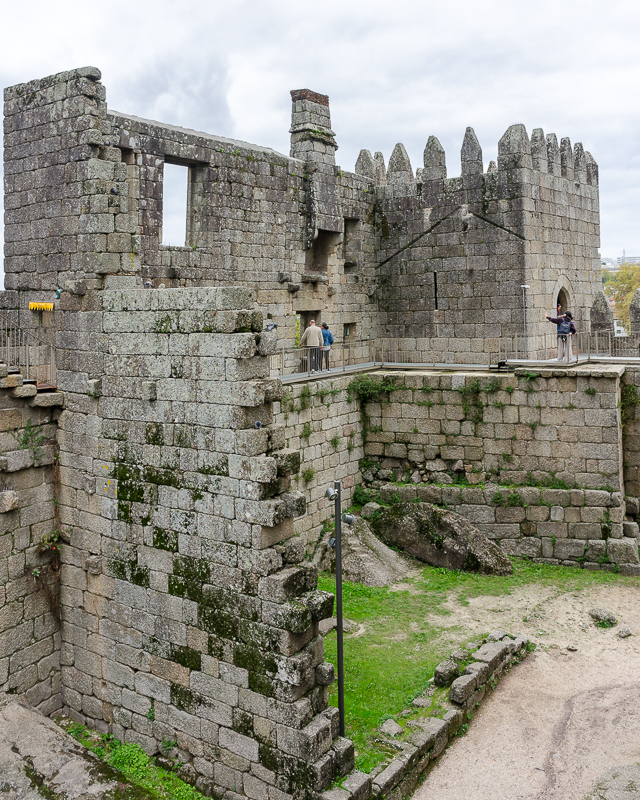
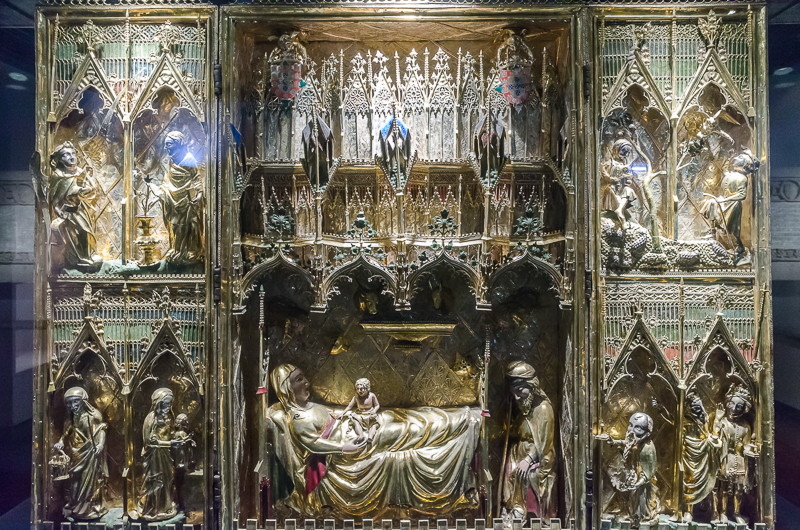
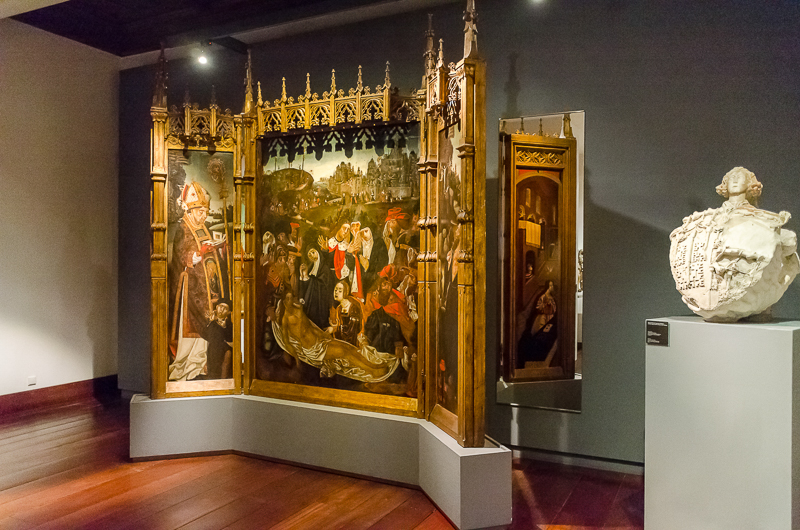
After a quick walk around the castle, both the walls and the exterior, we ventured back into town to visit the Museu de Alberto Sampaio (Alberto Sampio Museum). Ordinarily we skip religious art museums, but this one is housed in a former 10th century monastery. And it doesn’t cost much.
The website proclaims that twelve national treasures are found in the museum. A couple of them are pretty obvious based on the displays, but you probably need to take a guided tour to identify all twelve. We spent about 30 minutes walking through and looking at the paintings, sculptures, and artifacts (most of which are from a few local churches).
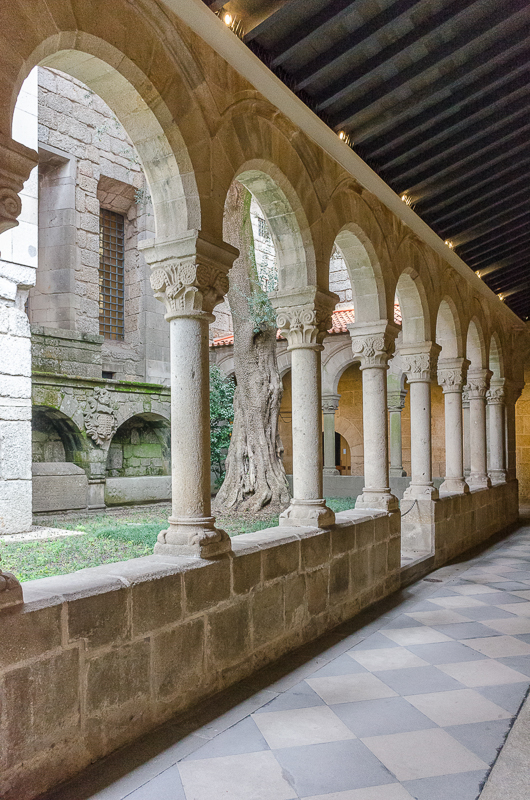
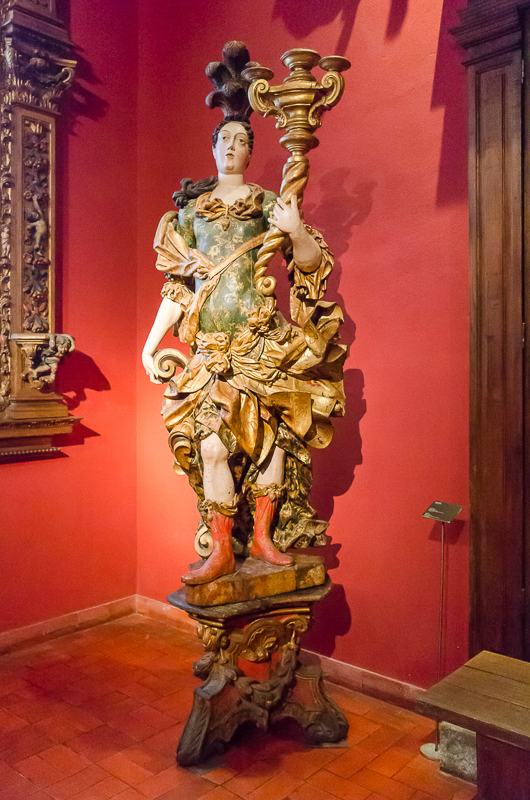
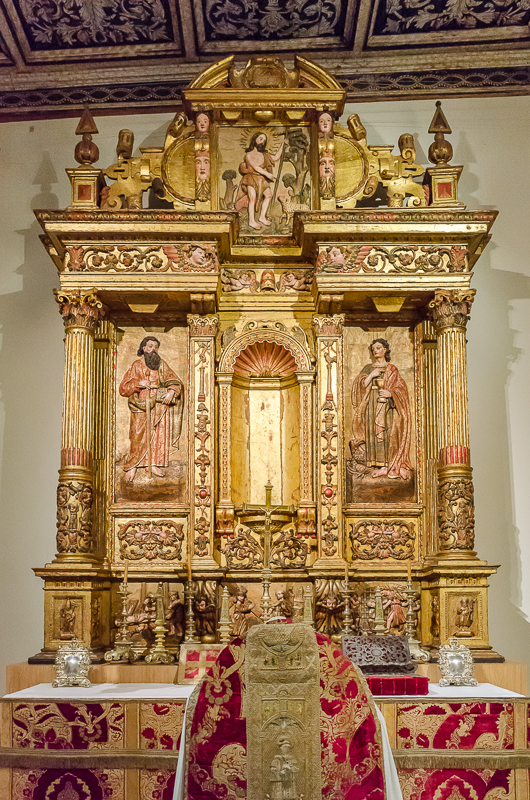
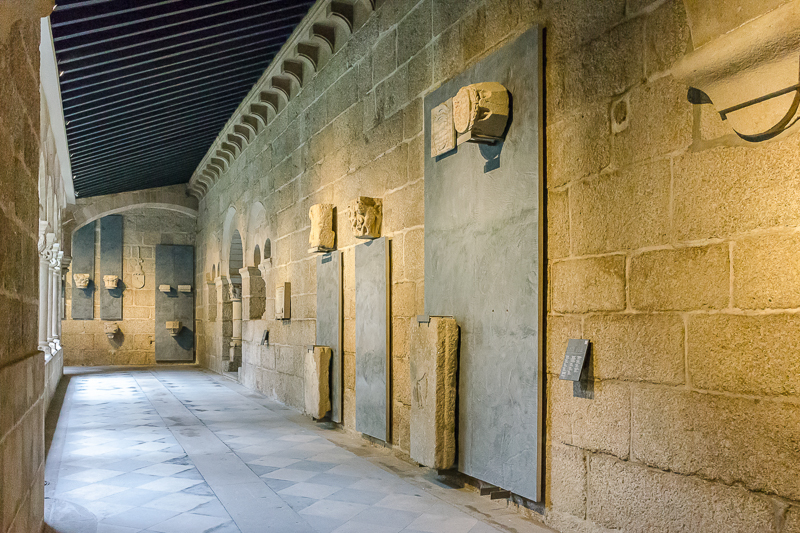
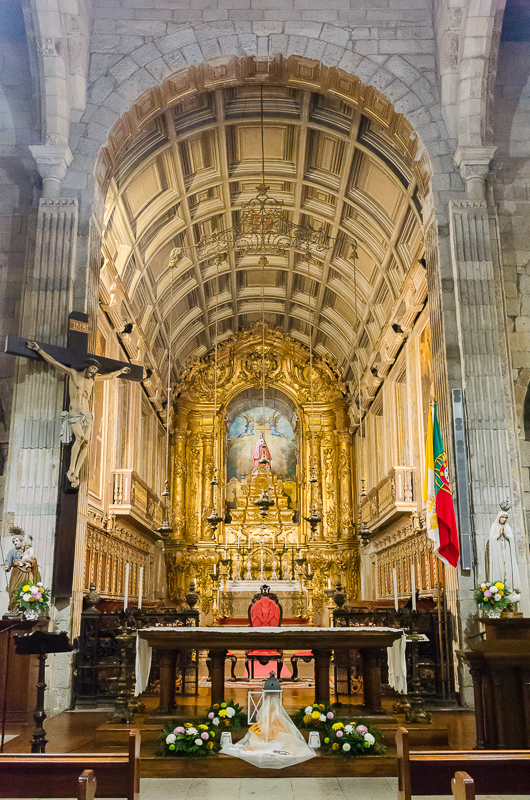
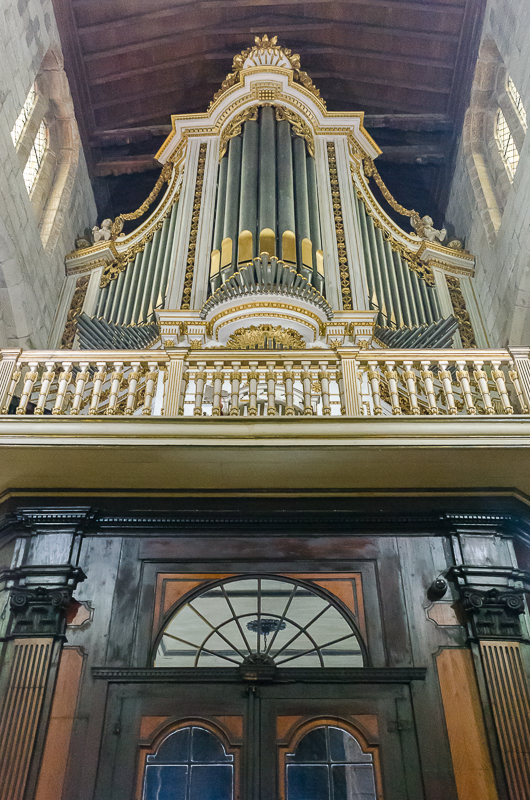
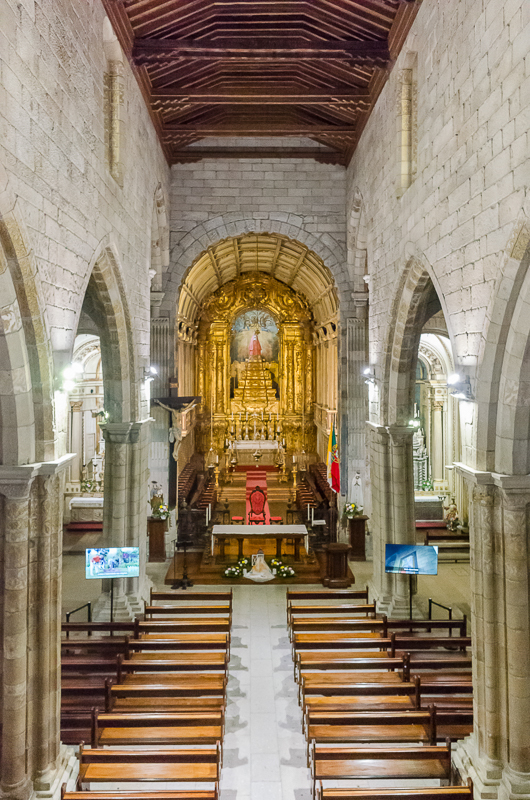
After leaving the museum, the only logical place to go is Igreja de Nossa Senhora da Oliveira, the adjacent church. Tourists are charged €2 to enter, which we happily paid. If you go, be sure to walk up the stairs to the loft to see the organ and church from above.
By this time it was about 4:00 PM. To end our afternoon’s explorations, we walked to Igreja e Oratórios de Nossa Senhora da Consolação e Santos Passos, which is probably best known for being the church in the photographs of Guimarães with all the flowers in front. Along with the castle, this church is probably the most recognized building in Guimarães.
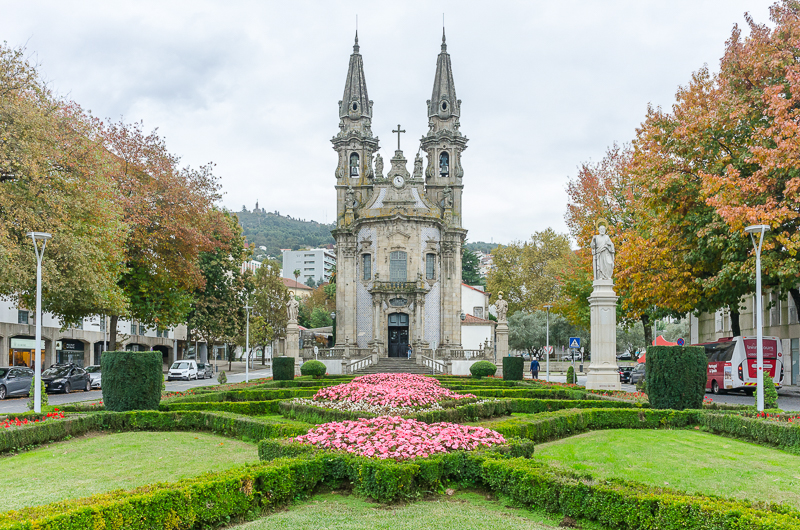
The church itself is free to enter and is worth a quick look in. But the inside doesn’t have quite the visual impact as the outside.
No visit to a new city would be complete without a visit to a grocery store. Stephanie wanted a tea to drink that night, so we detoured to Supermercados Froiz on the way back to the hotel.
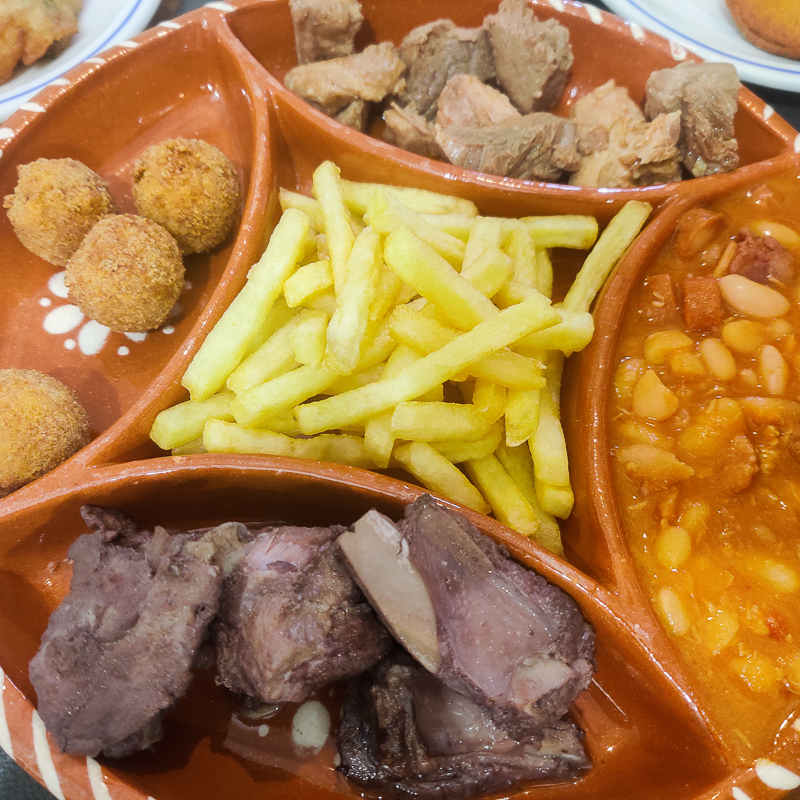
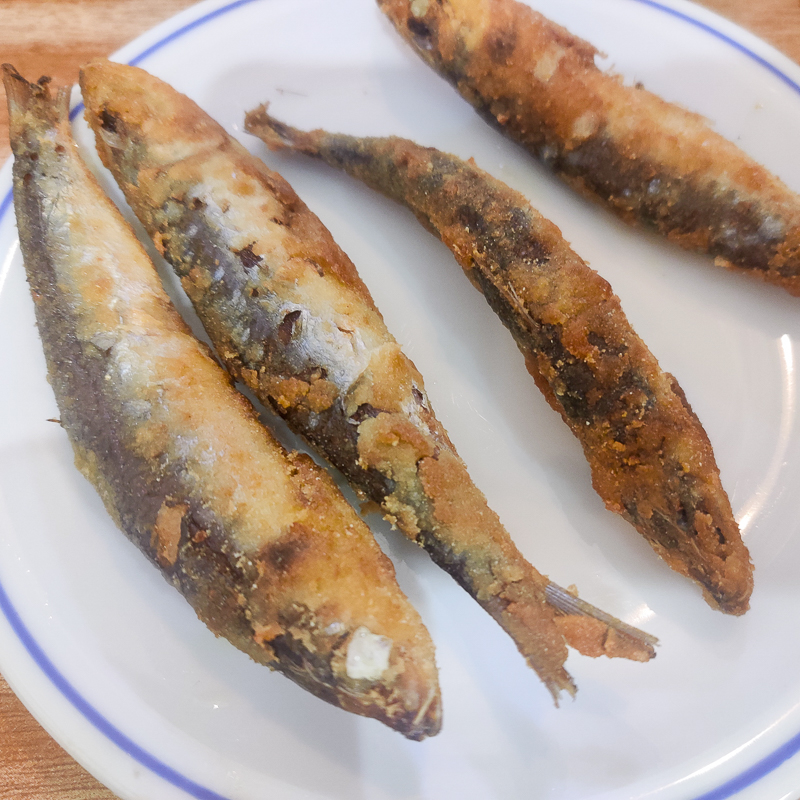
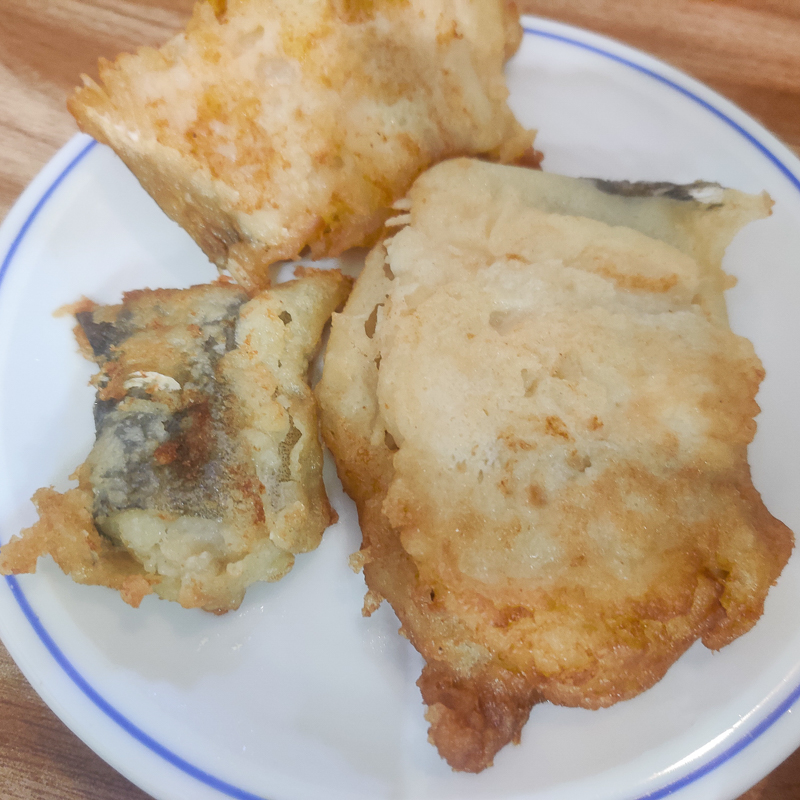
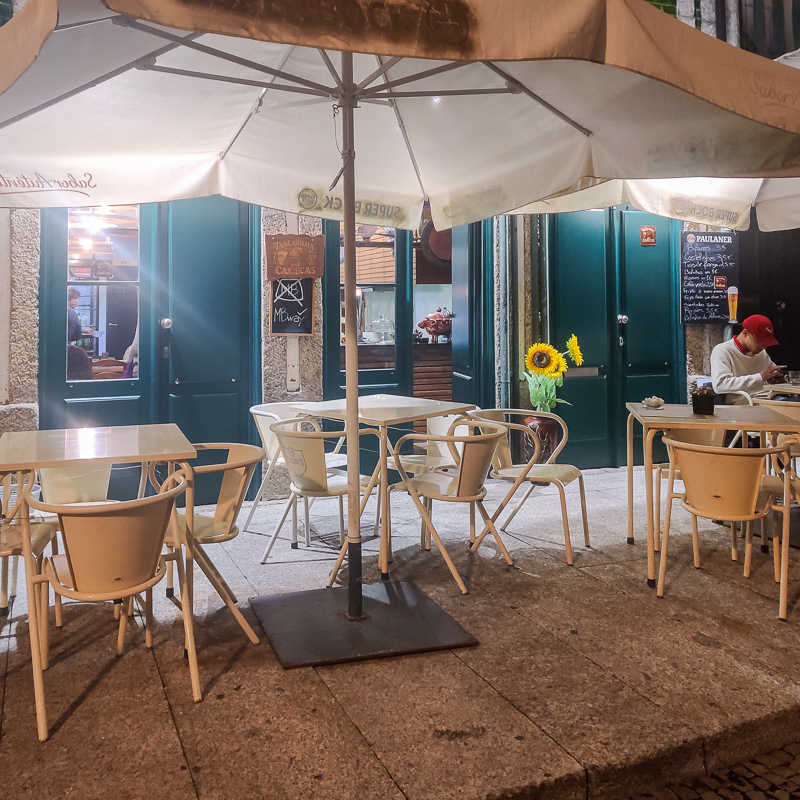
Dinner was a bit of a challenge because we wanted to avoid touristy restaurants but not have to walk too far. After some back and forth, we ended up at Tasquinha das Canecas, a small restaurant and tavern specializing in small plates of Portuguese staples. The host was very nice and essentially talked us in to buying one of every meat and fish option plus two beers.
Our assortment of seven dishes (eight if you include the fries) and two small beers cost €31.90, cash only. We didn’t particularly care for the sardines, but the beans – made with sausage, bacon, and some type of tomato sauce – were surprisingly good.
After dinner we couldn’t resist getting a pastel de nata for desert at Confeitaria Ribela. It was about 8:00 PM and I think we were the only people in the place under age 65. It seems to be a popular desert and coffee place for the elderly crowd.

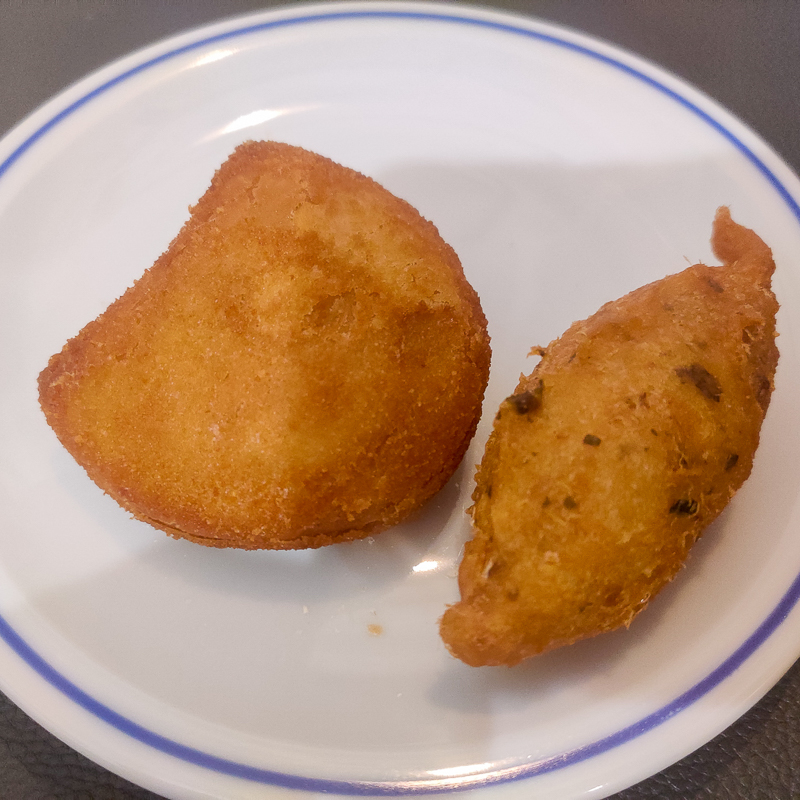
Monday morning began with breakfast being served at the hotel. A fairly large breakfast. The individual serving consisted of three salami slices, three ham slices, three cheese slices, a pastry, and pancake, along with an assortment of jellies, butter, and honey. We also got a yogurt, an assortment of fresh cut fruit (mostly melons), orange juice, coffee, and a pastel de nata.
Also available, but we passed on, were cereals, cooked to order eggs, more pancakes, chocolate cake, and orange cake.
We ended up skipping lunch.
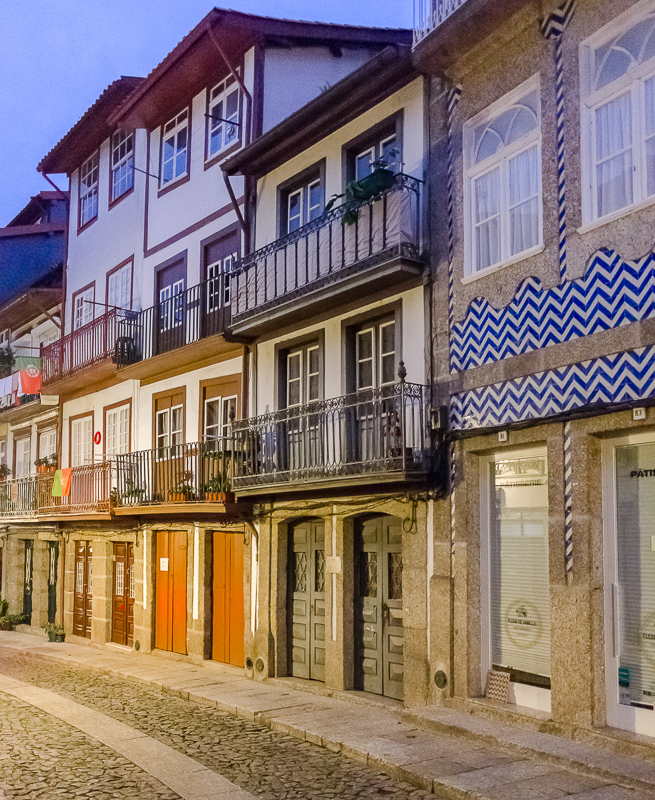
After breakfast we walked around the entire historic town center again, and past the palace and castle, though with only a tiny fraction of the number of people compared to Sunday afternoon. A few tour groups and school groups were seen after 10:00 AM, but only a couple.
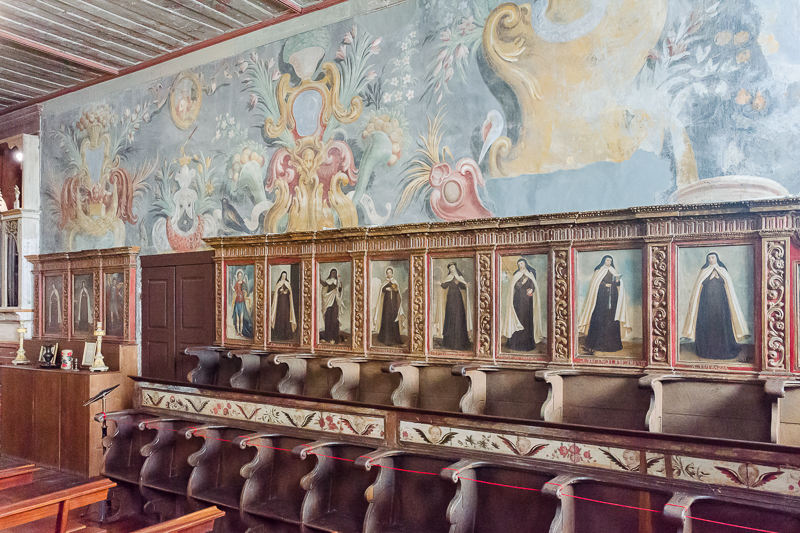
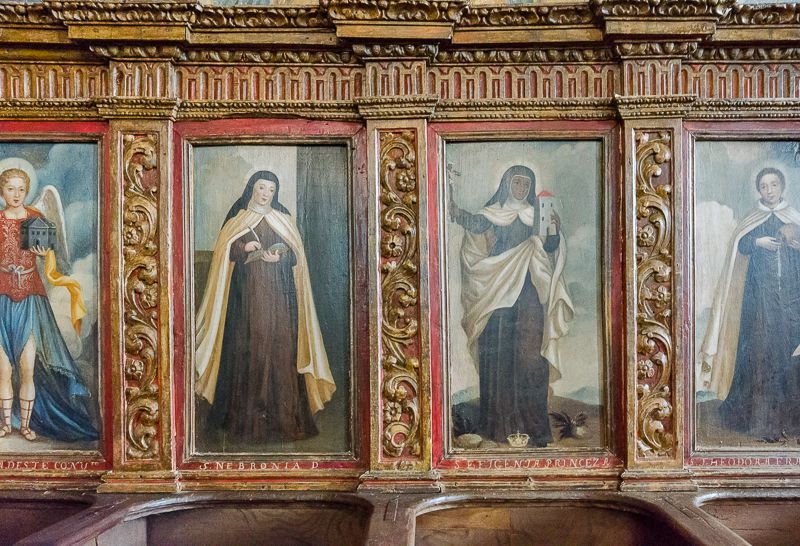
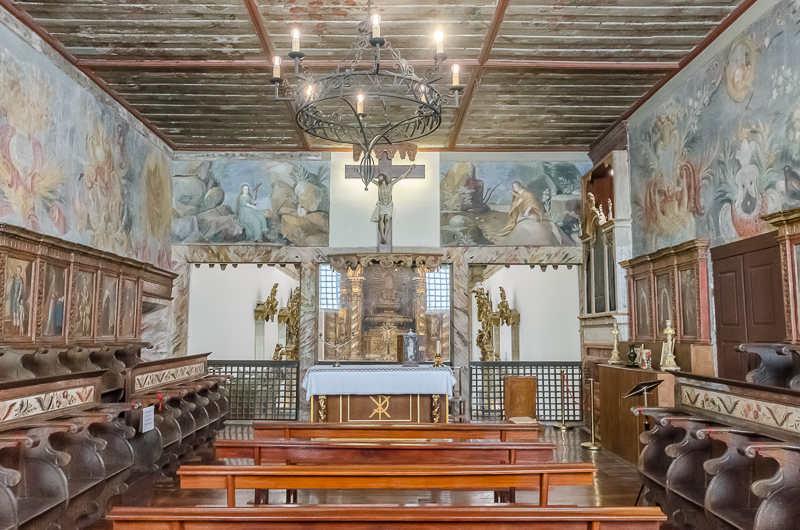
While out we stopped in to see Igreja de Nossa Senhora do Carmo, a small church. For an additional €2 each, which we paid, we received permission to go upstairs to the small, 400 year old, hand painted chapel. It was amazing to see.
Our other destination for the morning was Igreja de São Francisco, a church and convent. Unfortunately a funeral was being held so it was closed to the public.
Riding the cable car to the top of the mountain was the last item on our to do list, but only if the weather was good on Monday. While the weather was good, the cable car was not operating. We did not realize that the cable car only operates on weekends during the off season. Oh well. At least we saved €20.
With our morning being cut short, we made a quick dash back to the hotel to retrieve our backpacks and easily caught the 11:53 AM train back to Porto, arriving shortly after 1:00 PM
After another few days of dreary weather in Porto, it is time to move on. Next up, Coimbra.
Garrett and Stephanie
For additional posts about Portugal, or elsewhere in the world, check out our Travel Blog. It contains collected links to all of our travel posts.
Want to subscribe (or unsubscribe) for email notification of new blog posts? It is only two to three emails a month. Send your name and email address to slowtravelchronicles@gmail.com, and note subscribe (or unsubscribe) in the subject line. All email addresses will be kept confidential and not sold to any third-party. You won’t get any marketing junk or sales pitches from us.