
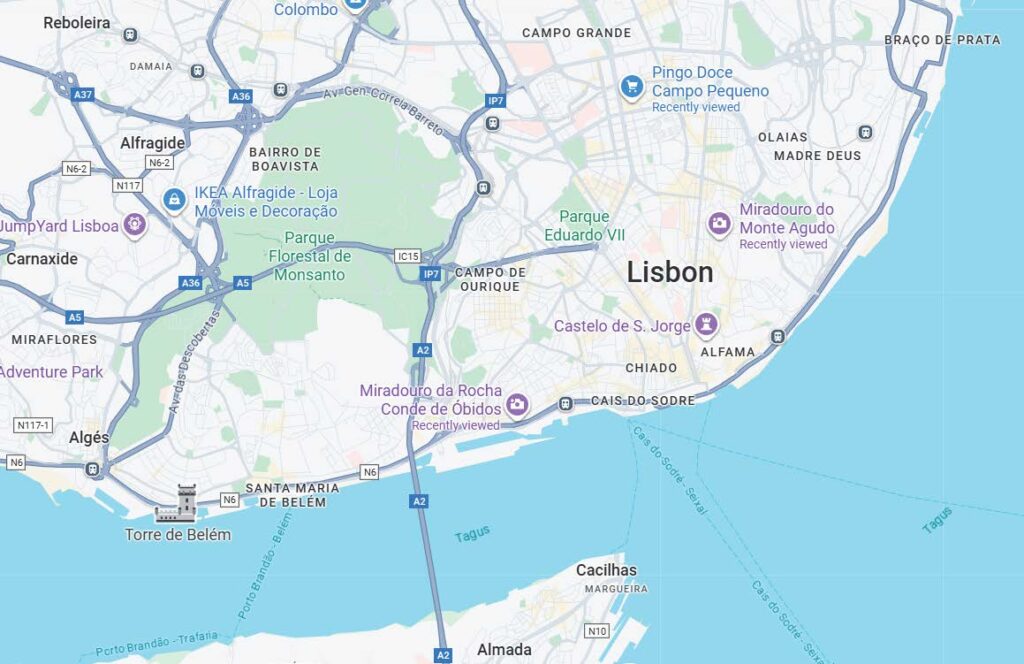
Because Lisbon is so large, and the interesting sites spread far and wide, we grouped activities together by area of town. Today we headed east of the city center to visit the historic sites there.
We had a fairly full day planned starting at Panteão Nacional (the National Pantheon). It’s a massive 17th century Baroque Church turned into a mausoleum for national celebrities. The obvious draw here is the building and rooftop views.
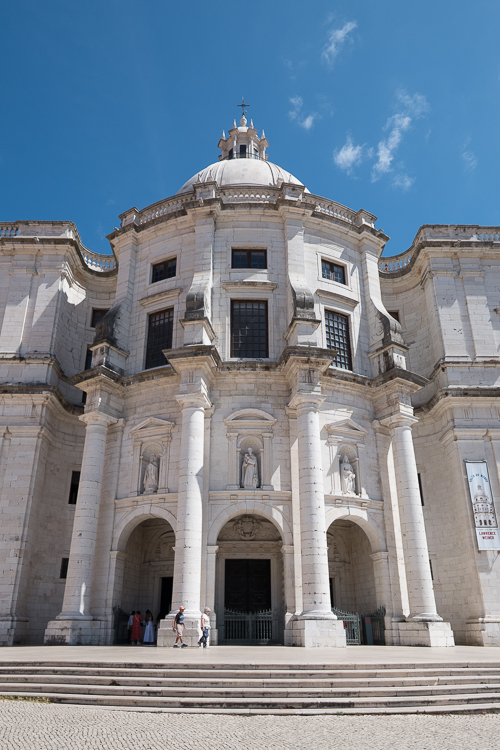
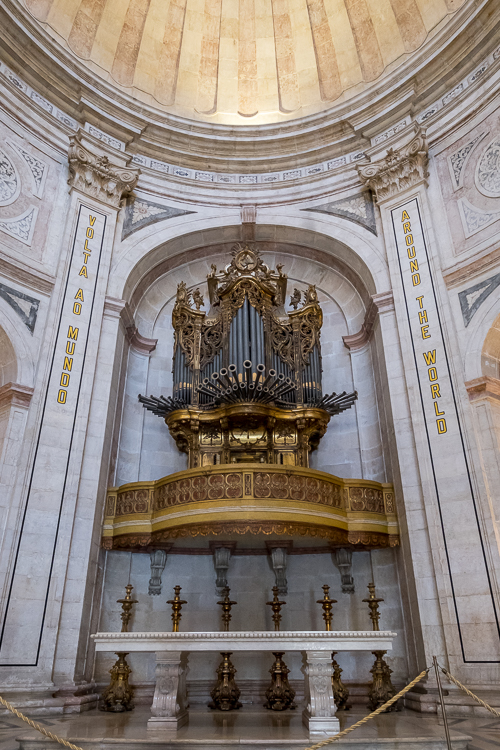
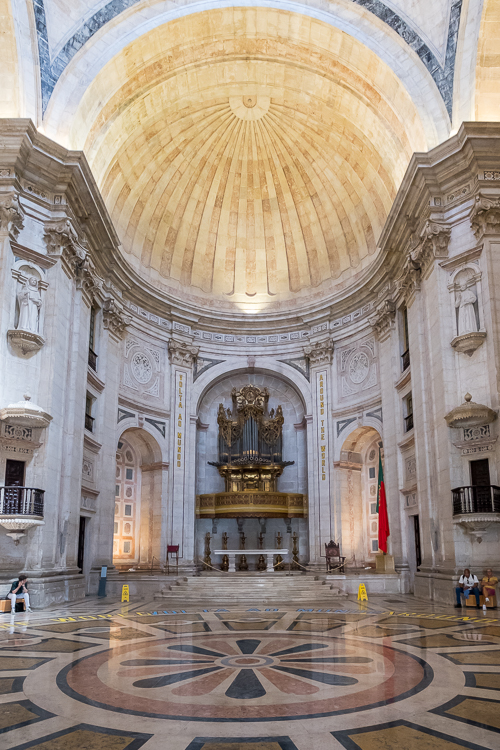
After taking the metro to Santa Apolónia, we walked uphill to the Pantheon, the last bit through Fiera da Ladra, a large flea market held on Tuesdays and Saturdays. It seemed like a decent flea market, but we didn’t stop to look around.
The National Pantheon itself was not busy. After paying €10 each, we entered to see really garish stickers used to spell out words on the floor and walls in bright yellow, blue, and red. I mean, it is just weird. The stickers pretty much ruin what would otherwise be a fairly interesting interior.
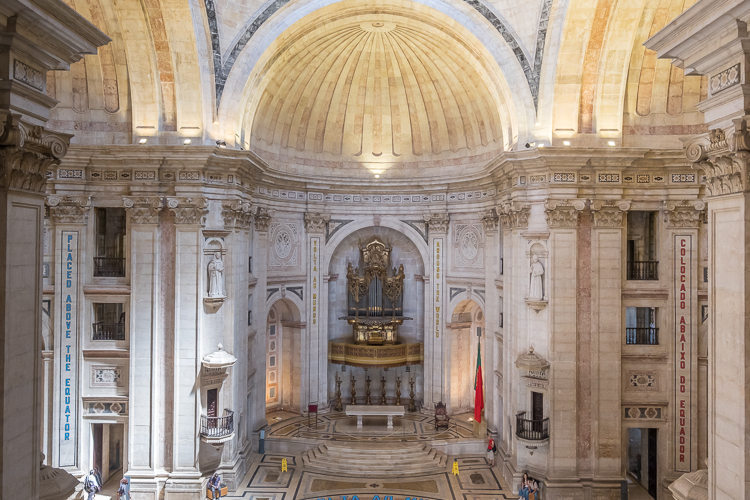
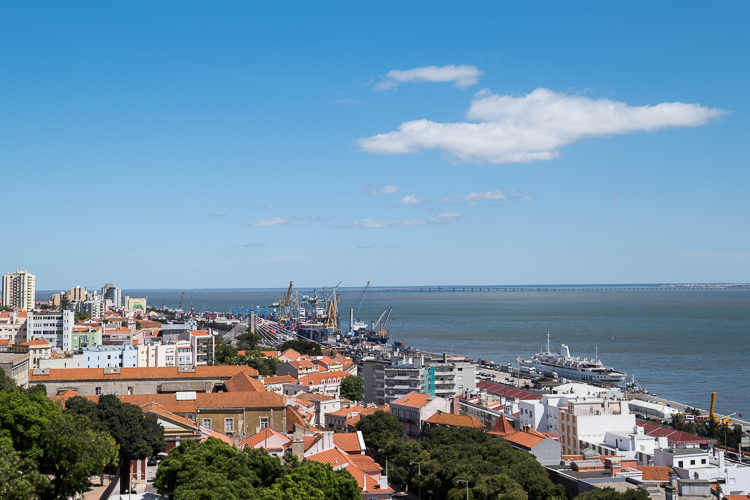
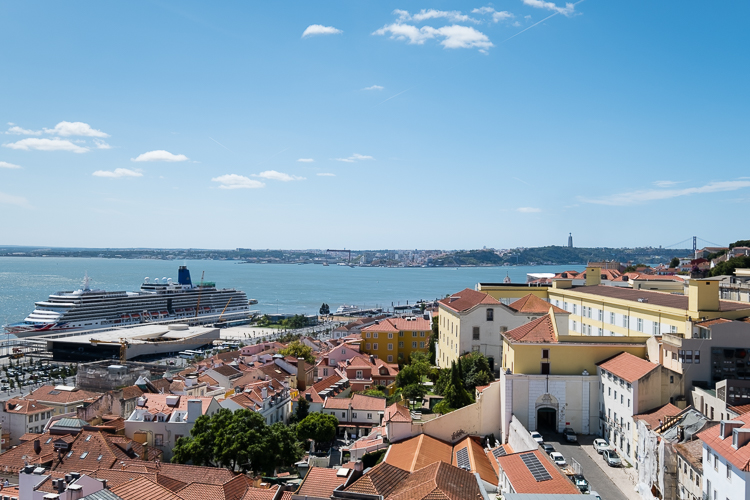
The roof is reached by walking up several flights of stairs. The stairs are wide, flat, and not steep, making it an easy up and down. The roof is nice, but the views are only average at best.
We weren’t ten steps outside the door when we unanimously agreed that this is one place we could have skipped. This is the first of what turned out to be several uninteresting, overpriced tourist attractions in Lisbon, an unfortunate recurring theme.
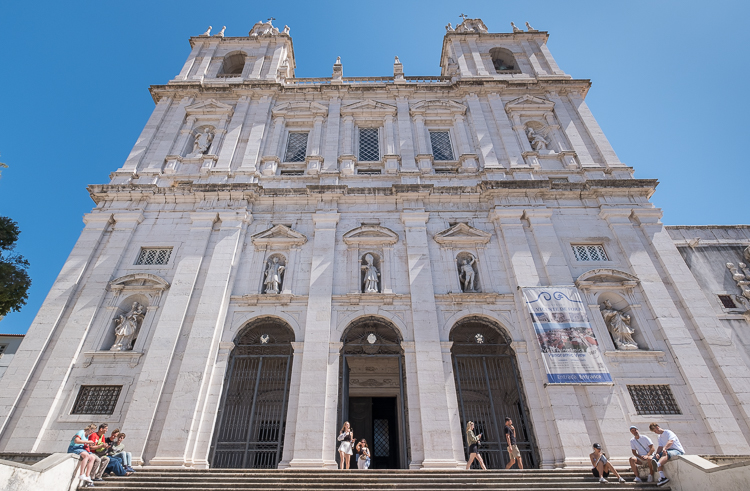
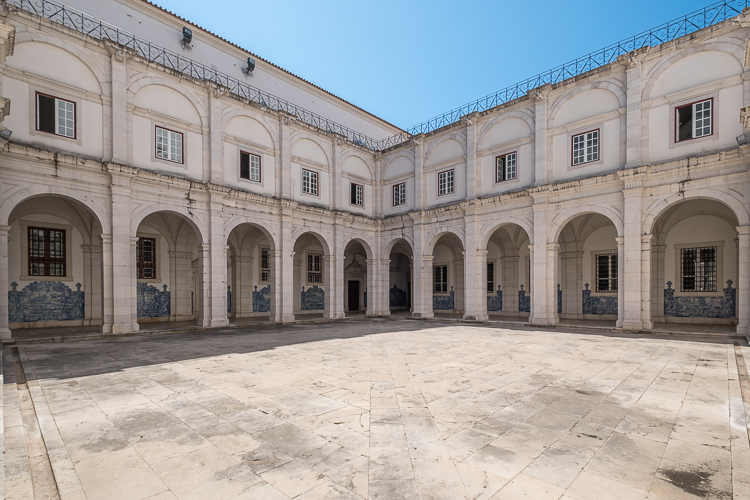
A five-minute walk uphill took us to Igreja e Mostiero de São Vicente de Fora (the Church and Monastery of Saint Vincent), a church and monastery. It is free to walk into the rear of the church for a quick look, but to enter the monastery itself tickets are €8 each.
Several different guided tours are available, in a variety of languages, if that interests you.
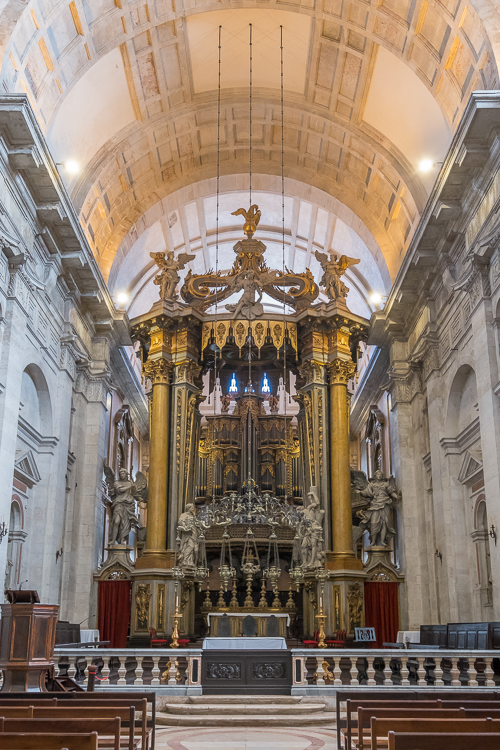
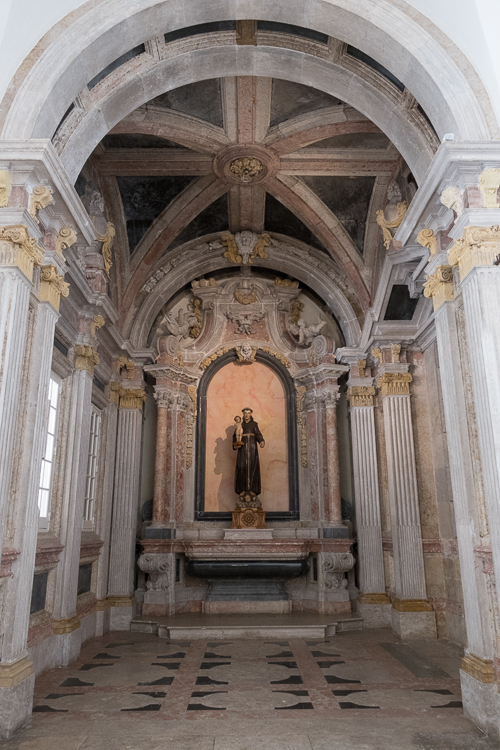
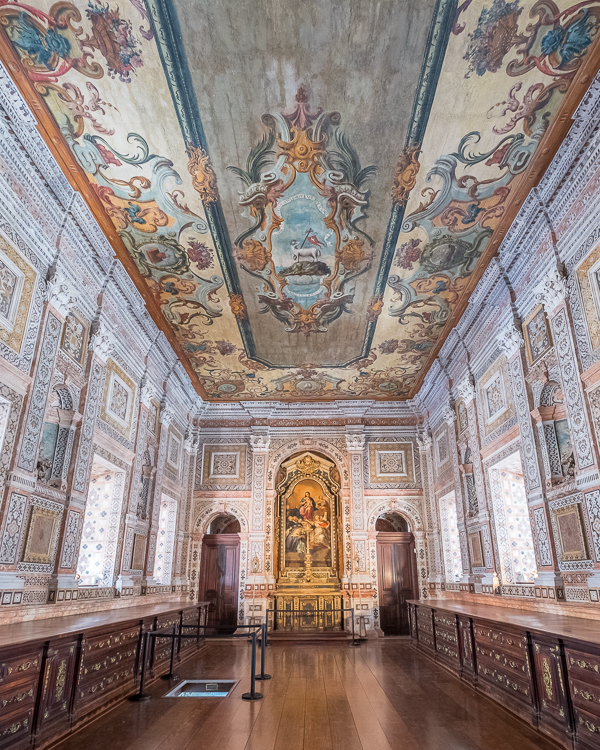
After buying tickets and getting a map of the monastery, our self-guided tour started in a small museum of religious artifacts dedicated to the history of the church in Lisbon. Signs are written in Portuguese, French, and English.
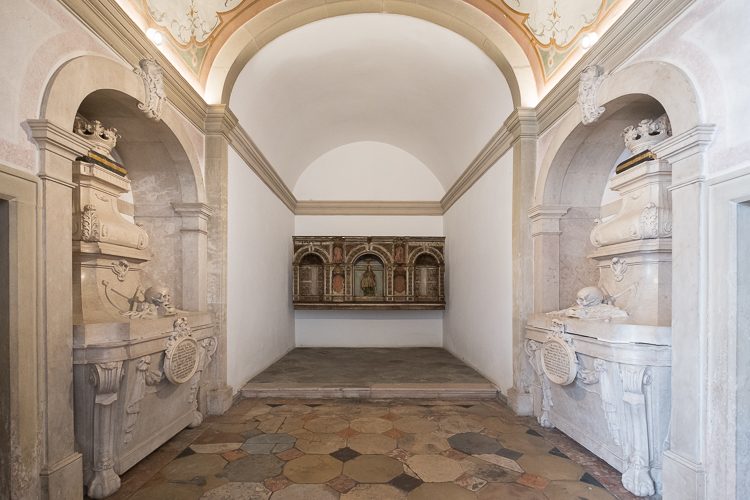
Following the small museum we walked around the cloisters, entered the front of the Church of St. Vincent de Fora, and viewed the sacristy. Also on the first floor is the Royal Pantheon Bragança, the final resting place of many members of this royal family.
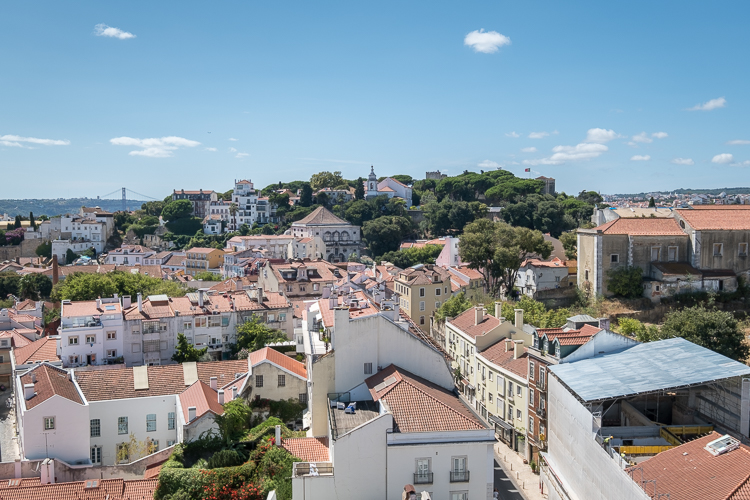
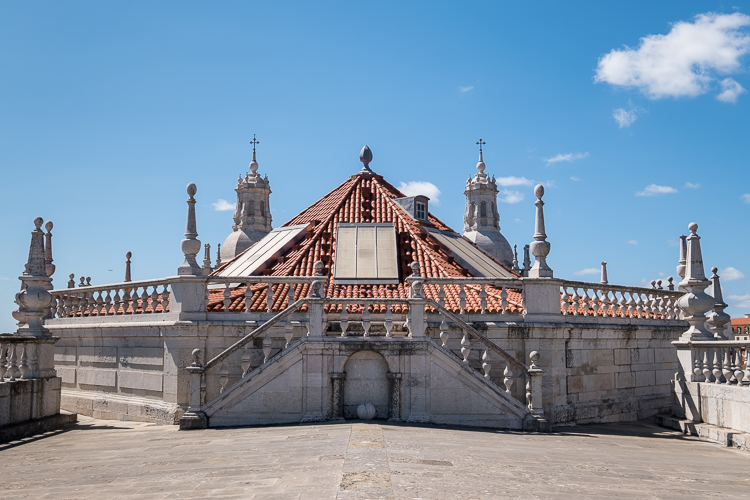
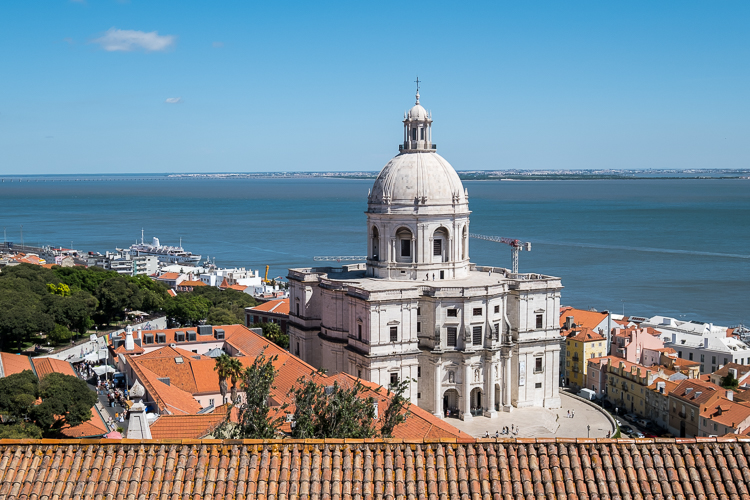
Up on the second floor is an exhibition of glazed tile panels illustrating the Fables of La Fontaine, a portrait gallery, and a view of the church from the high choir above. From there head up another few flights of stairs for the rooftop views.
The views from the monastery roof are pretty good, much better than from the National Pantheon.
We spent well over an hour in the monastery. A handful of other tourists were around, but not many. It is definitely worth the €8. In fact, it is one of the few places that we visited in Lisbon that is actually worth the cost, and one that we really enjoyed.
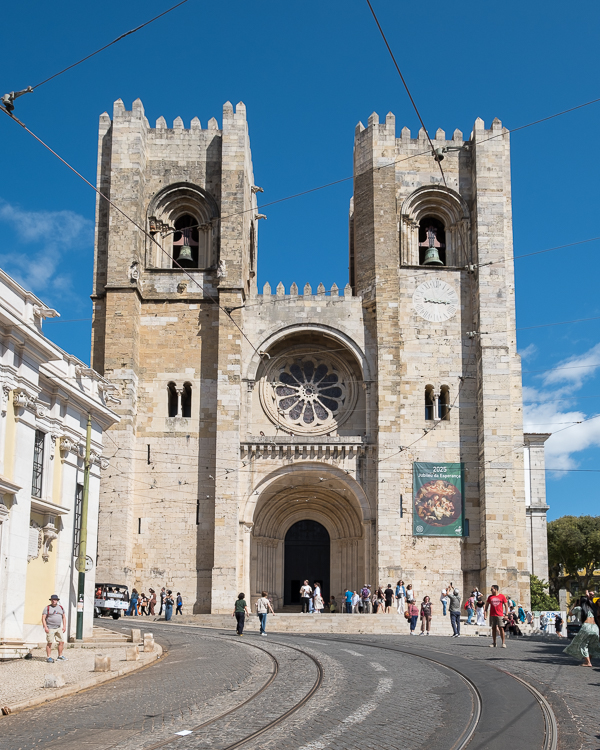
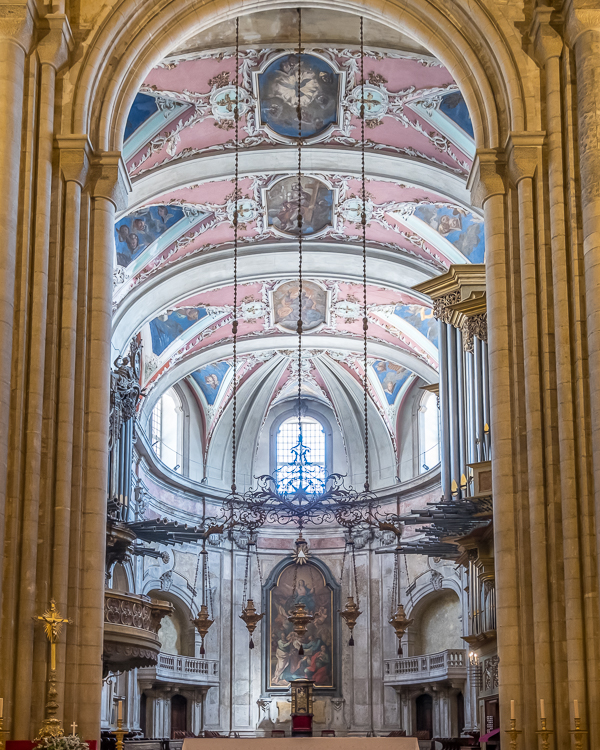
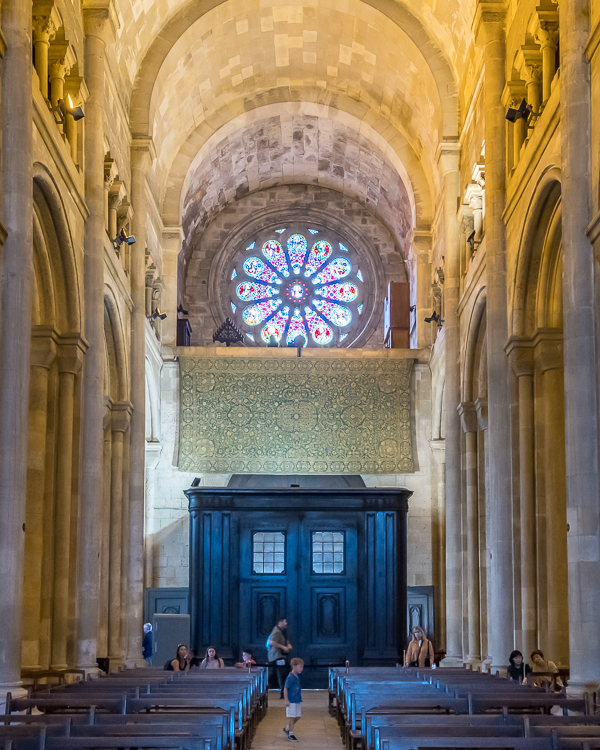
Leaving the monastery we crossed the street and hopped on Tram 28 to get to Sé de Lisboa, the cathedral. If you do any research on Lisbon you will quickly learn that Tram 28 is the tram most popular with visitors to the city as it links several popular (i.e. overcrowded and touristy) destinations.
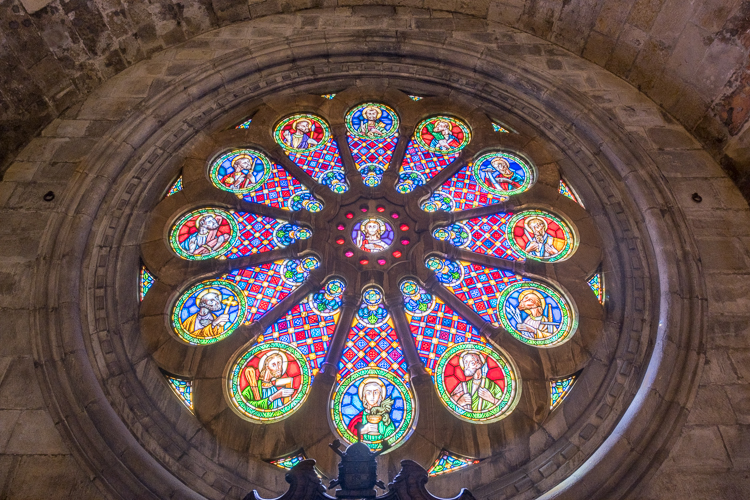
We hoped to avoid Tram 28 as it is always crowded but, on this occasion, it was the most convenient way to get where we were going. Actually, considering how hot and crowded the tram was, we should have just walked. From the monastery to the cathedral it’s mostly downhill.
Anyway, we arrived at the cathedral mid-afternoon on a Tuesday to find it swamped with tour groups. We could not help but wonder if this was a consequence of the two large cruise ships in port. We debated returning another day, but decided against it, hoping that inside it would not be too crowded.
It costs €7 to enter and walk around the cathedral. Again, a bit pricey for a twenty minute walk around a typical, and not particularly interesting, cathedral. We have never skipped visiting a major cathedral in any city.
In hindsight, this one was a close call.
Our next destination was a fifteen-minute walk across town, Museu Arqueológico do Carmo, an archaeology museum located in a Gothic church that was largely destroyed by an earthquake in 1755.
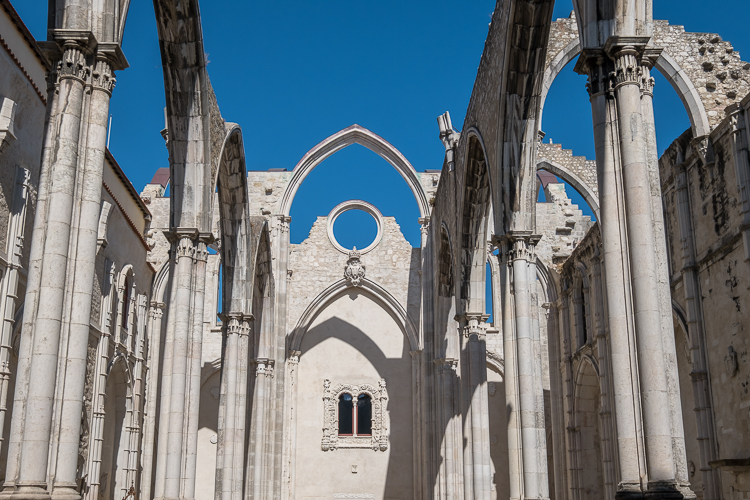
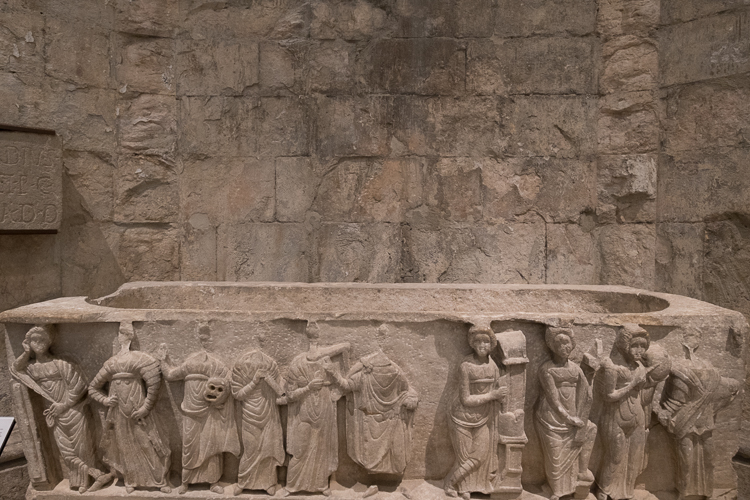
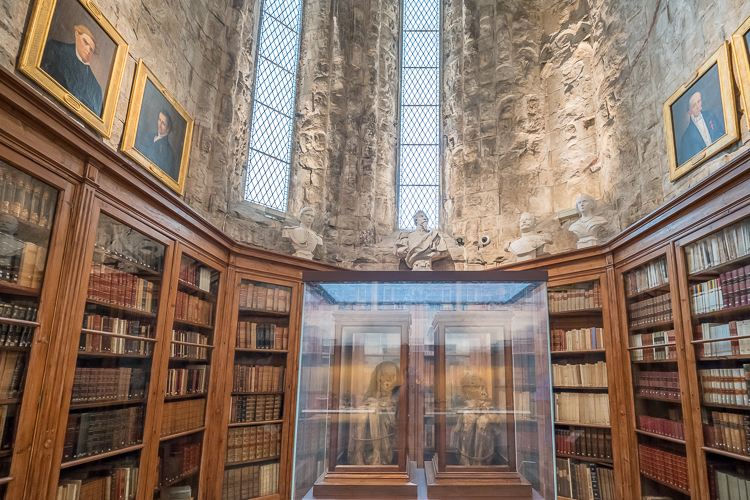
The ruins of the church are fascinating. The museum itself is just a few small rooms. If you like archaeology, you will probably enjoy this museum. If not, you will wonder why you paid €7 to walk through the ruins of a church.
So this was another attraction we could have skipped. Sigh.
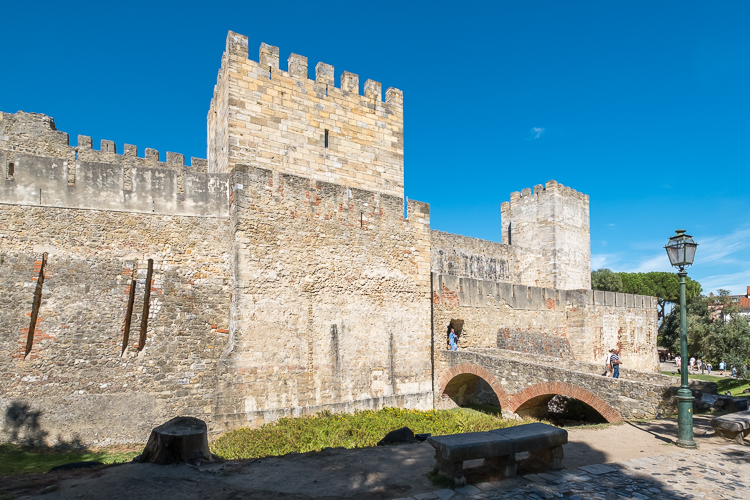
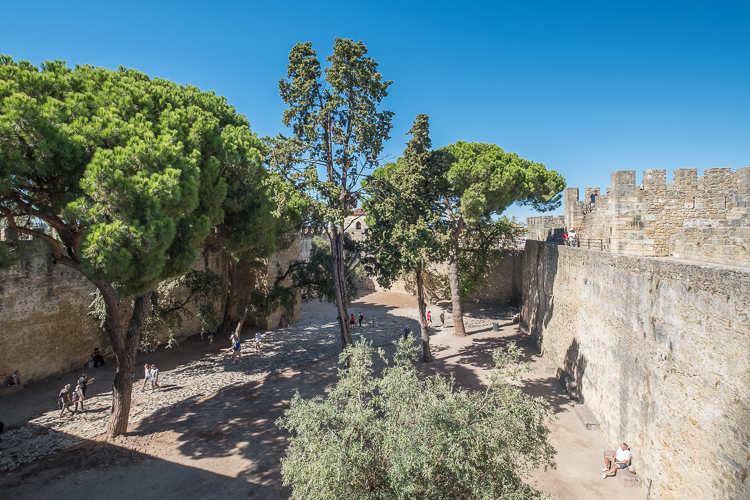
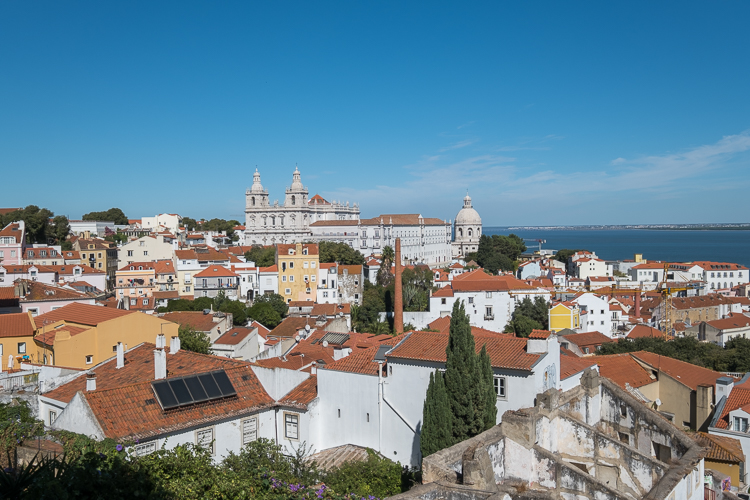
A few days later we visited Castelo de São Jorge (Castle of Saint George), the ruins of a Moorish castle and palace high up on one of the hills surrounding Lisbon. A ten minute ride on Bus 367 from Praça da Figueira to Castelo took us to the entry gate.
Thank God for Google Maps or I’m not sure we would have figured out the bus lines.
We walked into the castle district and bought our tickets, €15 each. The cost of a ticket includes a spot on a guided tour if you wish to take one. We did not.
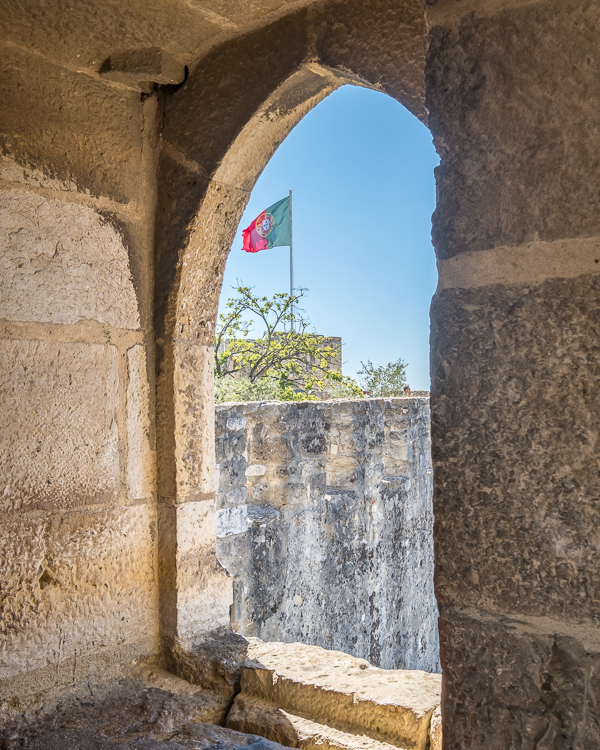
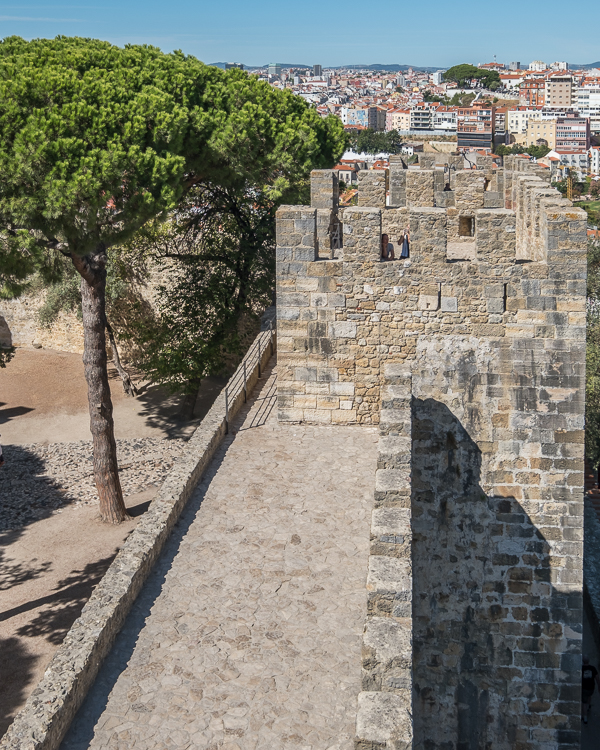
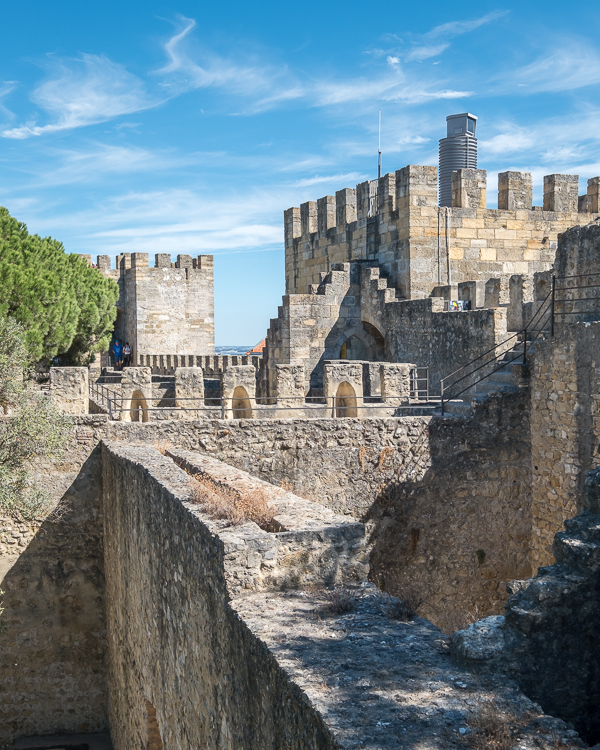
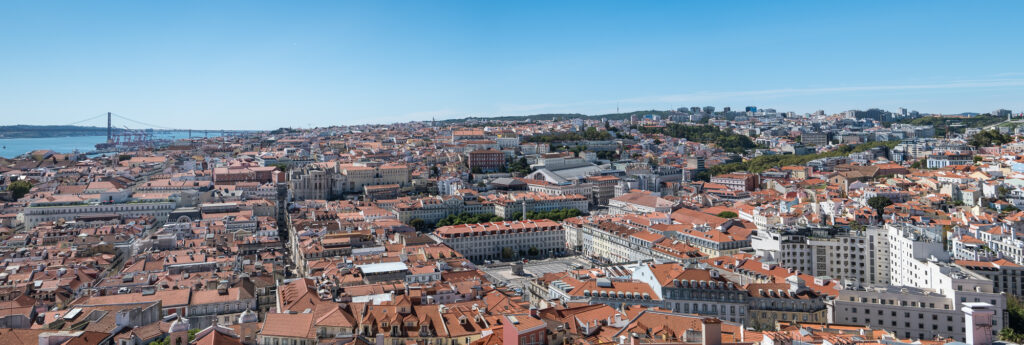
The entry leads straight into a large terrace with beautiful views over Lisbon. You pretty much have good views of the city from everywhere in the castle. A small archaeological museum, complete with a tiny gift shop, sits among the trees. It contains small objects and pottery, actually mostly pottery pieces. For us it was a just nice place to get out of the sun for a few minutes.
The 11th century Moorish castle is now just thick stone walls surrounding courtyards with several towers. By far the best part of the castle is walking around the tops of the walls and seeing the views over the city.
Just past the castle’s exit is a church, Igreja do Castelo de São Jorge, worth a quick stop in. For €6 you can climb the bell tower and get a drink on the way. Quite a few reviewers were critical of the views from the bell tower, so while we stopped in the church itself, we bypassed the tower.
We finally had the good sense to save some money.
Garrett and Stephanie
If you have not already done so, read our other posts about Lisbon:
Lisboa, Portugal (September, 2025, Part I). Sorting out Navegante options, finding salad dressing, and beer tasting.
Lisboa, Portugal (September, 2025, Part II). Just palaces: Queluz National Palace and Gardens; the National Palace of Ajuda.
Lisboa, Portugal (September, 2025, Part IV). Striking out at two of the Seven Wonders of Portugal; redemption at Oceanário de Lisboa.
For additional posts about Portugal, or elsewhere in the world, check out our Travel Blog. It contains collected links to all of our travel posts.
Want to subscribe (or unsubscribe) for email notification of new blog posts? It is only two to three emails a month. Send your name and email address to slowtravelchronicles@gmail.com, and note subscribe (or unsubscribe) in the subject line. All email addresses will be kept confidential and not sold to any third-party. You won’t get any marketing junk or sales pitches from us.